Sunday, August 30, 2026

In Times Like These

Ruth Caye Jones was a pastor’s wife and a mother of five living in Pennsylvania. Late in 1943, the realities of the war were weighing heavily on the home front. As she read the Pittsburgh newspapers, she was deeply distressed by the mounting military casualty lists, the slow progress of Allied troops, and severe nationwide food rationing.

Seeking comfort, she opened her Bible to 2 Timothy 3:1, which reads: "This know also, that in the last days perilous times shall come." Recognizing that her generation was living through those exact perilous times, she felt a strong prompting from the Holy Spirit.

While going about her daily household chores, the lyrics and melody began flooding her mind simultaneously. She pulled a small notepad out of her apron pocket and quickly penned the words and simple musical notes before she could forget them. Her lyrics also pulled heavily from Hebrews 6:19, which speaks of hope as a steady "anchor of the soul," giving life to her famous chorus about gripping the "Solid Rock."

The song was published in 1944 and resonated deeply with a hurting world. Years later, while watching a Billy Graham crusade on television, she wept as she listened to the famous baritone George Beverly Shea perform her song. She later said, "I can't believe I had any part in writing this song. I just feel that God gave it to me, and I gave it to the world."

In times like these we need a Savior
In times like these we need an anchor
Be very sure, be very sure
Your anchor holds and grips the Solid Rock


One writer said it like this: "Our lives are like the open seas—calm and pleasant one day; stormy and tempest-tossed the next. But in times like these we can be very sure our anchor holds and grips the Solid Rock."

Tuesday, August 25, 2026

The night Dolly came to Albany

Not long after Dolly Parton began her career, she and her then-singing partner, Porter Wagoner, came to Albany and performed at the Clinton County Fair. The date was July 24, 1973. At the time, they were one of the most heavily-booked acts operating out of Nashville.

By July 1973, Dolly had already become one of the most success­ful songwriters In Nashville. She and Porter came to Albany because, at the time, Porter was concentrating their shows in the smaller, more rural areas of the country in order to bring their music to people who would not ordinari­ly have a chance to see them. Accompanying them to Albany was comedian Speck Rhodes, who was known for his missing front teeth and his bright and colorful wardrobe, and the famous Wagonmasters band.

At the fair, Dolly sang, "Coat of Many Colors," which was already massively popular. She also sang her first #1 hit, "Joshua." Her song, "Jolene," would be released almost three months later. That night Porter and Dolly sang all their hit duets, like "If Teardrops Were Pennies" and Daddy was an Old time Preacher Man." It was a most memorable occasion, a great night to be at the Clinton County Fair and WANY broadcast it live on the air!

Dolly gained a national audience of millions of viewers by virtue of that TV show and one year after appearing at the Clinton County Fair she split from Porter in order to expand her career as a solo artist. Coming soon would be her massive hit, "I Will Always Love You," a song she wrote on the very bus that brought her to Albany fifty-three years ago. She dedicated it to Porter. The rest of the story you know.

Monday, August 3, 2026

Near the Cross


The hymn, "Near the Cross," sometimes referred to as "Jesus Keep Me Near the Cross," or, "In the Cross" is considered to be one of writer Fanny Crosby's best-known hymns. It is based on Galations 6:14, "But God forbid that I should glory, save in the cross of our Lord Jesus Christ, by whom the world is crucified unto me, and I unto the world."

"Near the Cross" was written by her in 1869, to a tune that had already been composed by William Howard Doane, who often collaborated with Crosby. The song is in F major and was composed in 6/8 time.

Though blinded at six weeks of age, it is believed that Crosby (1820-1915) was the author of over 8,500 gospel songs. The exact number isn't known, because she used more than one hundred “nom-de-plumes,” or “pen names,” many of which are not known. It has been written that at times she would write as many as six or seven hymns in one day. Other than Doane, she collaborated with a couple of other prominent gospel song composers of the day, William Bradbury and Ira Sankey.

The famous evangelist Dwight L. Moody was said to have asked Crosby the following question toward the end of her life: “If you could have just one wish granted, what would it be?” Sensing that he expected to reply that her wish would be to have had her sight reatored, she replied, “If I could have one wish, I’d wish that I might continue blind the rest of my life.” Moody was taken back and asked, “How can you say that?” Crosby was said to have responded, “Because, after being blind for all these years, the first face I want to see now is the face of Jesus.”

The theme of “Near the Cross” captures the hope and joy of heaven that is so characteristic of Crosby’s hymns: “Till my raptured soul shall find rest beyond the river.”

Jesus, keep me near the cross
There a precious fountain
Free to all, a healing stream
Flows from Calvary's mountain

Refrain: In the cross, in the cross
Be my glory ever
Till my raptured soul shall find
Rest beyond the river

Near the cross, a trembling soul
Love and mercy found me
There the Bright and Morning Star
Shed its beams around me

Near the cross! O Lamb of God
Brings its scenes before me
Help me walk from day to day
With its shadows o'er me

Near the cross I'll watch and wait
Hoping, trusting ever
Till I reach the golden strand
Just beyond the river


Monday, July 27, 2026

The Story of Reuben Coffey, an American Revolutionary War Soldier

In Augusta Phillips Johnson's book, "A Century of Wayne County Kentucky 1800-1900," originally published in 1939, she used War Department pension records to compile a list of 40 names of Revolutionary War soldiers who later emigrated to Wayne County. One of those soldiers was my 4th great-grandfather Reuben Coffey. He joined the Wilkes County Regiment of the North Carolina Militia on June 17, 1780 for, in his words, "as long a period as our country needed my services."

On October 7th that year, he was at King's Mountain, where the "Overmountain Men," so named because the militia soldiers all hailed from settlements inTennessee, Virginia, North Carolina, and Kentucky that were located "over" the mountain barrier, fought and defeated the British Loyalists, who suffered roughly 1,018 casualties and captures, while the Patriots lost only about 90 men. The victory was a massive turning point in the Southern Campaign of the American Revolutionary War.

In his pension papers filed in Wayne County, Kentucky court in 1832, a 72-year-old Reuben Coffey wrote, “We overtook the British and Tories at King's Mountain in South Carolina and defeated them on Saturday, the seven day of October 1780. We remained on the battle ground until Sunday, the next day, and then we marched with the prisoners up to Col. Walker's in Rutherford, North Carolina. We then marched about three miles to a widow Bickerstaff's (actually Biggerstaff), where a court marshall was held and they condemned and hung nine of the Tories." Today, the tree is gone but a Biggerstaff Hanging historical marker marks the spot.

Reuben moved to Wayne County around 1819 and became a respected citizen and successful farmer. He and his wife, Mildred "Millie" Morris Coffey, raised seven children. Their daughter, Sarah "Sally" Coffey Owens, was the mother of my great, great-grandmother, Almyra Owens Frost. Reuben died on June 9, 1942. He and Millie are buried at Elk Springs Valley Cemetery in Wayne County.

Kings Mountain National Military Park, located near Blacksburg, South Carolina, commemorates the Battle of Kings Mountain. It was listed on the National Register of Historic Places in 1996. Thomas Jefferson considered the battle "The turn of the tide of success."

Tuesday, June 9, 2026

Let Him Have His Way With Thee

"Let Him Have His Way With Thee” was written and composed by Cyrus Nusbaum, who was born near Elkhart, IN, in 1861. In 1886, he became a minister in the Methodist Church and first served in churches in Kansas.

This hymn was produced in 1898 and was based on experiences in his first year as minister. Nusbaum had been serving in one of the poorest circuits in the district. At the end of the year, he and his wife attended the conference where he hoped to be appointed to a better charge. However, he was named to the same circuit. Unhappy in his situation, he knelt in prayer and told the Lord that he would be willing to let Him have His way with him regardless of the cost. That feeling of surrender became the inspiration for the song. It first appeared in the Gospel Praises hymnal in 1899.

Nusbaum later became a conference evangelist and, during World War I, he was appointed by Woodrow Wilson as inspector of the American Red Cross in France, holding the rank of captain in the U. S. Army. After the war, he travelled throughout the United States conducting evangelistic meetings. In addition to this hymn, he also wrote both words and music for a number of other gospel songs. He passed away in 1937.

Would you live for Jesus And be always pure and good
Would you walk with Him Within the narrow road
Would you have Him bear your burden carry all your load
Let Him have His way with thee

His power can make you What you ought to be
His blood can cleanse your heart And make you free
His love can fill your soul, and you will see
’Twas best for Him to Have His way with thee


If you are struggling with problems in life, look to Jesus and “Let Him Have His Way with Thee.”

Monday, June 1, 2026

Larry Cordle to Perform at Spirit of 76 Celebration

Larry Cordle was born in Louisa, Kentucky and grew up near the neighboring small community of Cordell. As a young child he was introduced to bluegrass, country and gospel music by his great\-grandfather, Harry Bryant, an old-time claw hammer banjo stylist, fiddle player and dancer.

“Mom said I could sing 'I’ll Fly Away' all the way through when I was two years old!” Cordle fondly remembers on his website, recalling his grandfather's influence. “We lived so far away from everything that we had to make our own entertainment. Papaw would get the fiddle out in the evenings sometimes and play and dance for us. Just as soon as I was old enough to try to learn to play, I did so and kinda seconded after him on the guitar. He ran an old country store and I spent many happy hours in there with him playing, talking about and listening to music. It was our escape into another world, something we grew up with and looked so forward to. I was always happiest when we were in a jam session.”

After graduating from high school, Cordle spent four years in the Navy, was honorably discharged and attended Morehead State University, earning a bachelor’s degree in accounting. “I just didn’t see how I could ever make a living doing only music,” he explains, “so I worked for a CPA firm during the day and played in clubs at night.” All the while, he desperately wanted to devote all of his time to music, but his commitments would remain divided, until writing a song that changed everything for the aspiring singer-songwriter.

Cordle's childhood friend and neighbor, musical prodigy Ricky Skaggs, heard Cordle’s “Highway 40 Blues” and promised that he would record it one day. In the summer of 1983, it was the No. 1 country song in the nation, helping launch Larry’s songwriting career and skyrocketing Skaggs’ already solid music career. “A lot of people who hear it think it's about Interstate 40, which runs through Nashville, but I actually wrote it about that little state highway in Kentucky,” which runs from Salyersville through Paintsville and Inez to the West Virginia border, almost touching Lawrence County.

Cordle's best known song is “Murder On Music Row,” co-written with Larry Shell in 1999 as a complaint against the rise of “country pop” music. It was first recorded by his bluegrass group, Lonesome Standard Time, as the title track of an album, and gained its greatest fame when it was recorded as a duet by George Strait and Alan Jackson, reaching No. 38 on the country singles chart even though it was never officially released as a single. Cordle’s songs have also been recorded by Alison Krauss, Garth Brooks and Trisha Yearwood.

The original version of “Murder On Music Row” won Song of the Year at the 2000 International Bluegrass Music Association Awards. It was the second such award for Cordle; in 1993, the Lonesome Standard Time band won IBMA Song of the Year for “Lonesome Standard Time,” written by Cordle and Jim Rushing.

Cordle shared in a Grammy Award with friends Carl Jackson and Jerry Salley for the song "You’re Running Wild" on Livin', Lovin', Losin': Songs of the Louvin Brothers, a project that featured numerous country music stars singing songs made famous by the legendary duo. It won the 2004 Grammy for Country Album of the Year. Cordle has played on several other collaborative albums and singles, including the 2022 Gospel Music Association Dove Award-winning song, “The Sweet By and By,” with Jackson, Salley, Dolly Parton and Bradley Walker. He has provided harmony vocals for artists such as Brooks, Blake Shelton and many more. At last count, Cordle’s songs had appeared on projects that had sold a combined total of more than 55 million records.

In April 2015, Larry Cordle was inducted into the Kentucky Music Hall of Fame. In 2017, he released an all-gospel album, Give Me Jesus, which received a 2018 Grammy nomination for Best Roots Gospel Album and a 2017 IBMA Gospel Recorded Event of the Year nomination for the title track.

Cordle released one of his best albums to date, “Where The Trees Know My Name,” in 2021. The album produced three hit singles (“Sailor’s Regret,” “Cherokee Fiddle” and “Breakin’ on the Jimmy Ridge”) along with more chart singles “The Devil and Shade Wallen” and “Natural State” on the Bluegrass Today Top 20 song chart.

In 2022 Cordle scored with the release of his song, “East Kentucky Blues,” which reached No. 1 on the Bluegrass Today Top 20 weekly and monthly charts and was named one of the publication’s Top 50 Songs of 2022.

“Cordle remains highly active in all facets of his career,” his official biography says. “He regularly records and performs. He is also still first and foremost a songwriter, now writing independently for his own company, Wandachord Music (BMI). He is a long-time resident of the Nashville suburb of Hendersonville, where he lives with his wife Wanda. However, he still enjoys the opportunity to make frequent trips back to his Kentucky home place. Those Eastern Kentucky roots certainly shine through on his award-winning original songs.”

We are proud to welcome Kentuckian Larry Cordle to Seventy Six, Kentucky, and the Spirit of 76 Celebration at the Seventy Six Falls Country Club. Hope to see you there!!

Monday, December 22, 2025

Miracle in a Small Town

Many times I have driven through Monticello, Kentucky on Christmas morning on the way to my parents house. The quiet streets and the stillness of the moment let me know that people were indeed at home spending Christmas with their families. What remained, in all its serenity, revealed a simple, but humble, nostalgic quality of a town that is endearing. Kentucky These charming traits, combined with its history, is something sweet to cherish.

Seeing God's beauty in places like Monticello is a common theme across the world. Qualities that define God's nature are seen, not just in grand miracles, but in everyday creation. The Bible speaks of places where God's glory shines. Seeing the quiet beauty of my little corner of the world in trips to my parents' home on Christmas morning reminds me of the story of that first Christmas morning.

"And there were in the same country shepherds abiding in the field, keeping watch over their flock by night. And, lo, the angel of the Lord came upon them, and the glory of the Lord shone round about them: and they were sore afraid. And the angel said unto them, Fear not: for, behold, I bring you good tidings of great joy, which shall be to all people. For unto you is born this day in the city of David a Saviour, which is Christ the Lord (Luke 2:8-11).

The beautifulness of God's handiwork is not only seen in a drive through town, but you can also find it in a walk in the woods, or in a quiet sunset, or in a gentle breeze. Asking God to open your eyes to see His presence in everything will give you the perspective that God isn't just confined to grand events or holy buildings.

"O Little Town of Bethlehem" tells the story of Jesus' birth in a humble town, a small place on a quiet night for such a momentous event. The song was written in 1868 by Phillips Brooks, a minister at the Church of the Holy Trinity, Philadelphia. The words resonated themes of stillness and peace, reflecting hope in the aftermath of the Civil War.

While Brooks was not Abraham Lincoln's pastor, when the president’s slain body arrived in Independence Hall in Philadelphia on April 22, 1865, he had delivered the eulogy. The event served as a massive emotional release for a grieving nation. Hundreds of thousands of mourners had filed past the open casket in the Assembly Room, the same place where the Declaration of Independence was signed,

After that, Brooks took a sabbatical to Bethlehem. It was Christmas Eve when he attended a service at the Church of the Nativity. The visit had a profound impact on him, and he was inspired by the peaceful, humble atmosphere of the town, and the world-changing birth that occurred there.

At first, the song was a poem. The church's organist, Lewis Redner, was asked to put it to music. Trying as he did, he could not come up with an appropriate melody. One night he went to bed feeling defeated. It was the night before the Christmas Eve service. During his fretful sleep it seemed that he heard music. Immediately, he got up and wrote it down just as we sing it today. When he presented it to Rev. Brooks he said, "I think it was a gift from heaven."

The carol emphasizes that Jesus entered this world through a small, seemingly insignificant town, fulfilling prophecy found in Micah 5:2, and showing God's plan often works through humble means...the peaceful, quiet night of the first Christmas.

"O little town of Bethlehem
How still we see thee lie
Above thy deep and dreamless sleep
The silent stars go by
Yet in thy dark streets shineth
The everlasting light
The hopes and fears of all the years
Are met in thee tonight


Merry Christmas!

(A story that I wrote for the Wayne Weekly)

Saturday, December 20, 2025

Hymns of Hope: Fanny Crosby

Fanny Crosby, the prolific hymn writer, wrote several Christmas-themed songs. Though she's more famous for hymns like "Blessed Assurance" and "Pass Me Not, O Gentle Savior," which she wrote after hearing the cry of a prison inmate, some of her notable Christmas works include "Christmas Carol (Cheerily Hail the Christmas Morn)," a joyful carol celebrating the birth of Jesus....

"Merrily now the bells we hear
Chiming in chorus sweet and clear
Gather and sing, gather and sing
Welcome the children's King"


Another one, "Sing Hallelujah," encourages praise for the infant Redeemer....

"Come to the feet of our infant Redeemer
Come where today in a manger He lies
Lift up our hearts in a song of devotion
Let our hosannas with gladness arise"


I encourage you to find and listen to her Christmas hymns. At six weeks old, Fanny developed an eye infection, and a doctor applied the wrong medication, which causing permanent blindness. Later, she would say that she believed it was God's plan, and that she would thank the doctor if she met him, as it led to her profound spiritual life and prolific writing.

While attending a Christian camp near Lake Erie, she said to Pastor John Sweney, “Do you know that if at birth I had been able to make one petition to my Creator, it would have been that I should be born blind?” When he asked why, she said “Because, when I get to heaven, the first face that shall ever gladden my sight will be that of my Savior.”

In her diary, she wrote, "It seemed intended by the blessed Providence of God that I should be blind all my life. I could not have written thousands of hymns if I had been hindered by the distractions of seeing all the interesting and beautiful objects ther would have been presented to my notice."

Fanny Jane Crosb - mission worker, poet, lyricist, composer, prolific hymnist - lived from 1820 to 1915. By the end of the 19th century, she had become a household name.

Thursday, December 18, 2025

Hymns of Hope: O Holy Night (the origins)

The first major radio broadcast with voice and music was by Canadian inventor and radio pioneer Reginald Fessenden. It was on Christmas Eve in 1906, in Brant Rock, Massachusetts. It was heard by radio operators on ships along the Atlantic Coast. During the transmission, he played a piece of music on his violin and followed it by reading from Luke chapter 2. The song he played was John Sullivan Dwight's 'O Holy Night.'

Dwight lived and died in Boston, MA. The Harvard graduate became an ordained a minister, but ministry proved not to be his vocation. It was music. In 1852, he founded Dwight's Journal of Music, which became one of the most respected and influential periodicals in country. In 1855, he wrote English lyrics for the Christmas carol "O Holy Night,".which was originally written in French.

The origins of this beloved song began eight years earlier when the local priest in French Village asked worldly poet Placide Cappeau to write a poem for Christmas mass.

Not knowing exactly where to turn, he opened a bible to the book of Luke and put himself into the wonder of that night and imagined all the emotions and miracles he might have seen. He was so pleased with Cantique De Noel,” he asked musician friend, Adolphe Charles Adams, a Jew, to write music for it. The French village immediately embraced it. Years later, upon discovering Cappeau was a worldly man and Adams was a Jew, the church banned the song, but parishioners continued to sing it in their own homes behind closed doors.

Fast forward several decades to when John Sullivan Dwight discovered the song and fell in love with it. He published his rewritten version in his magazine and the nation quickly embraced it.

So, there you have it. Upon finishing his reading of Luke 2, Fessenden picked up his violin and played the strains of “O Holy Night,” not only marking the moment as the first broadcast of a man’s voice, but the first song ever to be played over the airwaves.

O holy night
The stars are brightly shining
It is the night of our dear Savior’s birth
Long lay the world in sin and e’er pining
‘Til He appeared and the soul felt its worth

A thrill of hope the weary world rejoices
For yonder breaks a new and glorious morn

Fall on your knees
O hear the Angels voices
O night divine O night when Christ was born
O night divine, O night, O night divine


Sunday, December 7, 2025

Hymns of Hope: O to be Like Thee

The words for this hymn were written by Thomas Obadiah Chisholm, who lived from 1866 to 1960. He was born in a log cabin near Franklin, Kentucky. He was educated in a one room school and became a teacher at the age of 16. By the age of 21 he was an associate editor of the local newspaper. He was saved at age 27, afterwhich he penned the words to "Oh, To Be Like Thee."

The basis for his words was his desire to shape himself in the image of Christ. Soon, poor health would challenge his efforts to become a newspaper editor and an ordained minister, however he would continue writing poetry. He wrote "Living for Jesus," (Living for Jesus, a life that is true, Striving to please Him in all that I do), but perhaps his most famous hymn is "Great Is Thy Faithfulness."

The words to "O to be Like Him" and "Great Is Thy Faithfulness" might be his personal diary. He started his spiritual journey with a desire to be like Jesus and as he neared the end of his journey on this earth he proclaimed God's greatness and faithfulness. What a testimony. May this be our experience and testimony as well. As we enter 2026, why not make it your prayer to be like Jesus in all that you do?

"O to be like Thee, O to be like Thee
Blessed Redeemer, pure as Thou art
Come in Thy sweetness
Come in Thy fullness
Stamp Thine own image
Deep on my heart"

"O to be like Thee! full of compassion
Loving, forgiving, tender and kind
Helping the helpless, cheering the fainting
Seeking the wand’ring sinners to find"

Hymns of Hope: What a Day That Will Be

This hymn was written in 1955 by gospel singer Jim Hill of Middletown, Ohio. The inspiration for it came from two people who were in his life. One person was an orphan girl who had sung at his church. She concluded her song with the words, “What a day that will be,” a phrase that resonated deeply with Hill and stayed with him over the years. The second inspiration came from a personal family tragedy, when his mother-in-law suffered a stroke that left her paralyzed. Hill struggled to comprehend why such a terrible thing would happen to such a kind and devout woman as his mother-in-law was.

One day while sitting on his porch, he founded himself reflecting on the trials she had faced, when the words to the hymn began to flow into his mind. Despite having never written a song before, he shared the words with his family. On their next visit to see his mother-in-law, Hill, his wife, and sister-in-law sang it to her and for the first time in three years, she smiled. To Hill, it was a divine confirmation that his song was blessed by God.

“What a Day That Will Be” is a song of encouragement and hope. Its message of a future without sorrow, pain or death, draws on the promise found in Revelation 21:4: “And God shall wipe away all tears from their eyes; and there shall be no more death, neither sorrow, nor crying, neither shall there be any more pain: for the former things are passed away."

“What a Day That Will Be” is a beautiful reminder of the eternal peace promised to believers. The second verse says it all:

"There'll be no sorrows there
No more burdens to bear
No more sickness, no pain
No more parting over there
And forever I will be
With the one who died for me
What a day, glorious day that will be"


Jim Hill sang with the Stamps and Statesmen quartets. In later years he was part of the Gaither “Homecoming Series.” He was also the worship minister and choir director at Towne Blvd Church of God in Middletown, where he was a long-time member. He passed away on Jan. 9, 2018.

Sunday, November 23, 2025

Jesus: Precious Name, Oh How Sweet

Lydia Odell Baxter was born in Petersburg, New York, 1809. A couple of decades later, she and her husband moved to New York City and operated a home that became known as a gathering place for ministers, evangelists and Christian workers; a lighthouse in the big city, offering respite to those spreading the gospel.

But God had a different path for Lydia – one that would take her through the valley of suffering. She developed a serious chronic illness that would confine her to bed for most of her remaining life – nearly three decades. While many would have grown bitter from such an affliction, Lydia maintained a cheerful and patient disposition that inspired everyone around her. Friends who came to offer comfort left having received it instead.

Lydia filled her days and nights with intensive Bible study and writing. She had a particular fascination with Biblical names and their meanings. Among those names, the one she found most precious was, "Jesus." Her outlook was positive. When asked how that could be in light of her suffering, she would say, “I have a very special armor. I have the name of Jesus.

Invoking Jesus’ name as spiritual protection became the inspiration for her most famous hymn, “Take the Name of Jesus with You,” written in 1870, just four years before her death. Writing it was not merely a creative outlet during her illness, but a ministry, a way of sharing the comfort she had found in Jesus’ name, with anyone who would read or sing her words.

"Take the name of Jesus with you
Child of sorrow and of woe
It will joy and comfort give you
Take it then, where’er you go"

(Taken from hymcharts.com by Don Chapman)

Tuesday, July 8, 2025

"I Surrender All...a Cause to Sing"

We all love that great hymn, but do you know the story behind how it came to be? The words were written by Judson Van DeVenter of Dundee, Michigan around 1890 and were later put to music by Winfield S. Weeden and published in 1896. Van DenVenter was an accomplished musician who started out as an art teacher. He taught in Sharon, Pennsylvania for 15 years, and during that time, was active in the Methodist Episcopal Church doing evangelistic work. Soon his friends began encouraging him to leave teaching to become an evangelist.

“I was conducting a meeting at East Palestine, Ohio… For some time I had struggled between developing my talents in the field of art and going into full-time evangelistic work. At last the pivotal hour of my life came, and I surrendered all. A new day was ushered into my life. I became an evangelist and discovered down deep in my soul a talent hitherto unknown to me. God had hidden a song in my heart, and touching a tender chord, he caused me to sing.”

"I Surrender All" was first published in Gospel Songs of Grace and Glory, a collection of old and new hymns by various hymnists. It has continued to appear in numerous other hymnals since its publication.

Van DeVenter went on to write more than 60 hymns and songs. In the 1920s, he served as a professor of hymnology at Florida Bible Institute near Tampa, which was later attended by Billy Graham. In “Crusade Hymn Stories,” by crusades singer Cliff Barrows, he writes that the evangelist said students often gathered in Van DeVenter's home for fellowship and singing. Graham was with the hymn writer when he died on July 17, 1939, recounting that Van DeVenter sang “I Surrender All” on his deathbed. Graham regularly used the hymn in his crusades.

All to Jesus I Surrender
All to Him I freely give
I will ever love and trust Him
In His presence daily live
All to Jesus I surrender
Humbly at His feet I bow
Worldly pleasures all forsaken
Take me, Jesus, take me now
All to Jesus I surrender
Make me, Saviour, wholly thine
Let me feel the Holy Spirit
Truly know that Thou art mine
All to Jesus I surrender
Lord, I give myself to Thee
Fill me with Thy love and power
Let Thy blessing fall on me
All to Jesus I surrender
Now I feel the sacred flame
Oh, the joy of full salvation
Glory, glory, to His name
Refrain:

I surrender all
I surrender all
All to Thee, my blessed Savior
I surrender all

Thanks to Kelly Reneau for allowing me to use her beautiful photo.

Saturday, March 29, 2025

How Firm a Foundation

An original verse in "How Firm a Foundation," goes like this...

"In ev’ry condition, in sickness, in health, in poverty’s vale or abounding in wealth, at home or abroad, on the land, on the sea, as thy days may demand shall thy strength ever be."

Originally published in London, England in 1787, the hymn first appeared in America in 1832, and became much loved and adored. It is good to know that in today's world, no matter the circumstance, no matter where we find ourselves, we can rely on God to provide us with a firm foundation to keep us calm and encouraged. God's love for us is rich and pure, measureless, strong and enduring. The hymn assures believers that God's strength will always be sufficient, regardless of their circumstances.

During the Civil War, both sides could be heard singing it, a testament to how God bridges the gap between all men with a calming realization that the foundation of God is our refuge. Andrew Jackson requested it be sung at his deathbed, and Robert E. Lee and Theodore Roosevelt both requested it be sung at their funerals.

In 1898, during the Spanish-American war, tensions between the North and the South were still high. A divided American army. needed to put aside differences to face a new conflict, but that was easier said than done, and then on Christmas eve of 1898 a sentinel’s call rang out, “twelve o’clock, and all’s well!” It was Christmas morning. With thoughts of home on his mind, suddenly there arose the sound of an old, familiar hymn, ringing out along those moonlit fields: ‘How firm a foundation, ye saints of the Lord!’ One voice, then another and soon another, and another, and in a moment a whole American army corps was singing:

"Fear not, I am with thee, O be not dismayed; For I am thy God, and will still give thee aid; I’ll strengthen thee, help thee and cause thee to stand, Upheld by My righteous, omnipotent hand."

With lyrics like "In ev'ry condition, in sickness, in health, in poverty's vale or abounding in wealth, at home or abroad, on the land, on the sea" believers are assured that God's strength will always be sufficient, regardless of their circumstances. The promise of God's strength applies to all situations, both good and bad. What an amazing comfort.

For 223 years, our church has been a source of strength and comfort for its members; a place for fellowship, spiritual nourishment and support; providing a sense of belonging, connection and opportunities for spiritual growth, prayer and learning about faith; offering comfort and direction during difficult times. We praise God for that.

Saturday, February 22, 2025

Unexpected Blessings

I could hardly see through my windshield because of the slush and gook that had been splattered on it, so on my lunch hour I drove to the car wash, only to find it closed. Of course, we had just encountered a winter storm and the wind chill was near zero. I was resigned to the fact that I would have to wait another day to wash my car.

Since Burger King was next door, I decided that was where I would get lunch. I pulled up to the pickup window and immediately there was water dripping from the awning above, dripping onto the dirty windshield I was having trouble seeing out of. In seconds my windshield was clean!

In the process of living, we sometimes face struggles, but God sure does have a way of working things out. Here's a shout-out to unexpected blessings that let me know just how good God is.

"For I was an hungred, and ye gave me meat: I was thirsty, and ye gave me drink: I was a stranger, and ye took me in: Matthew 25:35

Saturday, June 29, 2024

Long may our Land be Bright with Freedom's Holy Light

Officially, the Continental Congress declared its freedom from Great Britain on July 2, 1776, but after voting to approve it, a draft document was needed to explain it to the public. The proposed draft was made by a committee that included John Adams, Benjamin Franklin and Thomas Jefferson. It took two days for Congress to agree on the edits, and so the actual Declaration of Independence document was approved on July 4th.

In just two years from now, it will be exactly 250 years since the original Independence Day. We have come a long way since that time. Starting then as the smallest and youngest of the nations of the world, we have become the greatest and most powerful.

But today, God, as the ruler of all nations, is being at­tacked both internally and externally and it is having too much ef­fect for us to be complacent any longer. It is time that we should remind ourselves that we have a heritage of dependence on God, so well authenticated that it would be impossible to remove this from our history, even if we wanted to.

Our Declaration of Independence states that the right of mankind to enjoy freedom is a gift of God. Here are the words....

"We hold these truths to be self-evident, that all men are created equal, that they are endowed by their Creator with certain unalienable Rights, that among these are Life, Liberty and the pursuit of Happiness."

Our coins state "In God We Trust." Our pledge of allegiance declares that we are "one nation under God." The president of the United States, when he takes the oath of office, places one hand on a Bible and raises the other toward heaven as he pledges to uphold the constitution.

The Bible says. "Blessed is the nation whose God is the Lord." If our nation needed God's help in overcoming its enemies when it was the tiniest infant nation in the world, and its leaders then said that it did, can we afford now to take the attitude that we have outgrown the need of Divine assistance?

When we take this attitude, we are on the road to disaster. Wouldn't it be far better to acknowledge now that we need the Lord and to ask Him to intervene in our affairs?

Abraham Lincoln said, "1 have been driven many times to my knees by the overwhelming conviction that I had nowhere else to go." J. Edgar Hoover said, "The force of prayer is greater than any possible combination of man-controlled powers, because prayer is man's greatest means of tapping the infinite resources of God.

One of our favorite patriotic songs, "America," has a stanza, which is really a prayer....

"Our fathers' God to Thee
Author of liberty
To Thee we sing
Long may our land be bright
With freedom's holy light
Protect us by Thy might
Great God our King"


This Independence Day. let's pause our celebration long enough to pray this prayer.

Wednesday, May 22, 2024

Ice Cave

In 1945 at the Kentucky State Fair, Wayne County placed fourth in natural resources with things like oil, timber, coal, the largest number of miles of natural fishing streams and abundant wildlife and natural scenery resources like the 'ice cave.'

An ice cave?

The Louisville Courier-Journal reported in 1899 that there was an ice cave on old "Uncle" Tom Kelsey's farm, about 14 miles east of Albany and 1.5 miles from Gap Creek Store, near the Clinton/Wayne county line, on a spur of Poplar Mountain. Inside, a sink of some eighty yards almost perpendicular opened up a cavity in the earth filled with rooms of various sizes and dimensions. On all sides was large deposits of the most perfect process of the refrigerator, compact pure, lasting and perfect in every respect. The cave was high up on the ridge and anybody in the surrounding community having a yen for ice could go in and get it.

The newspaper wrote that Mammoth Cave had been praised and eulogized time and again as being the greatest curiosity of Kentucky, and even of the world, but It remained for the county of Clinton to come to the front with a phenomenon in the nature of a cave that surpassed all others.

In the article, Bony Baker and William Cheek, who had visited the cave and used the ice, vouched for "the truth of it, and said ice cave was the finest refrigerator In the world. They reported that people for miles and miles around would go there during the summer for their ice. Cheek said he explored the cave on July 4, 1880, took out a lump of ice, wrapped it In a bed blanket and drove to Somerset, where the Ice weighed fifty pounds, thus showing Its compactness and endurancs of heat.

In 1933, the Times Tribune in Corbin, Kentucky said Ice Cave had gotten its name because of its ability to preserve ice through the summer months. Kelsay said he had known of ice being removed from the cave as late as September. The ice formed early in the spring and if properly taken care of would be a great help to a family through the summer. Cheek had gone into the cave in late May of 1933 and brought out ice for freezing ice cream.

Saturday, May 18, 2024

A Joyous Day for Pauline

Pauline Conner accepted the Medal of Honor from President Donald Trump on behalf of her late husband, 1st Lt. Garlin Murl Conner, on June 26, 2018 at a White House ceremony in Washington, D.C. After the 89-year-old Pauline rose from her wheelchair to give the President a hug and a kiss on the cheek before receiving the award, a beaming Trump said, "I like her."

It was a joyous day in the East Room for Pauline, who had fought to attain the medal for her husband for 22 years. "If he were present, Murl would feel highly honored," Pauline told Pentagon reporters. "I just wish he was here to get it," she said. Of her husband, who died at age 79 in 1998, Pauline said "my husband was a very humble man. He was my hero for 53 years."

When the news came that Murl was being awarded the MOH, Pauline thought it was a scam, but she gathered family members to her home to be by her side in case that call did come and it was real. After two decades of trying, Pauline had almost given up on Murl receiving the MOH. So when her phone rang in the spring of 2018 and the voice on the line belonged to Trump — who told her he had read her late husband's impressive file and intended to award him the Medal of Honor — she said, “You gotta be kidding.” But he wasn’t kidding. In fact, he called Murl an “incredible hero” who had finally taken his rightful place in the eternal chronicle of American valor. "You sound just like an old country girl," President Donald Trump told her after confirming what she had been waiting so many years to hear. "Tell that beautiful wife of yours to give you a big hug and kiss," she told the President.

At the Pentagon, Pauline's eyes welled up with tears as she spoke before a large audience at 1st Lt. Conner's induction into the Hall of Heroes. With her son, Paul, looking on with her four grandchildren and four great-grandchildren, she said "We did it Murl," her voice quivering. "No more regrets." It was the most touching moment of the entire trip.

When Murl returned to Albany in the summer of 1945, a 15-year old Pauline was in the crowd that gathered to celebrate their war hero. Even the great Sgt. Alvin York himself, the Medal of Honor recipient from WWI, had shown up for the "speakin'. Pauline wasn't quite sure which one he was but she had read stories about him in the newspaper and wanted to meet him. She didn't think much of the scrawny fellow they were making all the fuss about with a parade and the speeches. "I was expecting a giant of a man," she said. But Murl was maybe 5-foot-6 and about 120 pounds at the time. She turned to her mother and said, "My God, Mama, that little guy couldn't have done all of what they said he'd done. All of what they said he had done included earning the Distinguished Service Cross, four Silver Star's, three purple hearts and a battlefield promotion from tech sergeant to first lieutenant.

One year later, they were married. "Our beautiful life together was simple," she said. "Our calling was having a family, building a home and a farm; and helping family and friends -- especially veterans who returned home with hardships. With the help of Pauline, Murl had found a way to still serve others by volunteering to help other veterans with benefits. He would do the interviews and she did the paperwork Even after he died in 1998, Pauline kept on doing it until she no longer was able.

By the way, the documentary, "From Honor to Medal: The Story of Garlin M. Conner," which was originally released in 2020 and tells Murl's story as one of the most decorated soldiers in American military history, will be shown on May 27th at 7pm and May 29th at 12:30am and 3am on KET. Albany native and UK School of Journalism and Media Professor Al Cross was the executive producer.

Thursday, May 2, 2024

A Father and his Son

Billy Graham once said, "The greatest tribute a boy can give to his father is to say, ‘When I grow up, I want to be just like my dad.”

By the time Todd Messer came to Clinton County to be the basketball coach, his daddy had already made a name for himself in Eastern Kentucky. A veteran basketball official of 27 years, Leighman Messer had called multiple regional championship games, all a state tournaments and the girls Sweet 16. He had coached football and girls and boys basketball and had been an assistant basketball coach at Clay County. Along the way, he made a lifelong impact on hundreds of kids.

Coming to Clinton County would become icing on the cake in Leighman Messer's already celebrated career. For 16 years, as he helped his son coach the Mighty Bulldogs, he witnessed Todd become one of the most respected coaches in Kentucky.

Coach Leighman Messer was on the sidelines for six all a classic regional championships, an all a state tournament runner up, seven district championships, 13 appearances in the regular regional tournament and nine seasons of 20 or more wins, and when the Kentucky State Senate honored Todd when he became the all-time winningest head coach in Clinton County High School history - 314 wins against 166 career losses, it was an especially proud moment for Leighman, an exclamation point on a beautiful 'like father, like son' story.

On Facebook, Amanda Messer posted a beautiful photo of her husband and their daughter, Lexi, and with it she wrote, "Sometimes all you need is your dad." How very apropos. I am sure going to miss Leighman Messer and his faithfulness to Todd and his family in Clinton County. It has sure been a joy to watch.

Wednesday, March 6, 2024

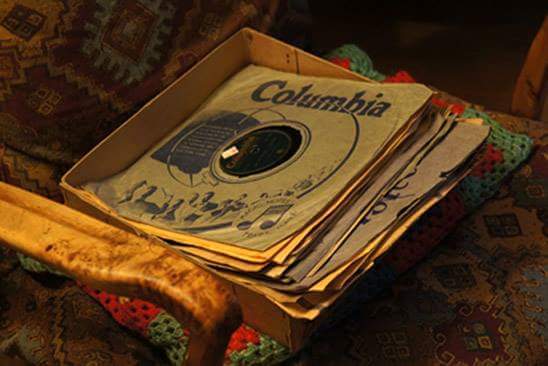
My 78 RPM Disks (1905-1924)

1. Albert Campbell - Dreaming (3701). Steve Porter - Flanagan At The Vocal Teacher's (3705). Standard Talking Machine Company 1907.

2. All Star Trio - Poor Little Butterfly Is A Fly Gal Now (18641-A). Fluffy Ruffles (18641-B). Victor Records 1919.

3. American Quartet - When You Wore A Tulip (17652A). Peerless Quartet - The Red, White and Blue (17652-B). Victor Records 1914.

4. Andre Benoist - Old Black Joe (50292-L). Valse In E Flat (50292-R). Edison Records 1915.

5. Anna Case - Old Folks At Home (83059-L). Annie Laurie (83059-R). Edison Records 1916.

6. Billy Murray - When Tony Goes Over The Top (18510-A). Arthur Fields - Good Morning Mr. Zip-Zip-Zip! (18510-B). Victor Records 1918.

7. Charles Hart, Elliot Shaw and The Calvary Choir - Shall You? Shall I? (80529-L). Charles Hart & Elliot Shaw - Is My Name Written There? (80529-R). Edison Records 1919.

8. Chatauqua Preachers Quartette - Softly Now The Light Of Day (39476). Let The Lower Lights Be Burning (39477). Standard Talking Machine Company 1914.

9. Chester Gaylord - Love's Old Sweet Song (80613-L). Edna White - Recollections of 1861-65 (80613-R). Edison Records. 1920.

10. Collins and Harlan - Just Help Yourself (3695). Cal Stewart - Uncle Josh Joins The Grangers (3706). Standard Talking Machine Company 1907.

11. Collins and Harlan - On The 5:15, United Talking Machine Company (39697). Ruff Johnson's Harmony Band (39698). Standard Talking Machine Company 1915.

12. Columbia Quartette - War Song Hits - Part I (A2428). War Song Hits - Part 2 (A2428). Columbia Records 1918.

13. Dabney's Band - Beautiful Ohio (A-12081). Hindustan (B-12081). Aerolian Vocalion 1919.

14. Edison Band - Medley Of American Patriotic Airs (50212-L). Medley Of American War Songs (50212-R). Edison Records 1914.

15. Edison Quartet - The Star Spangled Banner (80172-L). America (My Country 'Tis Of Thee (80172-R). Edison Records 1914.

16. Edison Quartet - He Lifted Me (80204-L). Let The Lower Lights Be Burning (80204-R). Edison Records 1914.

17. Edward Hamilton - Just Like The Rose (4725). Charles Hart & Elliot Shaw - Let The Rest Of The World Go By (4726). Emerson Records 1919.

18. Elizabeth Spencer & Henry Burr - You're Still An Old Sweetheart Of Mine (18590-A). Lewis James and Shannon Four - The Gates Of Gladness (18590-B). Victor Records 1919.

19. Elizabeth Spencer - Call Me Your Darling Again (80098-L) 1916. Metropolitan Quartet - Annie Laurie (80098-R). Edison Records 1914.

20. Elizabeth Spencer & Thomas Chalmers - Abide With Me (80276-L). John Young & Frederick Wheeler - When The Roll Is Called Up Yonder (80276-R). Edison Records 1915.

21. Ernest L. Stevens Trio - If I Had My Way Pretty Baby (51026-L). Red Mon Waltz (51026-R). Edison Records 1922.

22. Esther Walker - How Sorry You'll Be (Wait'll You See) (18657-A) Nov. 18, 1919. Billy Murray - He Went In Like A Lion And Came Out Like A Lamb (18657-B). Victor Records Jan. 2, 1920.

23. Frank Ferera/Anthony Franchini - Bright Moon (19088-A). Hawaiian Nights (19088-B). Victor Records 1920.

24. Fred Bacon - Old Black Joe (50351-L) 1916. Massa's In De Cold, Cold Ground (50351-R). Edison Records 1915.

25. Fred Van Eps - Medley Of Southern Melodies (51145-L) April 1923. Darkey's Dream and Darkey's Awakening (51145-R) 1922. Edison Records.

26. Geoffrey O'Hara - Send Me A Curl (18441-A). Lewis James and Shannon Four - All Aboard For Home Sweet Home (18441-B). Victor Records 1918.

27. Happy Six - I'm Nobody's Baby (79798). Cherie (79802). Columbia Records 1921.

28. Helen Clark & George Wilton Ballard - In The Old Sweet Way (50534-L). I'm Forever Blowing Bubbles (50534-R). Edison Records 1919.

29. Henry Burr - Are You From Heaven (18435-A) 1917. Sterling Trio - Give Me The Right To Love You (18435-B). Victor Records 1919.

30. Henry Burr - Then You'll Remember Me (414). Mrs. Stewart Holt and Frank C. Stanley - 'Tis But A Little Faded Flower (3402). Standard Talking Machine Company 1910.

31. Henry Burr - Throw Out The Life Line (3205) 1905. Stanley and Burr - What A Friend We Have In Jesus (3756). Talking Machine Company 1907.

32. Henry Burr - Abide With Me (A236). Where Is My Wandering Boy Tonight (A236). United Talking Machine Company 1908.

33. Henry Burr and Peerless Quartet - Broadway Rose (18710-A). Sterling Trio - Mother's Lullaby (18710-B). Victor Records 1920.

34. Henry Burr - That Wonderful Mother Of Mine (18524-A) 1919. Charles Anthony/Lewis James - Salvation Lassie Of Mine (18524-B). Victor Records 1919.

35. Henry Burr - Just A Baby's Prayer At Twilight (18439-A). Percy Hemus - On The Road To Home Sweet Home (18439-B). Victor Records 1918.

36. Irving Kaufman - Oh! Oh! Oh! Those Landlords (78445). Billy Murray - And He'd Say Oo-La La! Wee-Wee (78536). Columbia Records 1919.

37. James Craven - Georgia Rose (2172-A). Ernest Hare - I Want My Mammy (2172-B). Brunswick Records 1921.

38. Jaudas' Society Orchestra - The Missouri Waltz (50428-L). Poor Butterfly (50428-R). Edison Records 1917.

39. Joe Hayman - Cohen Telephones the Health Department (29685). Prince's Orchestra - Serenade (46167). Columbia Records 1915 R.

40. John Steel - Tell Me Little Gypsy (18687-A). The Girl Of My Dreams (18687-B). Victor Records 1920.

41. Joseph C. Smith's Orchestra - Alice Blue Gown (18700-A). Tripoli (18700-B). Victor Records 1921.

42. Kelly Harrell - Hand Me Down My Walking Cane (20103A). My Horses Ain't Hungry (20103B). Victor Records 1914.

43. Lewis James and Peerless Quartet - Smile And The World Smiles With You (18545-A). Sterling Trio - That Tumble Down Shack In Athlone (18545-B). Victor Records 1919.

44. Louise, Ferera and Greenus - Kawaihau Waltz (77798). Hawaiian Breezes (77884). Columbia Records 1918.

45. Maggie Teyte - Ma Curly-Headed Babby (82159-L). I'se Gwine Back To Dixie (82159-R). Edison Records 1919.

46. Metropolitan Quartet - I Will Sing Of My Redeemer (80300-L). I Love To Tell The Story (80300-R). Edison Records 1914.

47. Metropolitan Quartet - Come Where The Lillie's Bloom (80321-L) 1915. Thomas Chalmers - My Old Kentucky Home, (80321-R). Edison Records 1914.

48. Metropolitan Quartet - The Little Old Log Cabin In The Lane (80484-L) 1918. Betsy Lane Shepherd - I'll Remember You, Love In My Prayers (80484-R). Edison Records 1917.

49. Metropolitan Quartet - Darling Nellie Gray (80010-L) 1914. Elizabeth Spencer & Vernon Archibald - Ever Of Thee I'm Fondly Dreaming (80010-R). Edison Records 1920.

50. Orpheus Male Chorus - Dixieland Memories No. 2 (80395-L). Dixieland No. 1 (80395-R). Edison Records 1917.

51. Pale K. Lua and David Kaili (Irene West Royal Hawaiians) - Cunha Medley (17774-A). Hula Medley (17774-B). Victor Records 1915.

52. Rae Eleanor Ball; Jessie L. Deppen - Havana Moon (50857-L). Wonderland Of Dreams (50857-R). Edison Records 1921.

53. Sam Ash - On The Road To Happiness (46130). Reed Miller and Frederick Wheeler - Keep The Home Fires Burning (46135). Columbia Records 1915.

54. Sam Ash - When I Leave The World Behind (45647). Herbert Stuart - When The Lusitania Went Down (45660). Standard Talking Machine Company 1915.

55. S.C. (Steve) Porter [Chimes] - Safe In The Arms Of Jesus (A239) 1902. Henry Burr - Savior Lead me Lest I Stray (A239). Standard Talking Machine Company 1905.

56. Selvin's Novelty Orchestra - Dardanella (18633-A). My Isle Of Golden Dreams (1863-B). Victor Records 1919.

57. Sibyl Sanderson Fagan - L'Ardita - Magnetic Waltz (80453-L). Sibyl Sanderson, Fred Hager and Harvey Wilson - Sundown In Birdland (80453-R). Edison Records 1918.

58. Sousa's Band - U.S. Field Artillery March (18430-A). Liberty Loan March (18430-B). Victor Records Dec. 21, 1917.

59. S.W. Smith, U.S.N. And Bugle Squad - U.S. Army Bugle Calls Pt. 1. (50452-R). U.S. Army Bugle Calls Pt. 2 (50452-L). Edison Records 1918.

60. Thomas Chalmers - Nearer My God To Thee (50002-L) July 21, 1913. Elizabeth Spencer & Frederick Wheeler - Dreams Of Galilee (50002-R). Edison Records 1915.

61. Thomas Chalmers - Beulah Land (80549-L). Fred East & Lewis James - Only A Step To Jesus (80549-R). Edison Records 1920.

62. Thomas Chalmers - The Palms (82055-L). O Holy Night (82055-R). Edison Records 1914.

63. Thomas Chalmers - Recessional (82133-L). Battle Hymn Of The Republic (82133-R). Edison Records 1917.

64. Toots Paka Hawaiian Company - Kilima Waltz (4795). Hilo March (4798). Emerson Records 1919.

65. Vasa Prihoda - On Wings Of Song (82236-L). (a) Songs My Mother Taught Me (b) Poem (82236-R). Edison Records 1921.

66. Venetian Instrumental Quartet - On The High Alps (50065-L) 1914. American Symphony Orchestra - Wedding Of The Winds Waltzes (50065-R). Edison Records 1912.

67. Waikiki Hawaiian Orchestra - One, Two, Three, Four Medley (50455-L) 1917. Ford Hawaiians - Ellis March (50455-R). Edison Records 1916.

68. Walter Van Brunt - Hickey Dula (50348-L). Collins and Harlan - On The Hoko Moko Isle (50348-R). Edison Records 1916.

69. Walter Van Brunt - Don't Bite The Hand That Feeds You (50357-L). Billy Murray - Are You From Dixie ('Cause I'm From Dixie Too) (50357-R). Edison Records 1916.

70. Walter Van Brunt & Elizabeth Spencer - On The Banks Of The Brandywine (80160-L). I'll Take You Home Again Kathleen (80160-R). Edison Records 1914.

71. Whitney Brothers Quartet - Home Of The Soul (16372-A). Stanley and Burr - I Am Praying For You (16372-B). Victor Records 1912.

In Times Like These

Ruth Caye Jones was a pastor’s wife and a mother of five living in Pennsylvania. Late in 1943, the realities of the war were weighing heavil...