Tuesday, March 21, 2023

The Goat Man was Everyone's Folk Hero

My most popular story, written in 2011, was about Charles "Ches" McCartney, aka the Goat Man, who traveled the countryside with a wagon pulled by goats. Over the years, I have had countless numbers of emails, well over a hundred, from people wanting to tell me about their experience in meeting him. Every single one has mentioned how bad he smelled.

One man in South Carolina wrote, "It was around 1970 when the Goat Man passed through my community. I remember daddy taking him to McCarty's Store, with me riding in the middle of our '66 Ford pickup. My God, I still remember the stink! It was like something out of a fairytale or a movie. As a 5- or 6-year-old boy, I was amazed by his herd of goats and the shaky wagon they towed. Daddy was a good man. It took a week of keeping both windows down to air out the pickup."

Before I tell you about his background, I must first offer up a disclaimer of sorts. The story of the Goat Man's beginnings seemed to change occasionally from one telling to the next. He claimed to have left his home in Sigourney, Iowa when he was 14. He claimed his first wife, Sadie, was a knife thrower in a sideshow in upstate New York and he was the target in her act. He claimed to have experienced a religious awakening in 1935, during the Great Depression, whereby he hitched up a team of goats to a wagon and took to the open road to preach the gospel. His wife and son, Albert Gene, accompanied him, but she quickly grew tired of the road, and him, and returned to Iowa, taking their son with her. He married at least twice more. The last one ended when, according to the New York Times, he sold his goat-weary wife for $1,000 to a farmer she'd grown sweet on, he claimed.

McCartney chose to live in Jeffersonville, Georgia, eventually in an old bus. When the son got older, he reunited with his dad, and for decades they traveled the backroads of the Southeast, sometimes with as many as 30 goats. His path was easily traceable from the wooden signs he tacked on trees by the roadside, signs bearing messages like “Prepare to Meet Thy God.” "People are goats, they just don't know it," he would often say. Maybe McCartney said that because he, himself, looked like a goat. He smelled like one, too, because he never took a bath or washed his clothes. You take a fellow who looks like a goat, travels around with goats, eats with goats, lies down among goats and smells like a goat and it won't be long before people will be calling him the Goat Man, and that is exactly how he got his name.

Someone would spot McCartney and his cavalcade of goats clamoring down the highway with the old iron-wheeled wagon piled high with garbage, lanterns, bedding, clothes, an old pot belly stove, and plenty of scrap metal that he gathered and sold. Word would get around and pretty soon the curious townsfolk would come out to meet him. He would preach the Gospel to them and sell picture postcards of himself.

In 1985, during one of his final journeys away from his home, McCartney set out on foot to California, hoping to meet actress Morgan Fairchild, whom he wanted to marry. Along the way, he was mugged and hospitalized with injuries. He had been beat up before, most notably in 1968 at Signal Mountain near Chattanooga, when he was severely beaten by men who also slit the throats of some of his goats, but this time he left the road for good. His final years were spent at a nursing home in Macon, where he died on Nov. 15, 1998 at the age of ninety-seven, a decade or so younger than he had claimed to be. Five months earlier, back in Jeffersonville, Albert Gene had been found murdered behind the old bus they had called home. Both are buried at Jeffersonville Cemetery.

It has been said that Charles McCartney was the essence of freedom, wandering around the rural highways of America at a goat's pace, unfettered to schedules, clocks or calendars, and surviving by selling scrap metal he would find on the road, postcards of himself and the goats, and of course, free goat milk. He was a simple man and a folk hero.

McCartney told people he was a preacher at the Free Thinking Christian Mission he had built near the old school bus in Jeffersonville. While the New York Times wrote that he had admitted his preaching was a gimmick, he insisted it was sincere.

The Goat Man passing through Albany, Kentucky in the 1950's.


Wednesday, March 15, 2023

Mose Hurt Littrell

The Kentucky Highway Patrol, the predecessor of the Kentucky State Police, was founded in 1936 as a part of the Kentucky State Highway Department. Six of the officers died in the line of duty before the agency became known as state police. The fourth victim was Patrolman Mose Hurt Littrell on March 14., 1938.

Littrell had obtained a three-day leave of absence from Harlan and was on his way home. Seven miles east of London, he picked up B . P. Snavely and Ed Kirby of Pineville, two hitchhikers who were trying to get to Somerset.

On East Highway 80, near Sandy Gap, Littrell saw three men standing in the road by a park­ed car; Leslie Farmer, 48, a former teacher in Pulaski County, Oliver Gosser, 42, of Pulaski County and Hollis Owens, 38, of Russell County. One of them was drinking from a bottle.

Littrell stopped 15 yards away, identified himself as a police officer, and told the men they would have to move the car off the highway and stop drinking. Seeing that one of them had a gun, he went back to his car and put his pistol in his pocket. He told the two hitchhikers, "Boys, the old man back there has been drinking and has a gun. Looks like we might have some, trouble. You all come along with me.’’

As they approached the three men, Farmer, who was standing a feet away with his arms behind him, brought his gun around and started firing without saying a word. The first shot struck Littrell in his chest and he wheeled partially around. A second shot struck him in the hip. Littrell drew his .38 Smith and Wesson Special and fired six shots, emptying his gun, and striking Farmer in the chest. Farmer's last two shots struck Littrell in the right leg and he fell to his knees in the road. Farmer fell face forward in the road, clutching his .380 automa­tic pistol in his right hand as he died. He had been shot three times in the chest and once in the right side under the arm. Four loaded shells were found in the clip of Farmer’s pistol. Five empty shells from the gun were found in the road.

Littrell called out the hitchhikers, "Boys come help me. I’m pretty badly shot.” They were crouched down beside the parked car when the shooting was going on. They and Gosser helped carry Littrell to his car. Kirby drove it to the Somerset hospital and then accompanied Littrell as he was transported by ambulance to a hospital in Lexington. He died the next morning.

A stray bullet had struck Gosser in his right leg. It's not clear how he got to the hospital, but while he was having his wound treated at the Somerset Hospital, he was placed under arrest and subsequently placed in jail for drunkenness. Gosser told a Somerset newspaper reporter while at the jail that Llttrell had drawn his gun first and started firing, saying that Farmer had jumped out of the way of the first shot and the bullet struck him.

When other officers arrived at the scene, Owens was not there. After searching the area, he was found asleep In the woods a half-mile from where the shooting had taken place. He was also arrested and jailed for drunkenness. Neither Gosser nor Owens were armed, and ac­cording to Littrell’s companions took no part in the affair. While the men were firing at one another, Gosser was standing back against the front of the Farmer car and Owens was leaning against the front fender. They had come to Somerset by bus the previous day and were going to a sawmill owned by Owens’ fath­er, where he was going to repair some machinery. They met Farmer at Dykes restau­rant and he agreed to take them to the mill in his car if they would furnish the gasoline.

Leslie Farmer began teaching school in Pulaski County in 1910. During WWI, he served with the U.S Medical Corps then went back to teaching. Mose Hurt Littrell was also a WWI veteran and past Commander of the Albany Dis­abled American Veterans Chapter. He had been recognized as a champion pistol shot of the state highway patrol.

Born on Nov. 24, 1892 to Thomas Mack and Nannie Bell Hurt Littrell, Mose was married to Mary McMillan and they had one daughter, Mary, wife of Gayron Cross, who died in 2006 in Ohio.

Llttrell became the storm center of a political dispute when he interrupted a speech being made by Circuit Judge King Swope of Lexington, a Republican who was running for Governor Republican candidate, during Clinton County's Centennial celebration, an event being put on by Littrell's DAV group. Littrell claimed that Swope went against an agreement he made that politics was not to be mentioned during his speech. Littrell stepped onto the platform and removed the microphone Swope was using. Clinton Circuit Court fined him $300. The Court of Appeals granted Littrell a second trial, but it was never held. He was granted a full pardon in 1937.

Tuesday, March 14, 2023

No Depression (in Heaven)

The photo you see, entitled "And Now Where," by American artist Rockwell Kent, is of a print that features a man and woman atop a mountain looking dejectedly into the distance alongside their knapsacks, and was published in 1936 during America’s Great Depression. It is the property of the McClung Museum of Natural History and Culture in Knoxville, Tennessee.

1936 was also the same year the Carter Family recorded their hit song “No Depression (In Heaven).” Although A. P. Carter has frequently been credited as the author of the song, there is evidence it was written in 1932 by James David Vaughan of Pulaski, Tennessee, one of the founders of the genre we know as "Southern gospel" music. He started the James D. Vaughan Music Publishing Company in 1900 and was the first to establish a professional quartet and put them on the road for the purpose of selling his songbooks. "No Depression (in Heaven)" is in his circa 1932 songbook, "Sweet Heaven." While A.P. Carter registered it as his own work (which he did for every recording they made), the family's version is almost a straight copy of Vaughan's original song.

Alvin Pleasant Carter of Maces Springs, Virginia took up playing the violin at an early age. suffered from a physical tremor, as well as a constitutional restlessness, which his mother ascribed to a near miss by a bolt of lightning while she was pregnant. His job traveling around the Clinch Mountain area selling trees and shrubs for a nursery helped him deal with the restlessness. One day he came upon a house where he heard a beautiful alto voice, which belonged to 16-year-old Sara Dougherty. Like A.P., Sara was a musician at heart. The same could be said for Sara's cousin, Maybelle, who was learning to play the guitar, which was just becoming popular.

The rest is history. A 2005 PBS documentary credited the Carter Family's music for lifting the nation's spirits during the darkest days of the Depression. It said their lyrics captured the joys and tragedies of everyday life: loves won and lost, dreams attained and shattered, separations and reunions. The Great Depression was the worst economic downturn in the history of the industrialized world, which led to half the country’s banks failing and 15 million unemployed Americans. The writer of "No Depression (in Heaven)" obviously saw it as evidence that the end was near. In his 2019 book, The Emotional Life of the Great Depression, author John Marsh said the Depression meant hunger and death. But for the Carter Family, and many of their listeners, the Great Depression also promised salvation.

For fear the hearts of men are failing
For these are the latter days we know
The Great Depression now is spreading
God's word declared it would be so

I'm going where there's no depression
To the lovely land that's free from care
I'll leave this world of toil and trouble
My home's in Heaven, I'm going there

In that bright land, there'll be no hunger
No orphan children cryin' for bread
No weeping widows, toil or struggle
No shrouds, no coffins, and no death

This dark hour of midnight nearing
And tribulation time will come
The storms will hurl in midnight fear
And sweep lost millions to their doom


The Carter Family


Monday, March 6, 2023

Sherman York had the Courage of a Bulldog


By all accounts, Sherman York was a great basketball player, a point guard known for his consistent play, both in high school and college. He was a three year starter for the Bulldogs and at Campbellsville College was the unanimous choice for the outstanding basketball player award. He was inducted into the Clinton County Wall of Fame in 2002, along with his brother-in-law, and former teammate, Jackie Sewell.

Coach Lindle Castle once said the years 1959 to 1965 were the 'golden years of basketball at Clinton County High School. He based it on the fact that his players had grown up at one room schools. Aside from book learning, whenever there wasn't much else to do, they learned the game from teachers, and then wore out the goals practicing and playing hour after hour year around. "Then they started closing the one room schools for better education and the kids came into grade school centers. When they graduated, the golden years were over," he said.

An example of how bright the golden years of CCHS basketball was during that era is a team that rose to the occasion two seasons after the 1959-60 team was crowned champions of the 5th region. It has been said many times over the years that the 1961-62 team is the best team ever at CCHS.

The late L.H. 'Prof' Robinson, who was superintendent, principal and coach at Albany, loved Sherman York's consistency as a player and referred to him as a 'Bulldog,' which is what he was, both literally and figuratively. You will read Robinson's quotes throughout this story.

Sherman York, a junior, was the starting point guard on that team, averaging 9.4 points per game. Others were Sewell, Kenneth Conner, David McFarland, Tom Neathery, Paul Denney, Darrell Weaver, U.S. Reneau, W.L. Sawyers, Wells Latham, Wayne Cook, Don McWhorter, Kay Flowers, A.V. Conner, Jim Thrasher, Gayle Stearns, John Hay and Bill McDonald.

"Sherman has the speed of a fright­ened ghost. His nerves are made of the finest, purest steel. Under pressure, he is calm, undisturbed, capable and dependable. This boy has a potential that has not been fully explored." L.H. 'Prof' Robinson, 11/30/61

In the 20th district tournament championship game, the Bulldogs, rated 9th in the state, went up against Metcalfe County. Our hopes of advancing to the regional as district champs were dashed as the Hornets stung the Bulldogs by a single point, 59-58.

The 5th region tournament opened with a rematch between the Bulldogs and the Hornets, but this time the game had a much different ending. We won by 30. Up next was the semi-finals and a meeting with the only unbeaten team in Kentucky, Allen County, at 28-0. The Bulldogs led 13-12 after the first period, 29-26 at halftime, and 43-36 heading into the final frame. With 6:20 left to play and Clinton County leading by eight, the Patriots' Wayne Hanes fouled out, causing the cheering section to become as quiet as a graveyard, but with 2:14 left to play something unwanted happened....Kenneth Conner fouled out. What followed was a rally for the ages, as Allen County sparked big, scoring the games final eleven points to win 58-47. The Patriots' rock solid defense had held the Bulldogs to only four points in the last quarter.

"Even though the Bulldogs lost the game, there is not a thing to be ashamed of," wrote Jimmy Huccaby in the Clinton County News, "because this has been one of the best seasons ever witnessed by a Clinton County team and fans," he added. Our season was over, but for Coach Castle it would be the best won-loss record of his career, 30 wins and 4 losses.

There were a lot of great players on that Bulldogs team. Coach Castle claimed Sherman York was one of the best defensive guards the district had ever produced.....racking up many steals and turning them into fast break baskets. The coach would have known that first hand. As a freshman at the University of Kentucky, he was a shining star, a starter on the 1949-50 Kittens team that won 15 games and lost just once. "Castle is a ball-hawking specialist that set up the Cat's fast break offense," wrote Bob Gorham in the Kentucky Kernel.

"Sherman has the courage of a Bulldog. His floor play was a comfort to his doting coach." L.H. 'Prof' Robinson, 12/21/61

If you've heard stories about how great of a player Sherman was in high school, he was even better at Campbellsville University, where he played two seasons with another Clinton County High School player, 6'6" Bobby Reneau. Sherman lettered in three sports: basketball, track and baseball. In basketball, he was the captain of the Tigers and was a great asset as both a leader and playmaker. During his senior year in 1967 he was named Outstanding Athlete of the Year. Earlier that same year, he had been selected outstanding basketball player. He had also been named to the All K.I.A.C. Team in that sport. He was a valuable member of the track team at Campbellsville, where he captured first place several times in the 100 and 220 yard dashes.

As coach of the Wayne County Cardinals for four years, 1967 to 1971, Sherman did real well, guiding the Cardinals to an overall record of 56 wins and 37 losses. He posted a won-loss record of 6-14 his first season, 16-9 his second season, 15-7 his third season and 19-7 his final season. While at Wayne County, he also served as cross-country coach for three years and baseball and golf coach for two years. He also served as assistant football coach for one season. Sherman was inducted into the Cardinal Club's hall of fame in 1995 and the Wayne County High School Hall of Fame in 2007.

In November of 1981, H & W Sport Shop opened up in the Town, and Country Plaza in Monticello as the first store in Monticello to be devoted strictly to sports men and women. It was third in a chain of H & W Sport Shop's owned by Ronnie Hord and Ron Wilson of Campbellsville. Sherman managed the Monticello store and was also co-owner.

"We can always use a boy like Sherman York. His kind gladden the hearts of parents, coach, student body and faculty members. His kind will make a contribution to his generation." L.H. 'Prof' Robinson, 11/30/61

1961-62 SEASON
Nov. 3, Shopville 90 - 29 W
Nov. 7, at McCreary County 86 - 53 W
Nov. 10, at Ferguson 68 - 46 W
Nov. 17, South Hopkins 82 - 49 W
Nov. 24, at Ralph Bunche 62 - 61 W
Nov. 28, Pickett County 92 - 44 W
Dec. 1, Tompkinsville 73 - 40 W
Dec. 4, at Cumberland County 64 - 44 W
Dec. 5, at Gamaliel 77 - 57 W
Dec. 8, Metcalfe County 81 - 47 W
Dec. 12, at Greensburg 77 - 65 W
Dec. 15, Celina 68 - 35 W
Dec. 19, at Pickett County 74 - 25 E
Dec. 28, at Russell County/Adair County 43 48 L
Dec. 29, at Russell County/Monticello 82 - 44 W
Jan. 5, at Tompkinsville 91 - 61 W
Jan. 9 Shelby County CANCELLED
Jan. 12, McCreary County 73 - 52 W
Jan. 13, at Campbellsville Durham 42 - 46 L
Jan. 16 at Metcalfe County 57 - 54 W
Jan. 19, Gamaliel 79 - 43 W
Jan. 23, at Bowling Green 77 - 47 W
Jan. 30, Russell County 73 - 53 W
Feb. 1, Cumberland County 65 - 53 W
Feb. 6, at Liberty 99 - 67 W
Feb 9, Christian County 72 - 63 W
Feb. 13, Ferguson 104 - 48 W
Feb. 16, Campbellsville Durham 87 - 65 W
Feb. 20, Ralph Bunche 49 - 34 W
Feb. 23, at Celina 90 - 60 W
20th District Tournament at Edmonton
Feb. 28 Cumberland County 58 - 31 W
Mar. 2 Gamaliel 69 - 35 W
Mar. 3 Metcalfe County 58 - 59 L
5th Region Tournament at Bowling Green High
Mar. 7 Metcalfe County 83 - 53 W
Mar. 8 Allen County 47 - 53 L
Record: 30-4 (Coach Castle's best record) 104 points vs Ferguson/Feb. 13, 1962 set a record.

Kenneth Conner's personal scoring record was made and broken during this season. He beat his previous record of 32 points against McCreary County during the 1960-61 season by scoring 41 points on Dec. 29, this season, against Monticello. And then on Feb. 6th, this season, he broke that record when he scored 42 points in the game against Liberty.

Friday, March 3, 2023

One Hand on the Plow, the Other on the Fiddle and Guitar

Check out this circa 1905 photo of a group of Fentress County, Tennessee musicians. My fourth cousin, Gilbert Boles, is sitting to the left of the man holding onto the plow. His brother, Herbert, is to the right of the man. Gilbert was a school teacher. In the postcard dated March 17, 1910, he tells Herbert that he needs someone to meet him at the river after the school at Jamestown, Tennessee ends.

Tuesday, February 21, 2023

Inspiring Others in the Face of Hard Times

Why doesn’t God heal everyone? Why not me? Have you ever thought that? Well, there is a scene in Season 3, Episode 2 of the Angel Studios series that is also partially on Netflix entitled The Chosen, that resonates with me in a big way, and I find myself going back to it over and over again.

Jesus directs his disciples to go out in pairs into the villages of Galilee and gives them power and authority to drive out demons and cure diseases, to preach the kingdom of God and to heal the sick. In the scene I am talking about, one of the disciples, James, son of Alpheus, also called Little James, has a form of paralysis and walks with a limp. After witnessing Jesus performing many miracles of healing, he wants to discuss his own disability with Him...

"You’re sending us out with the ability to heal the sick and lame…so You’re telling me that I have the ability to heal? I just find that difficult to imagine, with my condition, which You haven’t healed.”

Jesus tells him that he was chosen, in part, because of his disability, that he will have a unique story when he learns to praise God in spite of his disability, and focus on things that matter more than the body.

“You are going to do more for me than most people ever dreamed. When you find true strength because of your weakness, and when you do great things in spite of this, the impact will last for generations."


Earthly life can involve hardships, even for those who are faithful. Jesus taught that Christians should expect hardships, a warning He gave specifically to prevent discouragement in the face of hard times. (BibleRef.com)

We all have something that we wish we could change about ourselves. Actor Jordan Walker Ross, who portrays Little James in The Chosen, was born early with many health problems, including Scoliosis. He said doing the scene in Season 3, Episode 2 was therapeutic for him. “I was able to release a lot of these frustrations I’ve had in my own life,” he said. “After doing that, I felt so much better.” He said "just because you're different, doesn't mean you're broken. You are just as worthy of love and just as capable of giving love and using your circumstances to do good in the world and to help others and uplift and inspire others."

I like the title I gave this piece: "Inspiring Others in the Face of Hard Times." Like Mr. Ross said, try to set a course to do good in the world and become a positive influence to those around you, no matter your circumstance.

Monday, February 20, 2023

A Bill Creating Clinton County, Kentucky was Signed into Law on this Day in 1836

Clinton County, Kentucky was formed from parts of Cumberland and Wayne counties in a bill co-sponsored by Senator's Ambrose Bramlette of Clinton County, who was serving his first term, and Frank Winfrey of Columbia. The General Assembly passed the bill in 1835, and it was signed into law by Gov. James Morehead on February 20, 1836.

The first government was organized on April 1, 1836 at the home of Pleasant Williams, later the home of the Alford Frank Burchett, on Kentucky Highway 639 at Wago, where I grew up, and you know the rest of the story about how the first county seat was established at Peolia, then later moved to the present site originally known as Benny Dowell’s Place.

THE BILL

"...to wit beginning at the state line due North from the mouth of Wolf River, and thence a straight line to the plantation of Alexander Smith, including it, thence a straight line to the mouth of Tear Coat Creek on Cumberland River, thence up said river to the Russell County line, thence with said line to within a half mile of Beaver Creek, up Beaver Creek to the mouth of Otter Creek, thence up Otter Creek so as not to run nearer than within one half mile of said creek to Jacob Citt’s, leaving him in Wayne County, thence to the twelve mile post on the road that leads from Monticello to Stockton Valley: thence to the Poplar Mountain at Peter Stockton’s, leaving him in the new county, thence up said mountain to the top; thence with the top of said mountain to the state line; thence with the same at the beginning, shall be erected into one separate county known as the County of Clinton."

Nearly all histories written about us say the county was named after Dewitt Clinton, the distinguished governor of New York who died in 1928. A second story tells us that Frank Winfrey had a son named Clinton. He was born the year Dewitt Clinton died. Perhaps the two namesakes combined made for a stronger reason to name it Clinton County and we should leave it at that. Clinton Winfrey was the owner of Winfrey Hotel in Columbia, the site of a cholera epidemic in 1873 that resulted in the deaths of 42 people, including Clinton and two of his children.

Tuesday, February 14, 2023

Adolph Rupp's Dilemma About Brad Lair's Bed

Brad Lair played basketball for the Monticello, Kentucky Mountaineers from 1928 through 1930. At 6'10 1/2, he was the tallest high school player in the state of Kentucky at that time. He towered over his opponents and newspaper reports noted his basketball skills regularly, but one teammate, Bill Wray, would later say the Lair's greatest asset was not his heighth, but his agility. During his junior year, he scored 50 points in a game against Whitley City on January 10, 1930. He scored 33 points in the first half alone. Also on that team other than Lair and Wray was Frank Hedrick, Jack Phillips, Red Wilson, Roy Barrier, Sidney Back and William Gottshall. The coach was George Taylor.

Prior to the 1930-1931 season, Lair left Monti­cello to play his senior year at Jeffersonville, Indiana. The Red Devils won fifteen straight games without a loss because of him, but prior to the end of the season tournament, the school at New Albany filed a protest that 'unique influence' had been used to bring Lair to Jeffersonville. The Indiana High School Athletic Association agreed and suspended all athletics at Jeffersonville until the first day of June 1931.

Even though he had only played a total of just barely three years of high school ball, the media exposure he received at Jeffersonville attracted the attention of the new basketball coach at the University of Kentucky, Adolph Rupp.

Coach Rupp thought Lair had the greatest potential of any player he had seen up to that point, so he offered him a full scholarship and rolled out the red carpet for him, but there was a issue - finding a bed long enough to keep Lair from having to sleep 'catter-cornered' in a bed at UK. He thought about sending for Lair's bed back at home. "He lives in Monticello and has a bed there that fits him," the coach decided. "I'll bring it up here on a truck and then I'll have a hold on him."

He said he would have a 'hold on him' because he had discovered that a 'neighboring university' was trying to talk Lair out of attending UK, even though he was already enrolled there. According to a story in the Wayne County Outlook on September 29, 1932, Coach Rupp cut in on a telephone conversation between Lair and a representative from that 'northern school' and what he told that man was a masterpiece in public speaking. "If there is an extra charge for profanity over the telephone, I'd hate to see your bill this month," Rupp told UK athletics director Stanley "Daddy" Boles after slamming the phone receiver down.

By Thanksgiving, Coach Rupp was confronted with another issue: What to do about Lair's bed since the Wayne County giant had become homesick and departed Lexington for his home in Monticello. Instead of bringing Lair's bed from his home, Rupp had a nine-foot bed built for him. "But with Lair gone," wrote the Lexington Herald Leader, "Coach Rupp wants to either sell the bed or find a basketball player that will fit it. He prefers the latter."

His stint at UK wasn't the last of Brad Lair's basketball playing days. In 1934, he played for the House of David, a barnstorming comedic professional team out of Indiana whose players were famously known to wear long beards. The team lost just one game during Lair's only season with them. It was a two point loss to the Harlem Globetrotters. Like the Globetrotters, the House of David stretched and sometimes outright corrupted the rules of basketball, using their exhibition games as comedy routines – although unlike the Globetrotters, the House of David played against legitimate local teams instead of supplying their own submissive opposition.

Bradford Lair died on July 17, 1974 at the age of 61. He was inducted into the Monticello High School's Athletic Hall of Fame in 2001. Mr. Lair and his wife, Louisa Conley Lair, are buried at Elk Spring Cemetery in Monticello, with two of their five children. Most people in Clinton County, Ky remember their daughter, Betty, who was the wife of Eugene Groce.

Thursday, February 9, 2023

Burt Bacharach Wrote Uplifting Lyrics

"What the world needs now is love sweet love
No not just for some but for everyone"


Uplifting lyrics.

Remember that song? Burt Bacharach composed the music for it and Jackie DeShannon was the first to record and release it (April 15, 1965) after Dionne Warwick turned it down saying she felt it was "too country" for her tastes and too "preachy," though she did record it later.

An instrumental version of the song was featured regularly on the Jerry Lewis MDA Telethon for many years, most frequently heard when pledge amounts were announced on the broadcast.

He also co-wrote "Raindrops Keep Fallin' on My Head," another set of uplifting lyrics which describes a person who overcomes his or her troubles and worries by realizing that "it won't be long till happiness steps up to greet me." B. J. Thomas took it to #1 in January of 1970.

Bacharach died Wednesday, Feb. 8, 2023. He was 94.

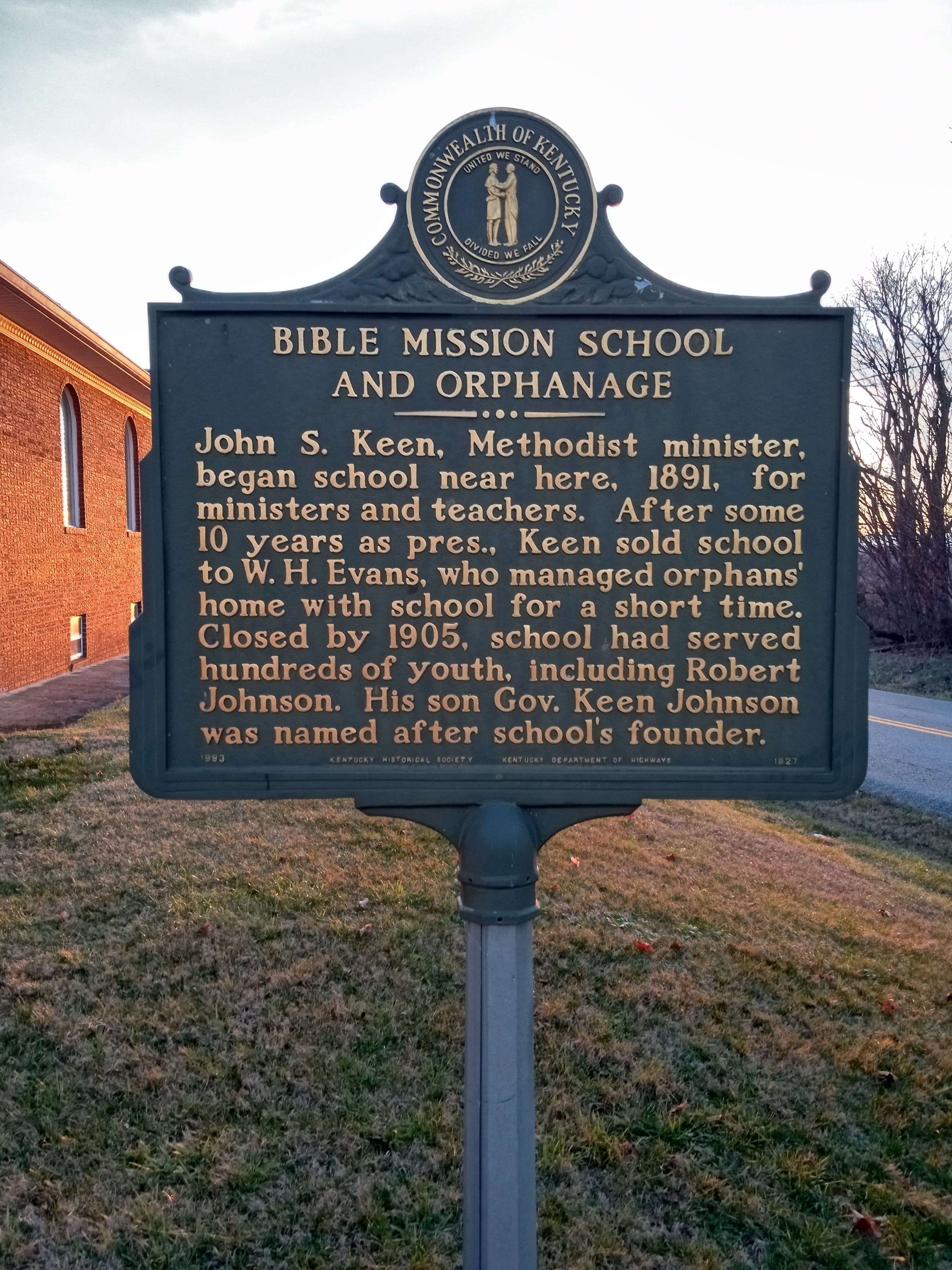
Bible Mission School and Orphanage

In a Kentucky Historical Society article for Explore KY History, author Tim Talbott, my cousin, wrote that Wayne County native John Samson Keen received the call to preach while a young man and by age twenty was riding a large circuit in southcentral Kentucky. A few years later he received the call to start a school and the place was in the Highway community of Clinton County.

John and Hannah Keen's school grew so much that in 1890, they saw the need for a better building and room for more students. Money was raised from all over the country and in 1894 there was a new and better building. From that point on, Bible Mission School grew at an even more rapid pace. Students were coming in from all over the United States. By comparison, according to Kentucky Public Documents, Vol. 4 of the Kentucky General Assembly, during the 1896-97 school year, Albany High School, now in its tenth year, had 154 students and three teachers, while Bible Mission School, in its third year in the new building, had 187 students and nine teachers.

Around 1900, John S. Keen turned the school over to W. H. Evans and became a minister in Texas. By 1904, Evans had also left for Texas after enrollment at Bible Mission School had started to decline, probably for two main reasons: a health epidemic and a new school that had opened in Columbia,

Bible Mission School closed in 1905, but it would later be celebrated because of a few things, including Dr. Alexander B. Mackey, president of Trevecca Nazarene University in Nashville, and Rev. Robert Johnson, whose son, Keen was Kentucky's forty-fifth governor, were students there.

In 1954, Eula Gamblin Mackey, whose husband, William Hunt Mackey, was a relative of Dr. Mackey, wrote in The New Era newspaper that when the U.S. had 45 states and five territories, each state and territory was represented at the school at Highway.

She also wrote that camp meetings were held each spring and fall in two tabernacles that were located on the grounds and that four or five thousand people attended with singing, praying and shouting taking place all over the school grounds. "People prayed through and were sanctified. Highway [community] was a holy place," she said.

Get this...when the Board of Regents met to decide the location for Lindsey Wilson Junior College, Highway lacked one vote getting it. One vote. "At the time," Mackey wrote, "Highway already had the buildings and Columbia had to build them." Go figure.

A marker erected at Highway Cemetery, submitted by John and Mareeda Gibson in 2006, signifies that location as the burial ground of 25 to 30 orphans who died during an epidemic [probably typhoid fever and/or Tuberculosis] at the orphanage at Highway in the late 1890's. It states that eight of the orphans died in one week and that no names have been found.

It is known that Mahala Reed Keenan, a revivalist minister who rode a white donkey side saddle through the hills of Kentucky, singing and preaching as she traveled, moved to Highway in 1896, wanting her sons to be educated there. But, she soon became sick with tuberculosis and needed a healthier place to live and breathe. In 1899, she and her son, Elva, who had the same illness, undertook a wagon journey to Floresville, Texas, but Mahala died shortly after her arrival there. Elva died four months later.

Historical Marker #1927 in the yard at Highway Church of the Nazarene tells about Bible Mission School and Orphanage that operated from 1891 to 1905 just past the church on Groce Gibson Road.

Tim Talbott's article

Saturday, February 4, 2023

Whack, the Barber

My great, great-grandfather, John Alex Craig, born in Albany, Kentucky in 1853, was one of the town's barbers. Appropriately, he was given the nickname, "Whack." If I had been the one to give him that nickname I would have included an exclamation point at the end of it...WHACK! to give it more character, not that he needed it probably.

The barbershop Whack operated from was located inside or near Huff Hotel, which was where Campbell New Funeral Home is today. One of his best customers who came in every day for a shave was a man they called Uncle Jim Vincent, and since he was such a good customer, Whack only charged him 5¢. That went on for years until one day, instead of a nickel, Whack kept a dime out of the coin Uncle Jim had handed him.

"Say," said Uncle Jim, "I thought you agreed to only charge me a nickel for a shave!"

"I did," replied Whack, "but when I told you that I didn't expect you to live forever!"


John Alex Craig died in 1927 and is buried at Peolia Cemetery alongside his wife, Analize Leslie Craig, who was the daughter of Ellison Leslie, a carpenter who put the roof on the new Clinton County Courthouse when it was rebuilt after the original one was burned during the civil war. He was also the brother of Kentucky Governor Preston H. Leslie. John Alex and Analyze had four daughters: Nora Talbott, Lela Smith, Della Means and Jennie Davidson.

In the photo made at Clear Fork Baptist Church, John Alex "Whack" Craig is on the far left. Beside him is Jim Pitman, Mariam Owens, Emmy Looper, Tressa Pitman, Jack Looper and Brooks Ferguson. Behind them is Robert Wood, Grant Dowell and Joe Denton. (A Lighthouse in the Wilderness, Morris Gaskins, 1971)

In Times Like These

Ruth Caye Jones was a pastor’s wife and a mother of five living in Pennsylvania. Late in 1943, the realities of the war were weighing heavil...