Monday, May 27, 2019
"An Unsung Hero in the making of a Legend"
Legendary Green Bay Packers quarterback Bart Starr died Sunday at the age of 85. He had been in failing health since suffering two strokes and a heart attack in 2014. Starr played for the Packers from 1956 to 1971 and won five NFL championships. He was the most valuable player in the first two Super Bowls.
Before playing in the first one on Jan. 15, 1967, the Packers first had to get by a tough Dallas Cowboys team in the NFC Championship on Dec. 31, 1967. When I think of Bart Start, this is what I think of:
The now legendary 1967 NFC Championship, dubbed the “Ice Bowl,” was known not only for the artic conditions (-41 degree wind chill factor) but for the final play by the Packers. It was the 4th quarter, the Cowboys were leading 17-14 with just 16 seconds left in the game and the Packers were at the one yard line. Starr, the quarterback, asked offensive lineman Jerry Kramer if he could make a hole in the line for him to get through for the touchdown. Kramer answered yes. The ball was snapped and true to his word, Kramer, the right guard, blocked for Starr, who crossed over into the end zone as the photo shows for the game winning touch down. The crowd went wild. Pandemonium followed as both fans and players swarmed the field. Starr was lifted high into the air as the crowd chanted STARR! STARR! STARR! over and over.
After he made the successful block, Kramer wound up face down on the icy field. As he picked himself up, he stared down the field at the sight of the famous Starr being in exalted for making the touchdown. Although happy his team had won, Kramer felt dejected, overlooked for his great contribution to his teams victory. Sure, Starr had ran in the touchdown, but if not for Kramer, the quarterback would have never been able to make it. And then, Jerry’s eyes turned away from the celebration and they found his head coach, Vince Lombardi, who was still standing on the same sideline where his team had stood during the game. Lombardi was standing still, his eyes steadfastly staring straight at Kramer. The second their eyes met, Lombardi extended out his arm and gave Kramer a thumb’s up. At that moment the lineman knew that, even though his role in the victory had gone unnoticed by the crowd, his head coach knew the truth, and that made everything okay.
Incidently, prior to Kramer's 2018 induction into the Pro Football Hall of Fame, the selection committee received a letter of recommendation on behalf of Bart Starr from his wife, Cherry. It said, in part, “Bart has always believed Jerry was the total package for a quality football player.”
As for Starr, he was a four-time Pro Bowl selection and two-time All-Pro. He won NFL titles in 1961, ’62, ’65, ‘67 and ’68. He was the 1966 NFL MVP and was named to the 1960s All-Decade team.
Yesterday, ESPN wrote that Bart Start was the toughest football player who ever lived. Jerry Kramer may have been invisible on that day, Dec. 31, 1967, but he sure was invaluable.
The photo here shows Starr, #15, lying face down in the end zone, while Kramer, #64, is lying almost face down before him.
Wednesday, May 15, 2019
Tim Conway's Tale of Childhood Faith and Answered Prayer
2007
by Tim Conway
Five dimes were burning a hole in my pocket—the ones I'd saved just for this day. The carnival was in town! Part of the annual Blossom Festival in my hometown of Chagrin Falls, Ohio: brass bands marched down Main Street, the town's ladies competed for the best jams and pies and the fruit trees dripped pink and white blossoms on the sidewalk. But, for me the best part was the carnival.
Saturday morning I wrapped my fingers around those coins and made my way to the carnival. "Step right up, young man, step right up," came the call from the booths. "Take a chance and win the prize of your life!"
There were giant teddy bears and rockets that a 12-year-old kid like me could shoot off in the backyard. Plastic jewelry sparkled in gimcrack treasure chests. But I wasn't going to waste my hard-earned money on just anything. It had to be the perfect thing.
Why pitch a Ping-Pong ball into a pot of goldfish or swing a hammer in a test for "The World's Strongest Man" if you didn't really want the prize?
I lingered for a moment at the merry-go-round, watching the horses go round and round to the calliope's song. They seemed a poor match for the real horses my dad took care of, and I would rather ride the real thing.
I bought a Coke in a bottle and sipped it, walking around the fairgrounds. One dime down. Then I spotted the Ferris wheel, circling above the fair. Ten cents a ride. I ponied up my second dime and hopped on.
Slowly I rose above the cotton candy and popcorn booths, above the sounds of the barkers shouting, above the trees until I could see the whole town. There was the school I attended and the fishing hole my buddies and I raced to after school.
I could see the ballpark, the movie theater on Main Street and our church, the center of our world.
Both Mom and Dad had immigrated here from the Old Country. Dad had worked with horses back in Ireland and got a job on a horse farm. And Mom was a seamstress who could sew anything; Dad's shirts, my Halloween costumes, her own dresses. She came here from Romania when she was only 16 years old and quickly found work.
I was their only kid and I always felt I was a real blessing to them. But when we prayed together on Sunday mornings their faith seemed so much greater. Kneeling next to them, I felt like I was waiting to hear God speak.
The Ferris wheel brought me plummeting back down to the ground and I hurried away, fingering the three dimes left in my pocket. That's when I spotted it: a white plastic crucifix that glowed in the dark with an emerald-green ribbon around it.
It was attached to one of 60 plastic ducklings bobbing up and down in a pool of water. A hose at the bottom of the pool made the ducks swim and spin. That crucifix was meant to be mine. I'd never been so sure of anything in my life.
"Step right up, son," the barker called to me. "For just ten cents that beauty could be all yours. All you have to do is pick it up with a hook. I'll bet you can catch anything when you fish."
Sure can, I thought. I handed over my dime and the man handed me a wooden pole. I lowered the hook toward the crucifix, slowly, carefully, but just as I yanked it the plastic duck scurried away. "Try again," said the barker, holding out his hand for another dime. This time it'll work.
I acted like I was fishing down by the river, casting my hook toward a trout. The duck with the crucifix came just in reach. I jerked up the line. Nothing. "Third time's a charm," said the man. I handed him my last dime and lowered the hook ever so gently to the crucifix...and pulled. Nothing.
The barker turned away. "Step right up," he called. It was so unfair! All my dimes were gone. Why was I so sure that crucifix was meant for me? Why was I certain I could win it?
I started to walk away, head down. My day at the carnival was over. Then I spotted something on the ground. One shiny dime, glinting in the bright sun. I picked it up and squeezed it between my fingers—and headed back to the game.
For some reason, I turned around. To this day, I can't tell you why. I left the fairground and stopped at a giant old maple tree. Leaning against the trunk, I closed my eyes and started praying, praying harder than I'd ever prayed before.
Lord, I said, if you're listening, I would really like that cross. The one that glows in the dark with the emerald ribbon.
I stayed there for a long time, just waiting. I could hear shouts at the carnival and the sound of the calliope. But slowly it all faded away and I was left with only my desire for the cross. What did it mean? It was just a piece of plastic that glowed in the dark, after all.
No, but it was more. It represented the faith I'd been yearning for, the deep and living faith that my parents had. I wanted it too and, somehow, in my 12-year-old heart, that plastic crucifix had come to symbolize it.
Standing against that old maple tree I knew that faith was already there for me to have, if I could just reach for it. Lord, I really want that crucifix. But even if it's not meant to be, I want you in my life every day.
I hurried back to the fairground, and right back to that booth. The barker looked at me, raised an eyebrow and stretched out his palm. I slapped the dime in it, and he handed me the fishing pole, eyeing me with bemusement.
Many of the other prizes had disappeared, but the crucifix was still there. I dipped the pole in the water, felt it catch against the emerald ribbon, then I raised the hook. The crucifix dangled from the other end. It was mine.
That little cross stayed with me for a lifetime. It was with me when I left home and went off to college. It was with me when I decided I wanted to act, and got my break on the Steve Allen Show and then on McHale's Navy.
It was with me through my wonderful years on The Carol Burnett Show, too. I still have it, and I hold on to it when I pray for people who are ill, for my children and grandchildren.
All these years later, miles from Chagrin Falls, that little carnival cross still helps me feel connected to God.
Friday, April 26, 2019
Remembering John Havlicek
I stopped caring so much about NBA basketball when Magic Johnson retired from the game for the third and final time in 1996. From a personal hero standpoint, I had no one else to root for. Larry Bird had already retired and so had Issel and Gilmore.
Growing up in the late sixties and all through the seventies it was routine for my family to attend church on Sunday morning. After lunch, our attention turned to the television set where there was almost always a Celtics game on, and that's where I became a big fan of Hondo. John Havlicek. Number 17.
Havlicek died Thursday night, April 25, 2019 at the age of 79. He had been suffering from Parkinson’s Disease.
It's funny because I always thought Havlicek looked more like a lumberjack then he did a basketball player. At 6'5 he was a small forward who sometimes played the shooting guard position, but he never slowed down. He never stopped running. His relentless hustle is what attracted me to his style of play.
Havlicek played 16 seasons in the NBA, all of them with the Celtics. He was one of the central figures in the Celtics’ rise to prominence and was considered a mainstay on eight championship teams (1963-1966; 1968, 1969, 1974 and 1976). Havlicek averaged 20.8 points, 6.3 rebounds, 4.8 assists and 1.2 steals over his career. He is the Celtics all-time leader in points scored and games played, ranks second in assists and fifth in rebounds. In addition, he made 13 All-Star teams and was an 11-time All-NBA selection before entering the Basketball Hall of Fame in 1984. The NBA named him to its list of the 50 greatest players to play in the league. His No. 17 is forever enshrined in the Garden rafters.
"HAVLICEK STOLE THE BALL"
Havlicek was involved in one of the NBA's most iconic plays of all time on April 15, 1965, during the Eastern Conference final playoff series between the Celtics and the Philadelphia 76ers. The Celtics were clinging to a 110-109 lead with five seconds remaining when Bill Russell’s inbounds pass from under the 76ers’ basket hit a guide wire overhead, giving the 76ers the ball and a chance to win the series. Guarding Chet Walker in the area near the free-throw line, Havlicek began silently counting off the five allotted seconds that 76ers had to inbound the ball. At the count of four, he peeked back to see that the ball had just been tossed in his direction. Havlicek reached and tipped the pass to teammate Sam Jones, who then dribbled out the clock to secure the victory for Boston, setting off pandemonium in Boston Garden. The play was immortalized by Celtics’ radio broadcaster Johnny Most, whose call “Havlicek stole the ball!” became enshrined in every highlight reel of the Celtics’ glorious history.
The Celtics issued a statement following his passing. It read, “(Halicek's) defining traits as a player were his relentless hustle and wholehearted commitment to team over self...he was a champion in every sense."
The basketball star was described by the team in a statement as "one of the most accomplished players in Boston Celtics history, and the face of many of the franchise's signature moments."
So long Hondo, thanks for the memories!
Tuesday, January 1, 2019
Parcel Post Began on Jan. 1, 1913
By law, the Post Office Department could not carry parcels weighing more than four pounds at the beginning of the 20th century. Private express companies, which had begun to flourish in the mid-1800s, delivered large packages. The establishment of rural free delivery had provided a heady taste of life for rural Americans. Soon the demand increased for the delivery of packages containing food, dry goods, drugs, and other commodities not easily available to farmers. Though express companies and country merchants fought long and hard against it, rural residents, who represented 54 percent of the country’s population in 1910, were equally emphatic in wanting Parcel Post.
The Act of August 24, 1912 authorized Parcel Post and it officially began on January 1, 1913. It was an instant success, with 300 million parcels mailed in the first six months the service was offered. The effect on the national economy was electric. Marketing and merchandising through Parcel Post spurred the growth of the great mail-order houses. Montgomery Ward, the first mail-order company, started with a catalog of more than 100 products in 1872. Sears, Roebuck and Company followed Montgomery Ward in 1893. The year Parcel Post began, Sears handled five times as many orders as it did the year before. Five years later, Sears doubled its revenues.
(from usps.com)
Tuesday, December 18, 2018
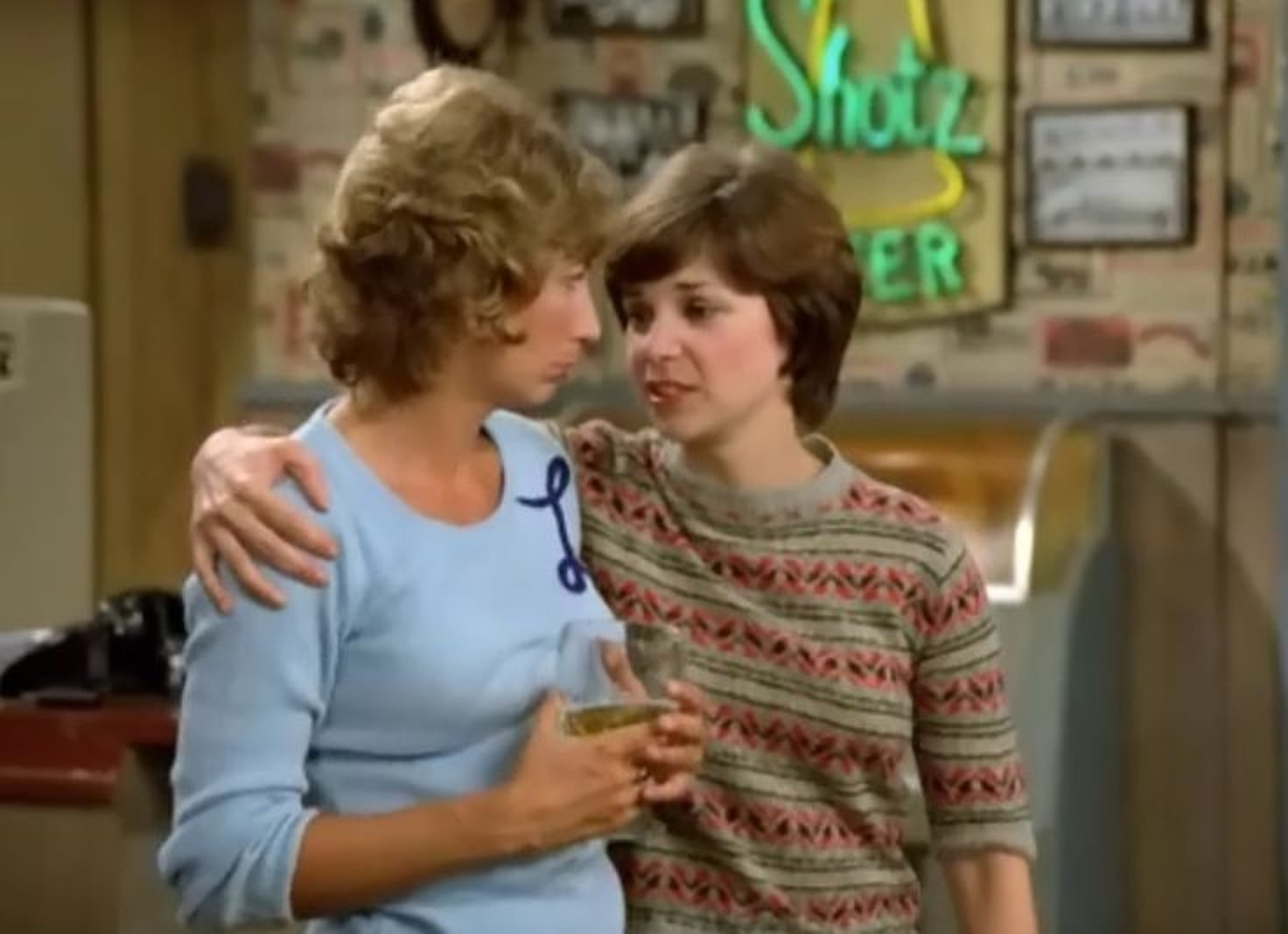
"My Friend" by Laverne DeFazio
"My Friend"
by Laverne DeFazio
My best friend is Shirley Feeney
The best in all the land
Whenever we're in trouble
We face it hand in hand
We laugh when we are happy
We cry when we are sad
We talk when we are lonely
Just to know her makes me glad
If I had one wish in life
I know what it would be
I'd have Shirl as my best friend
For all eternity
("Laverne & Shirley," season 5, episode 16 - "The Beatnik Show")
R.I.P. Penny Marshall
(Oct. 15, 1943 – Dec. 17, 2018)
For the record, Laverne & Shirley became the most-watched American television program by its third season, and was nominated for two Golden Globe Awards and a Primetime Emmy Award in 1979.
by Laverne DeFazio
My best friend is Shirley Feeney
The best in all the land
Whenever we're in trouble
We face it hand in hand
We laugh when we are happy
We cry when we are sad
We talk when we are lonely
Just to know her makes me glad
If I had one wish in life
I know what it would be
I'd have Shirl as my best friend
For all eternity
("Laverne & Shirley," season 5, episode 16 - "The Beatnik Show")
R.I.P. Penny Marshall
(Oct. 15, 1943 – Dec. 17, 2018)
For the record, Laverne & Shirley became the most-watched American television program by its third season, and was nominated for two Golden Globe Awards and a Primetime Emmy Award in 1979.
Labels:
ABC,
Carmine Ragusa,
CBS,
Cindy Williams,
David Lander,
DeFazio,
Eddie Mekka,
Feeney,
Garry Marshall,
Happy Days,
Laverne,
Lenny,
Michael McKean,
Milwaukee,
Paramount,
Shirley,
Sitcom,
Squiggy,
TV,
Wisconsin
Thursday, December 13, 2018
"Saviour, Like a Shepherd Lead Us"
It was Christmas Eve 1876 and Ira D. Sankey, the famous singer and songwriter, was traveling on a steamboat up the Delaware River. Travelers on such a holiday, seemingly cut adrift in a world where everyone else is celebrating with loved ones, often seem to cling together making a circle of warmth in a waiting room, in a plane or in an almost deserted restaurant.
This was such a journey. On the deck were gathered a number of passengers, looking out at the calm, starlit night. Someone said, "Mr. Sankey is aboard!" and immediately there were cries of "Let him sing for us! Let's ask Mr. Sankey to sing!"
He was leaning against one of the great funnels of the boat. Before he began, he stood for a moment as if in prayer, deciding what to sing. He wanted to sing a Christmas song, but somehow the words of the shepherd song were what came to his heart.
"Saviour, like a shepherd lead us
Much we need Thy tender care
In Thy pleasant pastures feed us
For our use Thy folds prepare"
"Blessed Jesus, blessed Jesus
Thou hast bought us, Thine we are
Blessed Jesus, blessed Jesus
Thou hast bought us, Thine we are"
There was a deep stillness throughout the crowd. The words, telling the sweet story of God's love for wandering men, and the beautiful melody floated out across the deck, across the water and into the night. Every heart was stirred.
At the end of the song, a rough-looking man stepped forward. To Sankey, he asked, "Did you ever serve in the Union Army?" "Yes," answered Sankey. "Can you remember if you were doing picket duty on a bright moonlight night in 1862?" "Yes, I do," answered Sankey, with surprise. "Were you...?"
"I did, too, but I was serving in the Confederate Army. When I saw you standing at your post, I said to myself, 'that fellow will never get away from here alive.' I was in the shadow, completely hidden, while you walked in full moonlight."
"I raised my rifle and took aim. At that instant, you began to sing, just like a moment ago. The song was 'Saviour, like a shepherd lead us...'
"The music touched my heart and I took my finger off the trigger. 'I'll wait until the end of the song,' I said to myself. 'I can't miss him, and I can shoot him afterwards.'
"We are Thine, Thou dost befriend us
Be the Guardian of our way
Keep Thy flock, from sin defend us
Seek us when we go astray"
"Blessed Jesus, blessed Jesus
Hear, O hear us when we pray
Blessed Jesus, blessed Jesus
Hear, O hear us when we pray"
"As you sang, you reached the place where it says," 'We are thine, do thou befriend us, be the guardian of our way...'
"I could hear every word perfectly, and how the memories came to my heart! I began to think of my childhood and my mother. She loved God and had sung that song to me many times. But she died all too soon, otherwise I think my life might have been different.
"At the end of the song, I found it impossible for me to take aim, though you still stood in the bright moonlight, a perfect target."
"Then I thought of the Lord. I looked at you and thought, 'the Lord who was able to save that man from certain death must surely be great and mighty.' My arm dropped to my side and I cannot tell you all the things I thought at that time. My heart was smitten, but I didn't know what to do.
"Just now, when you were about to sing and stood quietly as if praying, I recognized you. I've wandered far and wide, since that other occasion. I have never found that Shepherd. Please help me now find a cure for my sick soul."
Deeply moved, Sankey threw his arms about the man who had been his enemy. A man who could have ended his life. That Christmas Eve night, a former soldier found the great and tender Shepherd as his Saviour.
"Early let us seek Thy favor
Early let us do Thy will
Blessed Lord and only Saviour
With Thy love our bosoms fill"
"Blessed Jesus, blessed Jesus
Thou hast loved us, love us still
Blessed Jesus, blessed Jesus
Thou hast loved us, love us still"
Saturday, December 1, 2018
George W. Burchette: Guard of Honor
In the Manuscripts & Folklife Archives section of the Department of Library Special Collections at Western Kentucky University in Bowling Green, Kentucky is a letter addressed to George W. Burchette, a civil war soldier born in Clinton County, Kentucky, who was in the service of one our nation's greatest presidents and recognized by another.
George Washington Burchette was born on August 27, 1843 to John Calvin Burchette and Polly Branham. He was the grandson of Icil Burchett. On September 29, 1861, soon after the Civil War began, George enlisted in the Union Army's 12th Kentucky Cavalry, where he became a 1st Sergeant. He served until July 24, 1865. Although he fought in battles at Mill Springs, Fort Henry, Perryville and elsewhere, it is what he did at the war's end that he became known for.
The story begins just after the assassination of President Abraham Lincoln, which occured on April 14, 1865, less than a week after the Civil War ended. A funeral train, known as The Lincoln Special, was set up to transport the president's remains from Washington D.C. to his hometown of Springfield, Illinois, where he was to be buried. There were no television cameras or radio broadcasts in those days, only newspaper and telegraph. The Lincoln Special brought the slain president to the people. It allowed the nation to mourn together in a way that neither telegraph nor newspapers could do.
The train left Washington, D.C. on April 21 and traveled 1,654 miles through Washington, Maryland, Pennsylvania, New York, Ohio, Indiana and Illinois, never exceeding 20 mph, to the final stop at Springfield, arriving there on May 3. Following his assassination on April 14th, over the course of 20 days, the president's coffin made 14 stops between Washington DC. and Springfield, Illinois, retracing the route Lincoln had traveled to Washington as the president-elect on his way to his first inauguration, more than four years earlier. Millions of Americans came to view the train along the route and to participate in ceremonies and processions that were held at each stop. The normal routine of everyday living stopped; work, stores, businesses, schools...everything came to a standstill. At each train depot,.and along the streets, tens of thousands of people came and stood in silence, waiting patiently for the Great Emancipator. Most wept.
The Lincoln Special sojourned from Washington, D.C. through Baltimore Maryland, Harrisburg and Philadelphia Pennsylvania, New York City, Albany and Buffalo New York, Cleveland and Columbus Ohio, Indianapolis and Michigan City Indiana, and finally to Chicago, where George Washington Burchette had been chosen as one of 24 men who would serve as funeral guards (Guard of Honor) and for Lincoln's body as it was taken from the train depot to Cook County Courthouse to lie in state.
When the funeral train arrived at Chicago's Park Place, a signal gun was fired, and the tolling of the bell on the courthouse announced the news to the citizens, but there were already thousands and thousands of people congregated in the vicinity of the funeral arch. The vast multitude stood in profound silence and reverently uncovered their heads as the coffin was borne to the dais beneath the grand arch, while the great Western Light Guard Band performed the "Lincoln Requiem," composed for the occasion. Thirty-six young lady pupils of the high school, dressed in white and banded with crape, then walked around the bier and each deposited an immortelle on the coffin as she passed. The coffin was then placed in the hearse, prepared expressly for the occasion, and the funeral cortege passed out of the Park Place into Michigan avenue, and fell into procession.”
“He comes back to us, his work finished, the republic vindicated, its enemies overthrown and suing for peace,” editorialized the Chicago Tribune. “He left us, asking that the payers of the people might be offered to Almighty God for wisdom and help to see the right path and pursue it. Those prayers were answered. He accomplished his work, and now the prayers of the people ascend for help, to bear the great affliction which has fallen upon them. Slain as no other man has been slain, cut down while interposing his great charity and mercy between the wrath of the people and guilty traitors, the people of Chicago tenderly receive the sacred ashes, with bowed heads and streaming eyes.”
John Carroll Power, an historian who served as the first custodian of the tomb of Abraham Lincoln, described the funeral procession: “It was a wilderness of banners and flags, with their mottoes and inscriptions. The estimated number of persons in line was 37,000 and there were three times as many more who witnessed the procession by crowding into the streets bordering on the line of march, making about one hundred and fifty thousand who were on the streets of Chicago that day, to add their tribute of respect to the memory of Abraham Lincoln.”
The viewing itself at the courthouse lasted for 28 hours, ending on May 2 at 8 P.M.. Power wrote: “The coffin was then closed and carried to the hearaw. The Light Guard Band performed a requiem as the remains were being transferred. An immense procession, bearing about three thousand torches, was already in line, to escort the remains to the depot. At a quarter before nine o’clock, it moved to the time of numerous bands of music. While the preparations for starting were in progress, the choir continued to sing funeral dirges, and twenty-five Sergeants of the Veteran Reserve Corps stood around the funeral car with draw swords. At half-past nine o’clock, the funeral cortege moved slowly out of the depot to the strains of a funeral march by the band, while the bells of the city tolled a solemn farewell to all that was mortal of Abraham Lincoln.”
U.S. Sanitary Commission activist Mary A. Livermore recalled: “There was none of the hum of business; none of the rush and whirl and hot haste that characterize Chicago, – but closed stores, silent streets, and sadness resting on all faces. Flags bound with crape floated mournfully at half-mast. Black draperies shrouded the buildings. All talk was low and brief. Many wept as they walked, and on the breast or arm of all were mourning badges. All nationalities, creeds, and sects were ranged along the route to be taken by the funeral cortége, or stood amid the solemn pageantry and funeral splendor of the great procession.”
The train left Chicago to the sound to tolling bells. As it crossed through Illinois towards Lincoln’s home town, it passed large bonfires, large crowds and banners that read, “Come Home" and “Go To Thy Rest.” At Springfield, the coffin was loaded into an elaborate hearse pulled by six black horses in feathers and mourning blankets and bearing a silver plaque engraved with “A. L.” and taken to the state house. There, in the Hall of Representatives, where Lincoln gave his famous “House Divided” speech, approximately 75,000 people filed silently by the coffin as a band played hymns sung by a choir of 30 vocalists. The next morning, Abraham Lincoln was laid to rest at Oak Ridge Cemetery.
George Washington Burchette was 22 years old when President Lincoln was assassinated. Being a member of the funeral guard brought him much notoriety back home in Cumberland and Clinton counties in Kentucky. After the war, he was appointed to oversee a group of 40 men who assisted the sheriff's of both counties in getting rid of bushwackers. He went on to become one of the Burkesville community's outstanding citizens and was elected state senator of Clinton and Cumberland counties.
When he died in 1935, just four months shy of his 92nd birthday, Burchette was Cumberland County's last surviving Union soldier and the last surviving member of the 24 men who had been chosen as guards for President Lincoln's while it as in Chicago and subsequent trip to Springfield. A few weeks before his death, Burchette received a letter from President Franklin D. Roosevelt. In the letter, dated March 8, 1935, the president wrote "My dear Mr. Burchette, I am informed that you were a member of the funeral guard of Abraham Lincoln in Chicago and I am glad to send you this note to extend to you my personal greetings and my best wishes for your welfare. Very sincerely yours, President Franklin D. Roosevelt."
George Washington Burchette died at noon on April 18, 1935, one month and 10 days after receiving that letter. A funeral was held the following day at his residence and he was buried at Burkesville Cemetery. After his death, the letter was placed in the Department of Library Special Collections at WKU, where it can be seen today.
Burchette's grandfather, Icil Burchett, was killed by civil war guerrillas at his home in Clinton County. His great-grandfather, John Burchett, was a revolutionary war soldier in Virginia.
The photocopy of the letter from President Franklin D. Roosevelt to George Burchette is courtesy of Library Special Collections, WKU.
George Washington Burchette was born on August 27, 1843 to John Calvin Burchette and Polly Branham. He was the grandson of Icil Burchett. On September 29, 1861, soon after the Civil War began, George enlisted in the Union Army's 12th Kentucky Cavalry, where he became a 1st Sergeant. He served until July 24, 1865. Although he fought in battles at Mill Springs, Fort Henry, Perryville and elsewhere, it is what he did at the war's end that he became known for.
The story begins just after the assassination of President Abraham Lincoln, which occured on April 14, 1865, less than a week after the Civil War ended. A funeral train, known as The Lincoln Special, was set up to transport the president's remains from Washington D.C. to his hometown of Springfield, Illinois, where he was to be buried. There were no television cameras or radio broadcasts in those days, only newspaper and telegraph. The Lincoln Special brought the slain president to the people. It allowed the nation to mourn together in a way that neither telegraph nor newspapers could do.
The train left Washington, D.C. on April 21 and traveled 1,654 miles through Washington, Maryland, Pennsylvania, New York, Ohio, Indiana and Illinois, never exceeding 20 mph, to the final stop at Springfield, arriving there on May 3. Following his assassination on April 14th, over the course of 20 days, the president's coffin made 14 stops between Washington DC. and Springfield, Illinois, retracing the route Lincoln had traveled to Washington as the president-elect on his way to his first inauguration, more than four years earlier. Millions of Americans came to view the train along the route and to participate in ceremonies and processions that were held at each stop. The normal routine of everyday living stopped; work, stores, businesses, schools...everything came to a standstill. At each train depot,.and along the streets, tens of thousands of people came and stood in silence, waiting patiently for the Great Emancipator. Most wept.
The Lincoln Special sojourned from Washington, D.C. through Baltimore Maryland, Harrisburg and Philadelphia Pennsylvania, New York City, Albany and Buffalo New York, Cleveland and Columbus Ohio, Indianapolis and Michigan City Indiana, and finally to Chicago, where George Washington Burchette had been chosen as one of 24 men who would serve as funeral guards (Guard of Honor) and for Lincoln's body as it was taken from the train depot to Cook County Courthouse to lie in state.
When the funeral train arrived at Chicago's Park Place, a signal gun was fired, and the tolling of the bell on the courthouse announced the news to the citizens, but there were already thousands and thousands of people congregated in the vicinity of the funeral arch. The vast multitude stood in profound silence and reverently uncovered their heads as the coffin was borne to the dais beneath the grand arch, while the great Western Light Guard Band performed the "Lincoln Requiem," composed for the occasion. Thirty-six young lady pupils of the high school, dressed in white and banded with crape, then walked around the bier and each deposited an immortelle on the coffin as she passed. The coffin was then placed in the hearse, prepared expressly for the occasion, and the funeral cortege passed out of the Park Place into Michigan avenue, and fell into procession.”
“He comes back to us, his work finished, the republic vindicated, its enemies overthrown and suing for peace,” editorialized the Chicago Tribune. “He left us, asking that the payers of the people might be offered to Almighty God for wisdom and help to see the right path and pursue it. Those prayers were answered. He accomplished his work, and now the prayers of the people ascend for help, to bear the great affliction which has fallen upon them. Slain as no other man has been slain, cut down while interposing his great charity and mercy between the wrath of the people and guilty traitors, the people of Chicago tenderly receive the sacred ashes, with bowed heads and streaming eyes.”
John Carroll Power, an historian who served as the first custodian of the tomb of Abraham Lincoln, described the funeral procession: “It was a wilderness of banners and flags, with their mottoes and inscriptions. The estimated number of persons in line was 37,000 and there were three times as many more who witnessed the procession by crowding into the streets bordering on the line of march, making about one hundred and fifty thousand who were on the streets of Chicago that day, to add their tribute of respect to the memory of Abraham Lincoln.”
The viewing itself at the courthouse lasted for 28 hours, ending on May 2 at 8 P.M.. Power wrote: “The coffin was then closed and carried to the hearaw. The Light Guard Band performed a requiem as the remains were being transferred. An immense procession, bearing about three thousand torches, was already in line, to escort the remains to the depot. At a quarter before nine o’clock, it moved to the time of numerous bands of music. While the preparations for starting were in progress, the choir continued to sing funeral dirges, and twenty-five Sergeants of the Veteran Reserve Corps stood around the funeral car with draw swords. At half-past nine o’clock, the funeral cortege moved slowly out of the depot to the strains of a funeral march by the band, while the bells of the city tolled a solemn farewell to all that was mortal of Abraham Lincoln.”
U.S. Sanitary Commission activist Mary A. Livermore recalled: “There was none of the hum of business; none of the rush and whirl and hot haste that characterize Chicago, – but closed stores, silent streets, and sadness resting on all faces. Flags bound with crape floated mournfully at half-mast. Black draperies shrouded the buildings. All talk was low and brief. Many wept as they walked, and on the breast or arm of all were mourning badges. All nationalities, creeds, and sects were ranged along the route to be taken by the funeral cortége, or stood amid the solemn pageantry and funeral splendor of the great procession.”
The train left Chicago to the sound to tolling bells. As it crossed through Illinois towards Lincoln’s home town, it passed large bonfires, large crowds and banners that read, “Come Home" and “Go To Thy Rest.” At Springfield, the coffin was loaded into an elaborate hearse pulled by six black horses in feathers and mourning blankets and bearing a silver plaque engraved with “A. L.” and taken to the state house. There, in the Hall of Representatives, where Lincoln gave his famous “House Divided” speech, approximately 75,000 people filed silently by the coffin as a band played hymns sung by a choir of 30 vocalists. The next morning, Abraham Lincoln was laid to rest at Oak Ridge Cemetery.
George Washington Burchette was 22 years old when President Lincoln was assassinated. Being a member of the funeral guard brought him much notoriety back home in Cumberland and Clinton counties in Kentucky. After the war, he was appointed to oversee a group of 40 men who assisted the sheriff's of both counties in getting rid of bushwackers. He went on to become one of the Burkesville community's outstanding citizens and was elected state senator of Clinton and Cumberland counties.
When he died in 1935, just four months shy of his 92nd birthday, Burchette was Cumberland County's last surviving Union soldier and the last surviving member of the 24 men who had been chosen as guards for President Lincoln's while it as in Chicago and subsequent trip to Springfield. A few weeks before his death, Burchette received a letter from President Franklin D. Roosevelt. In the letter, dated March 8, 1935, the president wrote "My dear Mr. Burchette, I am informed that you were a member of the funeral guard of Abraham Lincoln in Chicago and I am glad to send you this note to extend to you my personal greetings and my best wishes for your welfare. Very sincerely yours, President Franklin D. Roosevelt."
George Washington Burchette died at noon on April 18, 1935, one month and 10 days after receiving that letter. A funeral was held the following day at his residence and he was buried at Burkesville Cemetery. After his death, the letter was placed in the Department of Library Special Collections at WKU, where it can be seen today.
Burchette's grandfather, Icil Burchett, was killed by civil war guerrillas at his home in Clinton County. His great-grandfather, John Burchett, was a revolutionary war soldier in Virginia.
The photocopy of the letter from President Franklin D. Roosevelt to George Burchette is courtesy of Library Special Collections, WKU.
Friday, November 16, 2018
Catching Up With a Hero
A member of a retired United States Marine Corps was in Albany, Kentucky today and while here, presented a copy of the book, "Korea Reborn: A Grateful Nation Honors War Veterans For More Than 60 Years of Growth," to James E. Morrison, who was a Master Sargeant, a non-commissioned officer with Co. C, 23rd Infantry 2nd Division. Morrison demonstrated exceptional valor when he distinguished himself by leading his troops in an attack on Heartbreak Ridge on Sept. 2, 1951. For weeks, his platoon had been completely surrounded by North Korean troops. Before being rescued by a Calvary Division, his Silver Star citation says he continuously exposed himself to enemy fire to direct his troops. At one point, he did not hesitate to carry one his wounded officers back to the first aid station, even though he himself was wounded by a grenade during the evacuation of that officer. Refusing to be evacuated himself, Master Sargeant Morrison continued leading his platoon during violent enemy fire until they were in consolidated positions on the seized objective. During this action, he was also given the French Croix de Guerre by the United Nations French Ground Forces. The book, presented by the KIA Motor Company, is dedicated to U.S. Veterans of the Korean War and their families, thanking them for their service.
Labels:
23rd Infantry,
2nd Division. Valor,
Book,
Co. C,
Croix de Guerre,
First. Aid,
Grenade,
Heartbreak,
Korea,
Platoon,
Ridge,
Sargeant,
Silver,
South,
Star,
United Nations. Veterans,
United States,
War
"Roy Clark, Thanks For Coming"
I don't know whose idea it was to form the Hee Haw Gospel Quartet, but boy was it a good one. Formed In the late 1970s, the quartet consisted of Roy Clark, Buck Owens, Grandpa Jones and Kenny Price. They would gather around a microphone and sing a gospel hymn at the end of the show's last segment. Several of the quartet's performances were released as recordings. We had two albums at WANY and we played them a lot. When Elmer Goodman died Sid Scott told me he had regretted not taking him into a recording studio with The Singjng DJ's and recording a gospel album in Hee Haw Quartet fashion. That would have been awesome.
Yesterday when I first heard that Roy Clark, a Grammy-winning country music singer-guitarist, had died of pneumonia complications at the age of 85, I immediately thought of the Hee Haw Gospel Quartet.
Clark was born on April 15, 1933 in Meherrin, VA, but his family moved to Washington, D.C. when he was a kid. His father played in a square dance band and took him to free concerts by the National Symphony and by military bands. “I was subjected to different kinds of music before I ever played,” Clark once said. “Dad said, ‘Never turn your ear off to music until your heart hears it — because then you might hear something you like.”
Roy started playing the guitar when he was 14 years old. In the early days of his career, he performed with banjo player David “Stringbean" Akeman. He said, "We would play drive-in theaters, standing on top of the concession stand. If the people liked it, they'd honk their horns."
Roy began making records in 1954. It didn't take long for people to sit up and take notice of his guitar playing. In the mid 1950s, he honed his television chops as a regular on Country Style, the D.C.-based television show hosted by Jimmy Dean, eventually taking over as host after Dean relocated to New York
. His big break came in 1960, when he was invited to Las Vegas to open for Wanda Jackson. After her band broke up, Clark hired her manager, who secured him appearances on The Tonight Show and Beverly Hillbillies. Clark was guest host on “The Tonight Show” several times in the 1960s and 1970s, a rarity for a country performer at that time. Yankee's baseball great Mickey Mantle was moved to tears when he heard Roy sing “Yesterday When I Was Young” and for years made Clark promise to sing it at his memorial, a request granted when Mantle died in 1995.
His first hit single came in 1963 with his recording of the Bill Anderson song, "Tips of my Fingers." He scored a huge hit in 1969 with one of his most beloved recordings, "Yesterday When I Was Young." He followed that up in 1970 with, "Thank God and Greyhound She's Gone." His 1973 hit "Come Live With Me," went to #1. His recording of "Alabama Jubilee" won him a Grammy Award in 1982. He was also known for his instrumental versions of “Malaguena,” on 12-string guitar, and “Ghost Riders in the Sky.”
As if his pickin' the banjo or the guitar wasnt enough, Roy's sense of humor captured the hearts of his fans. In a 1966 appearance on the TV show, Swingin’ Country, the host, Rusty Draper, asked him, “About how long have you been performing?“ Without skipping a beat, Clark said, “About three months.”
The music-comedy TV show, Hee Haw, greatly impacted a whole generation of people, thanks largely to one of Kornfield Kounty's most popular residents, the show's co-host, Roy Clark. CBS launched Hee Haw in summer 1969 as country music’s answer to Rowan and Martin’s Laugh-In. Each episode was filled with country music stars and down-home comedy skits. It lasted three seasons on the network before moving to syndication, where it aired for 22 more years.
Hee Haw was theme-based on rural culture, although it was not limited to a rural audience. It was successful in all of the major markets, including New York, Los Angeles, Boston, and Chicago.
The show provided a lot of laughs, and plenty of country music. Buck and Roy hosted the show through most of its run for most of its run. Their dialogue at the beginning of each show became one of most popular quotes ever: "I'm a-pickin' (Buck Owens)and I'm a-grinnin' (Roy Clark.
My favorite Roy Clark skit was set in a barber shop with Archie Campbell, a barber, cutting Roy's hair as he told one if his stories, like the one about Rindercella, her mugly other, two sad bisters and a very prandsom hince, or how about the "Oh that's good, no that's bad" gag? There was also the one where Roy would raise up from behind the counter to exclaim "Empty Arms Hotel!" Clark said Hee Haw capped off his career. “This was the icing on the cake," he said. This put my face and name together.” Another favorite of mine was the lamentful song "Gloom, Despair and Agony on Me," featuring Roy Clark, Buck Owens, Gordie Tapp and Archie Campbell.
Roy Clark was member of the Country Music Hall of Fame and Grand Ole Opry and has a star on the Hollywood Walk of Fame. He also won the Acedemy of Country Music’s Pioneer Award. Beginning in 1983, Roy opened the Roy Clark Celebrity Theatre in Branson, Missouri, and was one of the first country entertainers to open a theater there. Dozens followed him.
Roy was all about spreading love and good cheer. One of my all-time favorite quotes came when he said, "The next chance you get, do somethin' nice for somebody - say 'good day,' hold a door open - and don't wait around for a thank you...you don't need it." If only we would all do that, the world would be a better place. Roy must have known that.
He appreciated his fans and always let them know that he did. At the end of his concerts, he would tell the audience: “We had to come, but you had a choice. Thanks for being here.”
Yes, we had a choice and we chose you, Roy Clark. Thanks for coming. We were not let down. Thank you for the music, and for the laughs.
I close my story with the Hee Haw Gospel Quartet singing a beautiful rendition of Amazing Grace, featuring Charlie McCoy on harmonica.
Thursday, November 8, 2018
Saturday, October 27, 2018
The Cheyenne Social Club
The Cheyenne Social Club is a 1970 western comedy film directed and produced by Gene Kelly and starring James Stewart, Henry Fonda, Shirley Jones and Sue Ane Langdon. Set in 1867, it's about an aging cowboy, John O'Hanlan who inherits a brothel and decides to turn it into a respectable boarding house, against the wishes of both the townspeople and the ladies working there.
O'Hanlan (Stewart) and Harley Sullivan (Fonda) leave their jobs working on open cattle ranges in Texas to make the 1,000 mile trek to Cheyenne. Along the way, they engage in quite an interesting conversation, except it's Sullivan who does most of the talking.
Harley Sullivan: "I remember when I was about twelve years old. My daddy asked me, he says, 'What do you want to be when you grow up, Little Harley?' And like a fool, I said a cowboy. I've been making wrong moves ever since."
Harley Sullivan: "Did I ever tell ya how my Uncle Charlie got stoved up?"
John O'Hanlan: "No, Harley."
Harley Sullivan: "His home set right out in the prarie. One day he went in the outhouse and got caught right in the middle of a stampede. When he went in there wasn't a cow in sight. A few minutes late 365 longhorns ran over him. Broke him up something terrrible. That was nineteen years ago and he's still constipated."
John O'Hanlan: "Harley, did you ever get married?"
Harley Sullivan: "Yes, John, I did."
John O'Hanlan: "Well, I never knew it."
Harley Sullivan: "Well, John, it ain't something I like to talk about, but I was married once. And once is enough for any man. You can't smoke, chew, dip, drink, scratch in the parlor, or cuss. When you leave the house, they ask you where'd you go. And when you come home, they ask you where have you been. And right now with you, it is just like when I was married."
John O'Hanlan: "Why, how is that, Harley?"
Harley Sullivan: "Well, John, when a woman's talking to you, you can be pretty sure that she thinks she's in control. And when she's not talking to you, you can be pretty certain you're in control. Take Helen. She had flame red hair, pitch black eyes, ruby lips and no teeth - but talk about a body! She could straddle two horses at the same time. I went with her until I found out she dipped snuff. There's something awful unfemale about a snuff dipper - don't you think so, John?"
John O'Hanlan: "Harley, I want you to do me a favor. Don't ever tell anyone here in Cheyenne I voted Democratic. You'll do that for me, won't you?"
Harley Sullivan: "If you say so."
John O'Hanlan: "Thank you."
Harley Sullivan: "John, you don't mind if I still vote Democratic, do you?"
John O'Hanlan: "Just so long as you're not seen with me when you do it. Be bad for business."
John O'Hanlan: "What are you lookin' at?"
Harley Sullivan: "You."
John O'Hanlan: "Why?"
Harley Sullivan: "I don't know. You look different some how."
John O'Hanlan: "What do you mean different?"
Harley Sullivan: "John, its kind of hard for me to put my finger on."
John O'Hanlan: "Well, try Harley. Use 'em all."
Harley Sullivan: "Hank Jameson had fourteen brothers and sisters. She only had three toes on her left foot. I remember one day..."
John O'Hanlan: "Harley, who only had three toes on her left foot?
Harley Sullivan: "Hank's sister, Cora B. Cora B. Jameson was her name. Folks used to pay her to take her shoe off."
Harley Sullivan: You just ain't the man you was yesterday. At least ways not from where I stand."
John O'Hanlan: "Well, maybe you're not standin' in the right place Harley! What do you mean I'm not the man today I was yesterday?"
Harley Sullivan: "Just, like you lost yourself when you took a bath!"
Fonda drones on and on as the pair travel across the vast Western landscape, about his family and dogs and heaven knows what all else. Finally...
John O'Hanlan: “You know where we are now, Harley?”
Harley Sullivan: “Not exactly.”
John O'Hanlan: “We’re in the Wyoming Territory and you’ve been talkin’ all the way from Texas.”
Harley Sullivan: “Just been keepin’ you company.”
John O'Hanlan: “I appreciate it, Harley, but if you say another word the rest of the day I’m gonna kill you.”
Subscribe to:
Posts (Atom)
In Times Like These
Ruth Caye Jones was a pastor’s wife and a mother of five living in Pennsylvania. Late in 1943, the realities of the war were weighing heavil...
-
(This photo was made in the 1950's as the Goat Man passed through my town) Charles McCartney was born on July 6, 1901. In 1915, at age ...
-
The Roanoke Colony was an enterprise financed and organized by Sir Walter Raleigh in the late 16th century to establish a permanent English ...