In her book, "A Century of Wayne County, Kentucky, 1800-1900, copyright 1939, Augusta Phillips Johnson included extracts from the diary of attorney John William Tuttle of Mill Springs, who served as Captain of the 3rd KY Vol. Inf; Co. G during the Civil War.
Capt. Tuttle was thinking about enlisting in the civil war when he attended a rally on June 17, 1861 at Parmleysville. He said, "I could not rid myself of the idea that those whose views do not coincide with mine on the great question are either fools or traitors."
On Saturday, July 27, 1861, he wrote "We arrived at Albany about 10. The first thing we saw upon arriving at the top of the hill overlooking the town were the Stars and Stripes gaily fluttering to the breeze above the tops of the houses. Upon entering town we met a procession with thirty-four ladies in front on horseback, one of whom carried a National Banner followed by about 60 cavalry and 500 infantry. They presented quite an imposing appearance.
About two thousand people were in town. After dinner a procession was formed which marched out about a half a mile from town where they were addressed by the Hon. Thomas E. Bramlette in a speech of something more than three hours duration. He made a most thrilling appeal on behalf of the Union and called upon the loyal citizens of Clinton County to join a regiment he is raising for the purpose of aiding the Union men of East Tennessee.
About thirty men enlisted in the service under him and 87 cavalry, to compose a part of a regiment destined for the same service, now being raised by Frank Woolford of Casey County. The feeling for the Union here is very strong and the most intense enthusiasm prevails."
At its dedication on April 8, 1923, the Monticello Doughboy was unveiled by a then 86-year-old Capt. Tuttle. His diary is on file at the University of Kentucky. It spans his life before, during and after the war. He and his wife, Mollie, are buried at Elk Spring Cemetery in Monticello.
Showing posts with label Cavalry. Show all posts
Tuesday, April 25, 2023
Friday, August 19, 2022
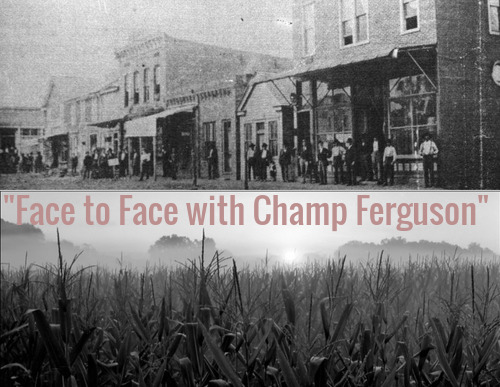
Face to Face With Champ Ferguson
John Garner had only been enrolled in school at Albany, Ky about six months when the civil war broke out, and had just recently left school and enlisted as a Union soldier the day he stood face to face with the infamous Champ Ferguson. It would be an encounter he would never forget.
After enlisting on New Years Day in 1863, two weeks shy of his 20th birthday, John had become concerned about his younger brother, Henderson, whom he had left behind in Clinton County, which was being terrorized by Confederate guerillas, including Ferguson, whom he described as a notorious human demon. Ferguson's killing spree lasted most of the war, from November 1861 to April 1865. Some of the killings were brutal and all were without mercy, with the victim usually face-to-face with him.
Determined to get his brother out of Clinton County, John dressed in civilian clothes and made his way on foot from Liberty to Somerset, and then to Albany, avoiding all public roads. His aunt, Betsy, lived in town, and his intention was to quietly slip into her home and stay hidden until she could fetch his brother for him. At the end of a wooded area in town, there was a cornfield which led up to his aunts garden. He could see her home from there, and noticed a few people were walking further down the street, but no one was near the home. Quietly, he ventured into the cornfield. Once he reached the garden, he stopped again to survey of the town. Seeing no danger, he crossed a fence and stepped into the back door of the house.
Upon seeing her nephew, Betsy threw up both hands and exclaimed, “The Lord have mercy, John what are you doing here?” He replied, "I am after Henderson. Where is he?” ‘'Gone and joined the army long ago,” she replied. “Which army?” he asked. “The Union Army,” she said. As Betsy John something to eat, suddenly there was gunfire and the clatter of horses feet, which seemed to be within very close range. John ran out on the porch, intending to get the house between him and town so he could make his getaway back into the cornfield. Suddenly, he was standing face to face with Champ Ferguson, whose pistol was drawn and pointed at him.
Champ: “What are you running for?"
John: ‘I am not running, sir.”
Champ: “Where were you going?”
John: “I heard the clatter of horses feet and stepped out here to see what was going on."
Champ: “Let me catch you running and you're a dead man."
John: “All right, if you catch me running, fire away.”
Betsy watched from inside the house as Ferguson whisked his horse and dashed back up the street. Both she and John were shaken up by what had just taken place, but now wasn't the time to talk about it. As Champ turned out of sight, John said goodbye to his aunt and began making his way through the tall green corn and into the woods. He remembered seeing at least a half dozen of Ferguson's men waiting in the street as he spoke to their captain. He realized any one of them might have recognized him as being a member of Col. Frank Wolford's Calvary had they come into the yard. He also realized how close he came to having his life taken from him, because he had heard that Ferguson took no prisoners, but cruelly murdered them.
After reaching the woods, John stopped and looked back toward town. He saw several people dashing about. Some were firing shots into the air. Feeling that he was now safe, he made his way to Rowena, where he boarded a steamboat bound for Burnside. A year later, John found his brother, Freeman, serving with the 6th Kentucky Cavalry.
When the war ended, John W. Garner became a minister in the Church of Christ faith and married Mary Freels of Wartburg, TN, a second cousin to Abraham Lincoln's mother, Nancy. They moved to Beloit, Kansas, but by 1895 were living in Perkins, Oklahoma, where John established a church and pastored there a few years before becoming an evangelist. John died in 1937 when he was 94 years old. His brother, Henderson, had also migrated west after the war. He died in Washington State in 1926. They were the sons of Freeman and Rachel Garner, who are buried at Tateville Baptist Church Cemetery in Pulaski County, Ky.
After enlisting on New Years Day in 1863, two weeks shy of his 20th birthday, John had become concerned about his younger brother, Henderson, whom he had left behind in Clinton County, which was being terrorized by Confederate guerillas, including Ferguson, whom he described as a notorious human demon. Ferguson's killing spree lasted most of the war, from November 1861 to April 1865. Some of the killings were brutal and all were without mercy, with the victim usually face-to-face with him.
Determined to get his brother out of Clinton County, John dressed in civilian clothes and made his way on foot from Liberty to Somerset, and then to Albany, avoiding all public roads. His aunt, Betsy, lived in town, and his intention was to quietly slip into her home and stay hidden until she could fetch his brother for him. At the end of a wooded area in town, there was a cornfield which led up to his aunts garden. He could see her home from there, and noticed a few people were walking further down the street, but no one was near the home. Quietly, he ventured into the cornfield. Once he reached the garden, he stopped again to survey of the town. Seeing no danger, he crossed a fence and stepped into the back door of the house.
Upon seeing her nephew, Betsy threw up both hands and exclaimed, “The Lord have mercy, John what are you doing here?” He replied, "I am after Henderson. Where is he?” ‘'Gone and joined the army long ago,” she replied. “Which army?” he asked. “The Union Army,” she said. As Betsy John something to eat, suddenly there was gunfire and the clatter of horses feet, which seemed to be within very close range. John ran out on the porch, intending to get the house between him and town so he could make his getaway back into the cornfield. Suddenly, he was standing face to face with Champ Ferguson, whose pistol was drawn and pointed at him.
Champ: “What are you running for?"
John: ‘I am not running, sir.”
Champ: “Where were you going?”
John: “I heard the clatter of horses feet and stepped out here to see what was going on."
Champ: “Let me catch you running and you're a dead man."
John: “All right, if you catch me running, fire away.”
Betsy watched from inside the house as Ferguson whisked his horse and dashed back up the street. Both she and John were shaken up by what had just taken place, but now wasn't the time to talk about it. As Champ turned out of sight, John said goodbye to his aunt and began making his way through the tall green corn and into the woods. He remembered seeing at least a half dozen of Ferguson's men waiting in the street as he spoke to their captain. He realized any one of them might have recognized him as being a member of Col. Frank Wolford's Calvary had they come into the yard. He also realized how close he came to having his life taken from him, because he had heard that Ferguson took no prisoners, but cruelly murdered them.
After reaching the woods, John stopped and looked back toward town. He saw several people dashing about. Some were firing shots into the air. Feeling that he was now safe, he made his way to Rowena, where he boarded a steamboat bound for Burnside. A year later, John found his brother, Freeman, serving with the 6th Kentucky Cavalry.
When the war ended, John W. Garner became a minister in the Church of Christ faith and married Mary Freels of Wartburg, TN, a second cousin to Abraham Lincoln's mother, Nancy. They moved to Beloit, Kansas, but by 1895 were living in Perkins, Oklahoma, where John established a church and pastored there a few years before becoming an evangelist. John died in 1937 when he was 94 years old. His brother, Henderson, had also migrated west after the war. He died in Washington State in 1926. They were the sons of Freeman and Rachel Garner, who are buried at Tateville Baptist Church Cemetery in Pulaski County, Ky.
Wednesday, March 10, 2021
A Civil War Massacre in Overton County
The Officer family lived in a rural community in Overton County called Sinking Cane. William Alexander Officer, who had married a Cynthia Holford in that community in 1836, operated a sizable farm with pastures, timberland and a large two-story house. Today, the location is about two miles off Highway 84 on Rock Springs Road, near the foot of Monterey Mountain. The couple produced seven children — four girls and three boys — and dealt primarily in livestock. He favored the Confederacy.
William spent a lot of time driving livestock further into the South. Everyone knew he was away from home a lot and also was successful and financially sound. Therefore, given the ongoing war, the Officer family was subject to harassment by federals who came to the Officer home place and took what they wanted — a common practice on both sides of the conflict.
One of the Officer sons, John, had been born in 1845 and was thus a young man when the Civil War broke out. He enlisted as a private in the Confederate Army. In March 1864, during a period in which Tennessee was seeing a flurry of wartime skirmishes and guerrilla activity in rural areas, John had been granted a leave from Company F, 13th (Dibrell’s) Tennessee Cavalry Regiment to go visit his family. With him had come a handful of fellow Confederate soldiers who had become separated from their command.
He was home with his companions on March 12, 1864. His mother rose early, and with daughter Frances, set to work to make an especially good Saturday breakfast for John and their visitors. The young men were happily eating what was probably the best meal they’d had in weeks when a big band of federal soldiers, some 200 of them, part of Col. William B. Stokes’ command, rode up to the house.
The federals had been sent out by Stokes to hunt down Confederate guerrillas, particularly Champ Ferguson. Upon their arrival, John Officer jumped up in a panic and fled into another room, where a slave of the family, named Abraham, but usually called Uncle Abe, helped him up into a loft or attic area to hide.
The guns of the family’s visitors were not far away, stacked on one another in a hallway, but the federal band was a big one and there appeared to be nothing to gain by dashing to get the weapons to make a hopeless stand. Union troops entered the house and things went bad fast. Shooting began, killing on the spot five of the young Confederates: John P. York, Oliver Shipp, Samuel Garrett, William Slaughter and William Lipscomb.
Slaughter served in Company C, 1st Regiment Texas Rangers. York, Shipp and Garrett were part of the 8th Texas Calvary and Lipscomb was in the 3rd Regiment, Alabama Cavalry. A sixth Confederate there was 2nd Lt. Robert S. Davis, also of the 8th Texas. Davis was wounded but did not die inside the house, as his companions had. The federals hustled the wounded man outside and put him against a gatepost, tying him in place. There he was executed by a hastily formed firing squad (That gatepost is on display in the Overton County Museum).
In 1922, Uncle Abe gave an eyewitness account of the incident before the Tennessee Historical Commission. According to his testimony, Davis spoke to his killers before they shot him, saying, “You ought not do this. I have never done anything but my sworn duty.” Abe also noted that Davis never flinched when the federal soldiers fired and took his life.
The six massacred soldiers are buried at Officer Cemetery, located near the home. This event is referred to locally as the Stokes Atrocity. A state historical marker, describing the event, is posted on the main street in Monterey.
*Written by Cameron Judd, The Greenville Sun (Mar 2, 2019): "A Civil War Massacre At A Place Called Sinking Cane."
William spent a lot of time driving livestock further into the South. Everyone knew he was away from home a lot and also was successful and financially sound. Therefore, given the ongoing war, the Officer family was subject to harassment by federals who came to the Officer home place and took what they wanted — a common practice on both sides of the conflict.
One of the Officer sons, John, had been born in 1845 and was thus a young man when the Civil War broke out. He enlisted as a private in the Confederate Army. In March 1864, during a period in which Tennessee was seeing a flurry of wartime skirmishes and guerrilla activity in rural areas, John had been granted a leave from Company F, 13th (Dibrell’s) Tennessee Cavalry Regiment to go visit his family. With him had come a handful of fellow Confederate soldiers who had become separated from their command.
He was home with his companions on March 12, 1864. His mother rose early, and with daughter Frances, set to work to make an especially good Saturday breakfast for John and their visitors. The young men were happily eating what was probably the best meal they’d had in weeks when a big band of federal soldiers, some 200 of them, part of Col. William B. Stokes’ command, rode up to the house.
The federals had been sent out by Stokes to hunt down Confederate guerrillas, particularly Champ Ferguson. Upon their arrival, John Officer jumped up in a panic and fled into another room, where a slave of the family, named Abraham, but usually called Uncle Abe, helped him up into a loft or attic area to hide.
The guns of the family’s visitors were not far away, stacked on one another in a hallway, but the federal band was a big one and there appeared to be nothing to gain by dashing to get the weapons to make a hopeless stand. Union troops entered the house and things went bad fast. Shooting began, killing on the spot five of the young Confederates: John P. York, Oliver Shipp, Samuel Garrett, William Slaughter and William Lipscomb.
Slaughter served in Company C, 1st Regiment Texas Rangers. York, Shipp and Garrett were part of the 8th Texas Calvary and Lipscomb was in the 3rd Regiment, Alabama Cavalry. A sixth Confederate there was 2nd Lt. Robert S. Davis, also of the 8th Texas. Davis was wounded but did not die inside the house, as his companions had. The federals hustled the wounded man outside and put him against a gatepost, tying him in place. There he was executed by a hastily formed firing squad (That gatepost is on display in the Overton County Museum).
In 1922, Uncle Abe gave an eyewitness account of the incident before the Tennessee Historical Commission. According to his testimony, Davis spoke to his killers before they shot him, saying, “You ought not do this. I have never done anything but my sworn duty.” Abe also noted that Davis never flinched when the federal soldiers fired and took his life.
The six massacred soldiers are buried at Officer Cemetery, located near the home. This event is referred to locally as the Stokes Atrocity. A state historical marker, describing the event, is posted on the main street in Monterey.
*Written by Cameron Judd, The Greenville Sun (Mar 2, 2019): "A Civil War Massacre At A Place Called Sinking Cane."
Wednesday, July 3, 2019
Morgan's Kentucky Raid Began at Cumberland County
On July 2, 1863, Confederate General John Hunt Morgan and his troops crossed the Cumberland River at Burkesville, KY, where a skirmish with Union foes took place. Morgan's Rebels were able to drive the Yankees back to the nearby Marrowbone community, but another skirmish occured just beyond the community of Waterview. This time, however, the Union forces used artillery and fresh men to push Morgan back.
Morgan's whole purpose in conducting raids into the north was to create diversion to keep Union troops and resources away from the ongoing Confederate operations at Vicksburg and Gettysburg.
From Kentucky, Morgan's Men raided across southern Indiana and Ohio. At Buffington Island in Meigs County, Ohio on July 19, 1863, Union Maj. Gen. Ambrose Burnside ordered out all available troops for a battle that ended with the capture of over half of the 1,700-man Confederate force, including my grandmother Vada Boles' 3rd cousin, Samuel Washington Frost, who had grown up at Gap Creek in Wayne County and had enlisted in Co. H 7th KY Cavalry at the onset of the Civil War.
Samuel and hundreds of other prisoners who had fought at Buffington Island were sent to Camp Douglas prison camp in Chicago, where he died on March 26, 1864. It has been estimated that more than 6,000 Confederate prisoners died there from things like smallpox, dysentery, pneumonia, starvation and torture.
They are buried in the Confederate Mound at Oak Woods Cemetery, located in the Hyde Park neighborhood of Chicago. It is one of the largest mass graves in North America. Near the southwest corner of the cemetery stands a 30-foot granite monument dedicated to the thousands of Confederate soldiers who died at Camp Douglas.
As for General Morgan, less than a month after the skirmishes that had taken place in Cumberland County, he surrendered, although, he escaped to fight again, only to be killed about a year later.
Labels:
Buffington Island,
Burkesville,
Camp Douglas,
Cavalry,
Chicago,
Confederate,
Confederate Mound,
County,
Gap Creek,
Hyde Park,
Indiana,
Kentucky,
Morgan,
Oak Woods Cemetery,
Ohio,
Raid,
Rebel,
Union,
Wayne,
Yankee
Subscribe to:
Posts (Atom)
In Times Like These
Ruth Caye Jones was a pastor’s wife and a mother of five living in Pennsylvania. Late in 1943, the realities of the war were weighing heavil...
-
(This photo was made in the 1950's as the Goat Man passed through my town) Charles McCartney was born on July 6, 1901. In 1915, at age ...
-
The Roanoke Colony was an enterprise financed and organized by Sir Walter Raleigh in the late 16th century to establish a permanent English ...