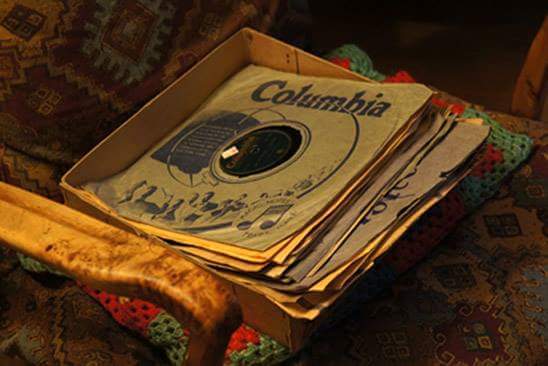
1. Albert Campbell - Dreaming (3701). Steve Porter - Flanagan At The Vocal Teacher's (3705). Standard Talking Machine Company 1907.
2. All Star Trio - Poor Little Butterfly Is A Fly Gal Now (18641-A). Fluffy Ruffles (18641-B). Victor Records 1919.
3. American Quartet - When You Wore A Tulip (17652A). Peerless Quartet - The Red, White and Blue (17652-B). Victor Records 1914.
4. Andre Benoist - Old Black Joe (50292-L). Valse In E Flat (50292-R). Edison Records 1915.
5. Anna Case - Old Folks At Home (83059-L). Annie Laurie (83059-R). Edison Records 1916.
6. Billy Murray - When Tony Goes Over The Top (18510-A). Arthur Fields - Good Morning Mr. Zip-Zip-Zip! (18510-B). Victor Records 1918.
7. Charles Hart, Elliot Shaw and The Calvary Choir - Shall You? Shall I? (80529-L). Charles Hart & Elliot Shaw - Is My Name Written There? (80529-R). Edison Records 1919.
8. Chatauqua Preachers Quartette - Softly Now The Light Of Day (39476). Let The Lower Lights Be Burning (39477). Standard Talking Machine Company 1914.
9. Chester Gaylord - Love's Old Sweet Song (80613-L). Edna White - Recollections of 1861-65 (80613-R). Edison Records. 1920.
10. Collins and Harlan - Just Help Yourself (3695). Cal Stewart - Uncle Josh Joins The Grangers (3706). Standard Talking Machine Company 1907.
11. Collins and Harlan - On The 5:15, United Talking Machine Company (39697). Ruff Johnson's Harmony Band (39698). Standard Talking Machine Company 1915.
12. Columbia Quartette - War Song Hits - Part I (A2428). War Song Hits - Part 2 (A2428). Columbia Records 1918.
13. Dabney's Band - Beautiful Ohio (A-12081). Hindustan (B-12081). Aerolian Vocalion 1919.
14. Edison Band - Medley Of American Patriotic Airs (50212-L). Medley Of American War Songs (50212-R). Edison Records 1914.
15. Edison Quartet - The Star Spangled Banner (80172-L). America (My Country 'Tis Of Thee (80172-R). Edison Records 1914.
16. Edison Quartet - He Lifted Me (80204-L). Let The Lower Lights Be Burning (80204-R). Edison Records 1914.
17. Edward Hamilton - Just Like The Rose (4725). Charles Hart & Elliot Shaw - Let The Rest Of The World Go By (4726). Emerson Records 1919.
18. Elizabeth Spencer & Henry Burr - You're Still An Old Sweetheart Of Mine (18590-A). Lewis James and Shannon Four - The Gates Of Gladness (18590-B). Victor Records 1919.
19. Elizabeth Spencer - Call Me Your Darling Again (80098-L) 1916. Metropolitan Quartet - Annie Laurie (80098-R). Edison Records 1914.
20. Elizabeth Spencer & Thomas Chalmers - Abide With Me (80276-L). John Young & Frederick Wheeler - When The Roll Is Called Up Yonder (80276-R). Edison Records 1915.
21. Ernest L. Stevens Trio - If I Had My Way Pretty Baby (51026-L). Red Mon Waltz (51026-R). Edison Records 1922.
22. Esther Walker - How Sorry You'll Be (Wait'll You See) (18657-A) Nov. 18, 1919. Billy Murray - He Went In Like A Lion And Came Out Like A Lamb (18657-B). Victor Records Jan. 2, 1920.
23. Frank Ferera/Anthony Franchini - Bright Moon (19088-A). Hawaiian Nights (19088-B). Victor Records 1920.
24. Fred Bacon - Old Black Joe (50351-L) 1916. Massa's In De Cold, Cold Ground (50351-R). Edison Records 1915.
25. Fred Van Eps - Medley Of Southern Melodies (51145-L) April 1923. Darkey's Dream and Darkey's Awakening (51145-R) 1922. Edison Records.
26. Geoffrey O'Hara - Send Me A Curl (18441-A). Lewis James and Shannon Four - All Aboard For Home Sweet Home (18441-B). Victor Records 1918.
27. Happy Six - I'm Nobody's Baby (79798). Cherie (79802). Columbia Records 1921.
28. Helen Clark & George Wilton Ballard - In The Old Sweet Way (50534-L). I'm Forever Blowing Bubbles (50534-R). Edison Records 1919.
29. Henry Burr - Are You From Heaven (18435-A) 1917. Sterling Trio - Give Me The Right To Love You (18435-B). Victor Records 1919.
30. Henry Burr - Then You'll Remember Me (414). Mrs. Stewart Holt and Frank C. Stanley - 'Tis But A Little Faded Flower (3402). Standard Talking Machine Company 1910.
31. Henry Burr - Throw Out The Life Line (3205) 1905. Stanley and Burr - What A Friend We Have In Jesus (3756). Talking Machine Company 1907.
32. Henry Burr - Abide With Me (A236). Where Is My Wandering Boy Tonight (A236). United Talking Machine Company 1908.
33. Henry Burr and Peerless Quartet - Broadway Rose (18710-A). Sterling Trio - Mother's Lullaby (18710-B). Victor Records 1920.
34. Henry Burr - That Wonderful Mother Of Mine (18524-A) 1919. Charles Anthony/Lewis James - Salvation Lassie Of Mine (18524-B). Victor Records 1919.
35. Henry Burr - Just A Baby's Prayer At Twilight (18439-A). Percy Hemus - On The Road To Home Sweet Home (18439-B). Victor Records 1918.
36. Irving Kaufman - Oh! Oh! Oh! Those Landlords (78445). Billy Murray - And He'd Say Oo-La La! Wee-Wee (78536). Columbia Records 1919.
37. James Craven - Georgia Rose (2172-A). Ernest Hare - I Want My Mammy (2172-B). Brunswick Records 1921.
38. Jaudas' Society Orchestra - The Missouri Waltz (50428-L). Poor Butterfly (50428-R). Edison Records 1917.
39. Joe Hayman - Cohen Telephones the Health Department (29685). Prince's Orchestra - Serenade (46167). Columbia Records 1915 R.
40. John Steel - Tell Me Little Gypsy (18687-A). The Girl Of My Dreams (18687-B). Victor Records 1920.
41. Joseph C. Smith's Orchestra - Alice Blue Gown (18700-A). Tripoli (18700-B). Victor Records 1921.
42. Kelly Harrell - Hand Me Down My Walking Cane (20103A). My Horses Ain't Hungry (20103B). Victor Records 1914.
43. Lewis James and Peerless Quartet - Smile And The World Smiles With You (18545-A). Sterling Trio - That Tumble Down Shack In Athlone (18545-B). Victor Records 1919.
44. Louise, Ferera and Greenus - Kawaihau Waltz (77798). Hawaiian Breezes (77884). Columbia Records 1918.
45. Maggie Teyte - Ma Curly-Headed Babby (82159-L). I'se Gwine Back To Dixie (82159-R). Edison Records 1919.
46. Metropolitan Quartet - I Will Sing Of My Redeemer (80300-L). I Love To Tell The Story (80300-R). Edison Records 1914.
47. Metropolitan Quartet - Come Where The Lillie's Bloom (80321-L) 1915. Thomas Chalmers - My Old Kentucky Home, (80321-R). Edison Records 1914.
48. Metropolitan Quartet - The Little Old Log Cabin In The Lane (80484-L) 1918. Betsy Lane Shepherd - I'll Remember You, Love In My Prayers (80484-R). Edison Records 1917.
49. Metropolitan Quartet - Darling Nellie Gray (80010-L) 1914. Elizabeth Spencer & Vernon Archibald - Ever Of Thee I'm Fondly Dreaming (80010-R). Edison Records 1920.
50. Orpheus Male Chorus - Dixieland Memories No. 2 (80395-L). Dixieland No. 1 (80395-R). Edison Records 1917.
51. Pale K. Lua and David Kaili (Irene West Royal Hawaiians) - Cunha Medley (17774-A). Hula Medley (17774-B). Victor Records 1915.
52. Rae Eleanor Ball; Jessie L. Deppen - Havana Moon (50857-L). Wonderland Of Dreams (50857-R). Edison Records 1921.
53. Sam Ash - On The Road To Happiness (46130). Reed Miller and Frederick Wheeler - Keep The Home Fires Burning (46135). Columbia Records 1915.
54. Sam Ash - When I Leave The World Behind (45647). Herbert Stuart - When The Lusitania Went Down (45660). Standard Talking Machine Company 1915.
55. S.C. (Steve) Porter [Chimes] - Safe In The Arms Of Jesus (A239) 1902. Henry Burr - Savior Lead me Lest I Stray (A239). Standard Talking Machine Company 1905.
56. Selvin's Novelty Orchestra - Dardanella (18633-A). My Isle Of Golden Dreams (1863-B). Victor Records 1919.
57. Sibyl Sanderson Fagan - L'Ardita - Magnetic Waltz (80453-L). Sibyl Sanderson, Fred Hager and Harvey Wilson - Sundown In Birdland (80453-R). Edison Records 1918.
58. Sousa's Band - U.S. Field Artillery March (18430-A). Liberty Loan March (18430-B). Victor Records Dec. 21, 1917.
59. S.W. Smith, U.S.N. And Bugle Squad - U.S. Army Bugle Calls Pt. 1. (50452-R). U.S. Army Bugle Calls Pt. 2 (50452-L). Edison Records 1918.
60. Thomas Chalmers - Nearer My God To Thee (50002-L) July 21, 1913. Elizabeth Spencer & Frederick Wheeler - Dreams Of Galilee (50002-R). Edison Records 1915.
61. Thomas Chalmers - Beulah Land (80549-L). Fred East & Lewis James - Only A Step To Jesus (80549-R). Edison Records 1920.
62. Thomas Chalmers - The Palms (82055-L). O Holy Night (82055-R). Edison Records 1914.
63. Thomas Chalmers - Recessional (82133-L). Battle Hymn Of The Republic (82133-R). Edison Records 1917.
64. Toots Paka Hawaiian Company - Kilima Waltz (4795). Hilo March (4798). Emerson Records 1919.
65. Vasa Prihoda - On Wings Of Song (82236-L). (a) Songs My Mother Taught Me (b) Poem (82236-R). Edison Records 1921.
66. Venetian Instrumental Quartet - On The High Alps (50065-L) 1914. American Symphony Orchestra - Wedding Of The Winds Waltzes (50065-R). Edison Records 1912.
67. Waikiki Hawaiian Orchestra - One, Two, Three, Four Medley (50455-L) 1917. Ford Hawaiians - Ellis March (50455-R). Edison Records 1916.
68. Walter Van Brunt - Hickey Dula (50348-L). Collins and Harlan - On The Hoko Moko Isle (50348-R). Edison Records 1916.
69. Walter Van Brunt - Don't Bite The Hand That Feeds You (50357-L). Billy Murray - Are You From Dixie ('Cause I'm From Dixie Too) (50357-R). Edison Records 1916.
70. Walter Van Brunt & Elizabeth Spencer - On The Banks Of The Brandywine (80160-L). I'll Take You Home Again Kathleen (80160-R). Edison Records 1914.
71. Whitney Brothers Quartet - Home Of The Soul (16372-A). Stanley and Burr - I Am Praying For You (16372-B). Victor Records 1912.
Showing posts with label New York. Show all posts
Wednesday, March 6, 2024
Tuesday, March 21, 2023
The Goat Man was Everyone's Folk Hero
My most popular story, written in 2011, was about Charles "Ches" McCartney, aka the Goat Man, who traveled the countryside with a wagon pulled by goats. Over the years, I have had countless numbers of emails, well over a hundred, from people wanting to tell me about their experience in meeting him. Every single one has mentioned how bad he smelled.
One man in South Carolina wrote, "It was around 1970 when the Goat Man passed through my community. I remember daddy taking him to McCarty's Store, with me riding in the middle of our '66 Ford pickup. My God, I still remember the stink! It was like something out of a fairytale or a movie. As a 5- or 6-year-old boy, I was amazed by his herd of goats and the shaky wagon they towed. Daddy was a good man. It took a week of keeping both windows down to air out the pickup."
Before I tell you about his background, I must first offer up a disclaimer of sorts. The story of the Goat Man's beginnings seemed to change occasionally from one telling to the next. He claimed to have left his home in Sigourney, Iowa when he was 14. He claimed his first wife, Sadie, was a knife thrower in a sideshow in upstate New York and he was the target in her act. He claimed to have experienced a religious awakening in 1935, during the Great Depression, whereby he hitched up a team of goats to a wagon and took to the open road to preach the gospel. His wife and son, Albert Gene, accompanied him, but she quickly grew tired of the road, and him, and returned to Iowa, taking their son with her. He married at least twice more. The last one ended when, according to the New York Times, he sold his goat-weary wife for $1,000 to a farmer she'd grown sweet on, he claimed.
McCartney chose to live in Jeffersonville, Georgia, eventually in an old bus. When the son got older, he reunited with his dad, and for decades they traveled the backroads of the Southeast, sometimes with as many as 30 goats. His path was easily traceable from the wooden signs he tacked on trees by the roadside, signs bearing messages like “Prepare to Meet Thy God.” "People are goats, they just don't know it," he would often say. Maybe McCartney said that because he, himself, looked like a goat. He smelled like one, too, because he never took a bath or washed his clothes. You take a fellow who looks like a goat, travels around with goats, eats with goats, lies down among goats and smells like a goat and it won't be long before people will be calling him the Goat Man, and that is exactly how he got his name.
Someone would spot McCartney and his cavalcade of goats clamoring down the highway with the old iron-wheeled wagon piled high with garbage, lanterns, bedding, clothes, an old pot belly stove, and plenty of scrap metal that he gathered and sold. Word would get around and pretty soon the curious townsfolk would come out to meet him. He would preach the Gospel to them and sell picture postcards of himself.
In 1985, during one of his final journeys away from his home, McCartney set out on foot to California, hoping to meet actress Morgan Fairchild, whom he wanted to marry. Along the way, he was mugged and hospitalized with injuries. He had been beat up before, most notably in 1968 at Signal Mountain near Chattanooga, when he was severely beaten by men who also slit the throats of some of his goats, but this time he left the road for good. His final years were spent at a nursing home in Macon, where he died on Nov. 15, 1998 at the age of ninety-seven, a decade or so younger than he had claimed to be. Five months earlier, back in Jeffersonville, Albert Gene had been found murdered behind the old bus they had called home. Both are buried at Jeffersonville Cemetery.
It has been said that Charles McCartney was the essence of freedom, wandering around the rural highways of America at a goat's pace, unfettered to schedules, clocks or calendars, and surviving by selling scrap metal he would find on the road, postcards of himself and the goats, and of course, free goat milk. He was a simple man and a folk hero.
McCartney told people he was a preacher at the Free Thinking Christian Mission he had built near the old school bus in Jeffersonville. While the New York Times wrote that he had admitted his preaching was a gimmick, he insisted it was sincere.
The Goat Man passing through Albany, Kentucky in the 1950's.
One man in South Carolina wrote, "It was around 1970 when the Goat Man passed through my community. I remember daddy taking him to McCarty's Store, with me riding in the middle of our '66 Ford pickup. My God, I still remember the stink! It was like something out of a fairytale or a movie. As a 5- or 6-year-old boy, I was amazed by his herd of goats and the shaky wagon they towed. Daddy was a good man. It took a week of keeping both windows down to air out the pickup."
Before I tell you about his background, I must first offer up a disclaimer of sorts. The story of the Goat Man's beginnings seemed to change occasionally from one telling to the next. He claimed to have left his home in Sigourney, Iowa when he was 14. He claimed his first wife, Sadie, was a knife thrower in a sideshow in upstate New York and he was the target in her act. He claimed to have experienced a religious awakening in 1935, during the Great Depression, whereby he hitched up a team of goats to a wagon and took to the open road to preach the gospel. His wife and son, Albert Gene, accompanied him, but she quickly grew tired of the road, and him, and returned to Iowa, taking their son with her. He married at least twice more. The last one ended when, according to the New York Times, he sold his goat-weary wife for $1,000 to a farmer she'd grown sweet on, he claimed.
McCartney chose to live in Jeffersonville, Georgia, eventually in an old bus. When the son got older, he reunited with his dad, and for decades they traveled the backroads of the Southeast, sometimes with as many as 30 goats. His path was easily traceable from the wooden signs he tacked on trees by the roadside, signs bearing messages like “Prepare to Meet Thy God.” "People are goats, they just don't know it," he would often say. Maybe McCartney said that because he, himself, looked like a goat. He smelled like one, too, because he never took a bath or washed his clothes. You take a fellow who looks like a goat, travels around with goats, eats with goats, lies down among goats and smells like a goat and it won't be long before people will be calling him the Goat Man, and that is exactly how he got his name.
Someone would spot McCartney and his cavalcade of goats clamoring down the highway with the old iron-wheeled wagon piled high with garbage, lanterns, bedding, clothes, an old pot belly stove, and plenty of scrap metal that he gathered and sold. Word would get around and pretty soon the curious townsfolk would come out to meet him. He would preach the Gospel to them and sell picture postcards of himself.
In 1985, during one of his final journeys away from his home, McCartney set out on foot to California, hoping to meet actress Morgan Fairchild, whom he wanted to marry. Along the way, he was mugged and hospitalized with injuries. He had been beat up before, most notably in 1968 at Signal Mountain near Chattanooga, when he was severely beaten by men who also slit the throats of some of his goats, but this time he left the road for good. His final years were spent at a nursing home in Macon, where he died on Nov. 15, 1998 at the age of ninety-seven, a decade or so younger than he had claimed to be. Five months earlier, back in Jeffersonville, Albert Gene had been found murdered behind the old bus they had called home. Both are buried at Jeffersonville Cemetery.
It has been said that Charles McCartney was the essence of freedom, wandering around the rural highways of America at a goat's pace, unfettered to schedules, clocks or calendars, and surviving by selling scrap metal he would find on the road, postcards of himself and the goats, and of course, free goat milk. He was a simple man and a folk hero.
McCartney told people he was a preacher at the Free Thinking Christian Mission he had built near the old school bus in Jeffersonville. While the New York Times wrote that he had admitted his preaching was a gimmick, he insisted it was sincere.
Monday, February 1, 2021
I Need Thee Every Hour
Annie Sherwood Hawks began displaying a gift for writing verses at the early age of 14, contributing poems on a regular basis to a variety of newspapers. One morning in June of 1872, while doing her regular household tasks, she suddenly became filled with the sense of a nearness to God. Wondering how one could live without Him, either in joy or pain, these words were ushered into her mind:
"I need Thee every hour
most gracious Lord
no tender voice like Thine
can peace afford"
Annie was a member of Hanson Place Baptist Church in Brooklyn, N.Y., where Dr. Robert Lowry, a prominent writer of gospel songs, was her pastor. Having been encouraged at the gift he saw in her poetry, Hawks showed her verses to him. Lowry added a refrain as he wrote the music for the hymn.
"I need Thee, O I need Thee
every hour I need Thee
O bless me now, my Savior
I come to Thee"
When it was first published in 1873, this Bible verse was included underneath the title: “Without me ye can do nothing” (John 15:5). Each of the first four stanzas dwells on a different facet of our dependence on God:
Verse one: Our need for His peace "I need Thee every hour most gracious Lord, No tender voice like Thine can peace afford."
Verse two: Our inability to resist temptation alone "I need Thee every hour, stay Thou nearby, Temptations lose their pow’r when Thou art nigh."
Verse three: Our need to find true meaning in life "I need Thee every hour, in joy or pain, Come quickly and abide, or life is vain."
and, verse four: Our desire to see God's promise "I need Thee every hour; teach me Thy will, And Thy rich promises in me fulfill."
The fifth stanza is an intense plea for God's presence "I need Thee every hour, most Holy One, Oh make me Thine indeed, Thou blessed Son."
most gracious Lord
no tender voice like Thine
can peace afford"
Annie was a member of Hanson Place Baptist Church in Brooklyn, N.Y., where Dr. Robert Lowry, a prominent writer of gospel songs, was her pastor. Having been encouraged at the gift he saw in her poetry, Hawks showed her verses to him. Lowry added a refrain as he wrote the music for the hymn.
every hour I need Thee
O bless me now, my Savior
I come to Thee"
When it was first published in 1873, this Bible verse was included underneath the title: “Without me ye can do nothing” (John 15:5). Each of the first four stanzas dwells on a different facet of our dependence on God:
Verse one: Our need for His peace "I need Thee every hour most gracious Lord, No tender voice like Thine can peace afford."
Verse two: Our inability to resist temptation alone "I need Thee every hour, stay Thou nearby, Temptations lose their pow’r when Thou art nigh."
Verse three: Our need to find true meaning in life "I need Thee every hour, in joy or pain, Come quickly and abide, or life is vain."
and, verse four: Our desire to see God's promise "I need Thee every hour; teach me Thy will, And Thy rich promises in me fulfill."
The fifth stanza is an intense plea for God's presence "I need Thee every hour, most Holy One, Oh make me Thine indeed, Thou blessed Son."
Wednesday, May 13, 2020
Hymns of Hope: Faith is the Victory!
Rev. John H. Yates was born in Batavia, New York on Nov. 31, 1837. He was licensed as a Methodist preacher after high school, but instead was forced to get a job to help maintain his aged parents. His father had been a shoemaker, so John's first job was in a shoe store. For thirty years he worked at different retail jobs, including a hardware store and a department store, eventually becoming the editor of the local newspaper.
All through his years of working Yates still managed to preach here and there, sharing his faith in Jesus Christ. Before his death in 1900, he switched from a Methodist to a Free Will Baptist and in 1897 began pastoring at a church near Batavia.
He also had another way of serving the Lord. His mother had been a school teacher who loved poetry and literature, and it was at her beckoning that Yates became a writer of poetry and songs. It wasn't long before hymns he had written were being sung all over the land.
“For whatsoever is born of God overcometh the world: and this is the victory that overcometh the world, even our faith.” - 1 John 5:4
John's faith was severely tested when his wife and two sons all died within the space of one week from an outbreak of diphtheria. He eventually remarried and kept going, giving living illustration that our faith in the promises of God and in our Lord Jesus gives us overcoming victory.
His success as a hymn writer led the famous singer and musician, Ira D. Sankey, to ask Yates to write hymns for him. Perhaps the deaths of his wife and children, and the testing of his faith, is what led him to write his most famous hymn, "Faith is the Victory."
Ye Christian soldiers rise
And press the battle ere the night
Shall veil the glowing skies
Against the foe in vales below
Let all our strength be hurled
Faith is the victory we know
That overcomes the world
Faith is the victory!
Oh glorious victory
That overcomes the world
Tuesday, May 12, 2020
The Day Aeronauts Fell From the Sky in Kentucky
Metcalfe County, Kentucky has been known for a lot of different things over the years: The Kentucky Headhunters, Black Stone Cherry, UK basketball star J.P. Blevins and the natural gas pipeline explosion at Beaumont in 1985, but in 1910 it was known as the place where a hot air balloon fell from the sky.
On May 8, 1910, Viking, said to be the largest hot air balloon in the world with a gas capacity of 85,000 cubic feet, left Quincey, Illinois on a journey to set a long-distance record. The balloon, piloted by A. Holland Forbes of New York, President of Forbes Publishing Company, sailed over Missouri, Indiana and then Kentucky. At 16,000 feet they encountered a thunderstorm which caused their virtually uncontrollable aircraft to shoot up to an altitude of 20,600 feet, which was a new altitude record.
As the balloon approached Tennessee, Forbes and his crewman, J. C. Yates, also of New York, almost passed out from the effects of the high altitude. Forbes later said the air pressure at that moment was no more than four pounds. The trauma caused both men to lose their ability to function properly. Forbes panicked and pulled the rip cord too hard in a rush to slow his descent. The two men were forced to discard all ballast and provisions to check their descent when suddenly, at a distance of almost 500 feet above ground, the rip cord tore Forbes' new balloon open and, like a piece of lead, it dropped straight to the ground in the Center community in Metcalfe County. Residents there arrived to find both men unconscious and seriously injured, Yates' injuries were more severe. The two men might have been killed had it not been for a pneumatic mattress that was laying on the basket floor. When they began their journey in Illinois, thirty-three bags of sand were onboard the Viking. There was only one left when it hit ground.
Forbes was internationally known as a balloonist. There was not another balloonist in the United States, and probably in the world, who had more enthusiasm about the sport than he did. He had made so many trips skyward that newspapers and magazines dubbed him the "Cowboy of the Air." A year earlier he won a trophy for the longest flight made in the United States during the year after his balloon, The New York, covered 731 miles in 19 1/4 hours. The accident in Metcalfe County wasn't his first narrow escape. At the Berlin races in 1908, his balloon, The Conqueror, caught fire and fell rapidly. Fortunately, the torn bag formed a sort of parachute that enabled Forbes to escape serious injury.
After the ordeal in Metcalfe County, Forbes continued to be an active member of the Aero Club of America, retaining his keen interest in all forms of aviation until his death on Dec. 23, 1927.
Wednesday, July 3, 2019
Three Cheers for the Red, White & Blue, But Not The Yankees
In 1974, a radio and tv commercial began airing that claimed there was nothing more American than "baseball, hot dogs, apple pie and Chevrolet." I'm not sure if fifty-four years earlier writer/composer Louis Hirsch would have agreed.
In 1914, Hirsch, who was born in New York City, was one of the nine founders of ASCAP, which stands for "American Society of Composers, Authors and Publishers," a non-profit performance-rights organization that protects its members' musical copyrights by monitoring public performances of their music and compensating them accordingly.
In that same year, 1914, Hirsch composed a patriotic love song entitled, "The Red, White and Blue," which was recorded and released on Victor Records by The Peerless Quartet. It is one of the disks in my 78rpm record collection.
Being a native of New York, Hirsch loved the Yankees, but in 1920 he sued the baseball organization for $100‚000 because of an incident which happened at a game on May 24th that year. To avoid sitting next to a cigar smoker‚ Hirsch switched seats with his brother, but an usher informed him it was against the rules to do that and ordered the two brothers to switch back. Hirsch refused and had to be forcibly ejected from the stands.
The Peerless Quartet, a popular ensemble organized in 1906, recorded The Red, White on June 4, 1914.
Such a beautiful red
I just love to see you smile
Your teeth are so white
Like the stars in the night
or the pearls from a southern isle
The blue of your eyes
Like the midsummer skies
Form a color I just love to view
So no wonder I say
When I'm looking your way
Three cheers for the
Red, White and Blue
Thursday, April 5, 2018
The Farmer and the Bicycle
Old farmer Jacob Rust lived about four miles from Albany, said a letter to the New York Sun. He had a good mountain farm and was very well-to-do in a rough and thinly populated region where a man with $10,000 was considered rich. Farmer Rust had several daughters and Ellen, the oldest, was considered the most 'handsomest' of them all.
This particular summer, a young man named Henry Curtis from Ohio, whose parents had moved there from Albany, had gone back to visit his relatives. He brought with him a bicycle. It was the first one to be seen in Clinton County, the letter said, and people came from miles around to see it. Henry, it said, was an expert rider and frequently displayed his bicycleship before the eyes of the mountaineers. He was even kind enough to let a number of the young men try his "velocipede," as it was called in Albany, but their bruised faces and sore joints soon made them very shy of the machine.
Henry fell in love with Ellen Rust. He pressed his courtship and was accepted, but farmer Rust was opposed. He objected to Henry because, as far as the farmer's knowledge went, he did not technically have what was known as any visible means of subsistence, or has farmer Rust termed it, "he was a lazy good-for-nothin' who had nothin' to do but go gallopin' around the hills on two wheels." Henry assured him he had a good business and fine prospects in Ohio, which was later transpired that his statement was true, but the farmer did not believe him.
So, Henry and Ellen waited. She was of legal age and they could have easily eloped, but they did not wish to do that. They wanted the old man's consent. The bicycle appeared to be farmer Rust's chief objection. He did not believe in it. "My gal," he said, "shan't marry any fellow who fools away his time on such a derned thing as that. Why, he might break his neck any day and then I'd have his 'widder' to take care of. I don't want for a son-in-law any man who rides on a velocipede. If he had a horse or a buckboard it would be all right."
Henry would not put away his beloved machine. The letter stated that he loved that bicycle, next to Ellen of course, and he meant to have them both. On Monday, Ellen was visiting a relative in town and Henry went to see her. They were getting angry at the old man's obduracy. "I will ride right out now, see him, and ask for your hand," said Henry, "and if he does not consent I will come back and we will get married anyhow. You are of legal age and we can have the ceremony performed here in town."
Ellen agreed.
Henry mounted his bicycle and headed for farmer Rust's place. The old man had just come in from a journey and his horse and buckboard were still at the yard gate. The young man immediately made known his errand.
" I told you once before that you could not marry her," said the farmer.
"Well, I am going to marry her, anyhow," replied Henry. "She is in town now. I am going back there and in less than an hour she will be my wife!"
"Then you will have to beat me to town," said farmer Rust. "I don't think any velocipede can get ahead of my old mare and the buckboard. If you get there ahead of me, i guess you can have the girl."
With that said, Henry mounted the bicycle and the old man jumped on his buckboard and the race was on. On a good turnpike or level road, read the letter, Henry could have easily outdistanced the old mare, who was not as swift as she once was, but it was altogether a different matter over those hills. But his recent experience with such difficulties stood him in good service, and, in spite of his rough path, Henry soon had the satisfaction of passing the farmer's bumping buckboard.
Henry waved his hand gleefully at his perspective father-in-law, who was swearing at his old mare and endeavoring to whip her into a faster gait. He wrecked twice, but each time Henry was able to right himself and his wheel without harm to either, and passed into town a quarter of a mile ahead of farmer Rust. He then stopped and waited for the farmer to come up.
The farmer looked at the bicycle for a moment and then exclaimed, "Well, I'll be derned!" Together, they went to fetch the Baptist preacher, brought him to the house where Ellen was visiting relatives, and it was there, on that day, that she and Henry were married.
- from the Sept. 26, 1889 edition of the Parsons (Kansas) Weekly Sun.
The story also ran in the Chicago Tribune, St. Paul Globe, Salt Lake Tribune, Daily Bee in Omaha, Times Democrat in New Orleans, the Clinton, Missouri Advocate and several other newspapers.
This particular summer, a young man named Henry Curtis from Ohio, whose parents had moved there from Albany, had gone back to visit his relatives. He brought with him a bicycle. It was the first one to be seen in Clinton County, the letter said, and people came from miles around to see it. Henry, it said, was an expert rider and frequently displayed his bicycleship before the eyes of the mountaineers. He was even kind enough to let a number of the young men try his "velocipede," as it was called in Albany, but their bruised faces and sore joints soon made them very shy of the machine.
Henry fell in love with Ellen Rust. He pressed his courtship and was accepted, but farmer Rust was opposed. He objected to Henry because, as far as the farmer's knowledge went, he did not technically have what was known as any visible means of subsistence, or has farmer Rust termed it, "he was a lazy good-for-nothin' who had nothin' to do but go gallopin' around the hills on two wheels." Henry assured him he had a good business and fine prospects in Ohio, which was later transpired that his statement was true, but the farmer did not believe him.
So, Henry and Ellen waited. She was of legal age and they could have easily eloped, but they did not wish to do that. They wanted the old man's consent. The bicycle appeared to be farmer Rust's chief objection. He did not believe in it. "My gal," he said, "shan't marry any fellow who fools away his time on such a derned thing as that. Why, he might break his neck any day and then I'd have his 'widder' to take care of. I don't want for a son-in-law any man who rides on a velocipede. If he had a horse or a buckboard it would be all right."
Henry would not put away his beloved machine. The letter stated that he loved that bicycle, next to Ellen of course, and he meant to have them both. On Monday, Ellen was visiting a relative in town and Henry went to see her. They were getting angry at the old man's obduracy. "I will ride right out now, see him, and ask for your hand," said Henry, "and if he does not consent I will come back and we will get married anyhow. You are of legal age and we can have the ceremony performed here in town."
Ellen agreed.
Henry mounted his bicycle and headed for farmer Rust's place. The old man had just come in from a journey and his horse and buckboard were still at the yard gate. The young man immediately made known his errand.
" I told you once before that you could not marry her," said the farmer.
"Well, I am going to marry her, anyhow," replied Henry. "She is in town now. I am going back there and in less than an hour she will be my wife!"
"Then you will have to beat me to town," said farmer Rust. "I don't think any velocipede can get ahead of my old mare and the buckboard. If you get there ahead of me, i guess you can have the girl."
With that said, Henry mounted the bicycle and the old man jumped on his buckboard and the race was on. On a good turnpike or level road, read the letter, Henry could have easily outdistanced the old mare, who was not as swift as she once was, but it was altogether a different matter over those hills. But his recent experience with such difficulties stood him in good service, and, in spite of his rough path, Henry soon had the satisfaction of passing the farmer's bumping buckboard.
Henry waved his hand gleefully at his perspective father-in-law, who was swearing at his old mare and endeavoring to whip her into a faster gait. He wrecked twice, but each time Henry was able to right himself and his wheel without harm to either, and passed into town a quarter of a mile ahead of farmer Rust. He then stopped and waited for the farmer to come up.
The farmer looked at the bicycle for a moment and then exclaimed, "Well, I'll be derned!" Together, they went to fetch the Baptist preacher, brought him to the house where Ellen was visiting relatives, and it was there, on that day, that she and Henry were married.
- from the Sept. 26, 1889 edition of the Parsons (Kansas) Weekly Sun.
The story also ran in the Chicago Tribune, St. Paul Globe, Salt Lake Tribune, Daily Bee in Omaha, Times Democrat in New Orleans, the Clinton, Missouri Advocate and several other newspapers.
Friday, July 27, 2012
The Edison Files: Billy Murray
Thomas Edison invented the phonograph in 1877. No one knows for sure who the very first recording artist was. Here is a look at the early recording artists I have in my collection.
William Thomas Murray, Billy Murray, was born in Philadelphia on May 25, 1877. His parents had migrated to the US from County Kerry, Ireland as young adults and in 1883 the family relocated to Denver, Colorado. Murray joined the Harry Leaviitt’s High Rollers troupe as an actor in 1893 and spent the next ten years honing his skills as an MC and song and dance man for a succession of minstrel shows and vaudeville troupes. In 1897, Murray traveled to San Francisco with aims at securing a job as a phonograph artist for Edison cylinders. He began recording songs for Edison in a variety of styles including sentimental ballads, religious standards and other popular styles. In 1889, he joined the Al G. Field Minstrels as a blackface singer and eccentric dancer traveling to the East Coast. Arriving in New York, Murray and songwriter Paul Dresser began plugging songs to phonograph companies. He quickly distinguished himself as a versatile interpreter of many genres. Journalist Jim Walsh would later write in the Hobbies magazine that ‘Billy Murray’s records were the only ones so clear you could catch every word on first hearing. This was partly because there was a certain ‘ping’ to his voice that cut sharp into the wax and he was smart enough to nasalize certain syllables to make important words and phrases stand out.’ Murray secured solo recording deals with Edison and Victor Records and from 1903 to the mid 1920’s released a string of recordings that hit #1 on the charts including Bedelia, Navajo, Meet Me In St. Louis Louis, Alexander, Come Take a Trip in My Air-Ship, Yankee Doodle Boy, Give My Regards to Broadway, In My Merry Oldsmobile and Everybody Works But Father, The Grand Old Rag, Harrigan, Under Any Old Flag At All, Carrie (Carrie Marry Harry), I Love a Piano, Pretty Baby, and That Old Gang of Mine.
To avoid a saturation of solo recordings, Murray was teamed with other best selling artists including Bob Roberts and Len Spencer. His most success pairing, however, was with the premier female singer of the day, Ada Jones. He also collaborated with vocal groups including Haydn Quartet, the American Quartet, Peerless Quartet, the Heidelberg Quintet, and the Eight Famous Victor Artists. With his collaborators, Murray had #1 hits with Take Me Out to the Ball Game (1908), By the Light of the Silvery Moon (1910), Let’s Take an Old Fashioned Walk (1907), Wouldn’t You Like to Have Me For A Sweetheart and When We are M-A-Double-R-I-E-D (1908), Shine on Harvest Moon (1909), Be My Little Baby Bumble Bee (1912), You’re the Flower of My Heart, Sweet Adeline (1904), Let Me Call You Sweetheart (1911), I Didn’t Raise My Boy to Be A Soldier (1915), My Bird of Paradise and The Lights of My Home Town (1916), I Don’t Know Where I’m Going But I’m On My Way (1918), Because (1900), In the Good Old Summer Time (1903), Toyland (1904), Blue Bell (1904), Dearie (1905), How’d You Like to Spoon With Me (1906), Sun bonnet Sue (1908), Put On Your Old Gray Bonnet (1909), Casey Jones (1910), Call Me Up Some Rainy Afternoon (1910), Oh You Beautiful Doll (1911), Moonlight Bay (1912), Everybody Two Step (1912), Rebecca of Sunnybrook Farm (1914), It’s a Long, Long Way To Tipperary (1914), Chinatown, My Chinatown (1915), Oh Johnny, Oh Johnny, Oh! (1917), Over There (1917), Goodbye Broadway, Hello France (1917) and Waiting for the Robert E. Lee (1912).
By the 1920’s, Murray was still successful despite the changing style and sound in American popular music. He continued recording for the major record labels of the time as a solo artist and in new duet pairings with Ed Smalle and Aileen Stanley and Walter Scanlan. In the 1930’s, Jim Walsh noted “He sang old-time popular songs for the movies in such productions as the ‘Bouncing Ball’ comedies. He even imitated animals for the talking and became well known as a radio actor, playing character parts in the Parket Family series and other popular shows. Murray continued recording into the 1940’s with his last recording, the comic dialogue ‘Casey and Cohen in the Army’ being released in 1943.
Murry was a devoted baseball fan and he is said to have played with the New York Highlanders (Yankees) in exhibition games. He also supposedly sometimes called in sick to recording sessions in order to go to the ballpark.
With the onset of heart trouble, Murray retired in 1944. He died on August 7, 1954.
To listen to great recordings by Billy Murray and other early recording artists visit the Cylinder Preservation and Digitization Project at the University of California at Santa Barbara.
Murry was a devoted baseball fan and he is said to have played with the New York Highlanders (Yankees) in exhibition games. He also supposedly sometimes called in sick to recording sessions in order to go to the ballpark.
With the onset of heart trouble, Murray retired in 1944. He died on August 7, 1954.
To listen to great recordings by Billy Murray and other early recording artists visit the Cylinder Preservation and Digitization Project at the University of California at Santa Barbara.
Subscribe to:
Posts (Atom)
The Story of Reuben Coffey, an American Revolutionary War Soldier
In Augusta Phillips Johnson's book, "A Century of Wayne County Kentucky 1800-1900," originally published in 1939, she used W...
-
The Roanoke Colony was an enterprise financed and organized by Sir Walter Raleigh in the late 16th century to establish a permanent English ...
-
When I think of the 70's, I think of the greatest rock and roll music ever. It is now included in a music genre that is known today a...


