In her early years during the Great Depression, Lyda Speck, who held a college degree in chemistry, had been an elementary school teacher in Livingston, but when school attendance dropped she was let go and in May of 1941 became a rural mail carrier.
And then came Dec. 7, 1941. “I remember it distinctly,” she said of the day of the surprise
attack from the Japanese Navy at the U. S. naval base at Pearl Harbor. “It was on a Sunday. Momma had just told us lunch was ready, and they broke into the news on the radio before we got to the dinner table. It was just unbelievable.” Suddenly there were jobs. The war brought the Depression to an end. As the men volunteered or were drafted for service overseas, the women stepped up to handle the jobs on the homefront. Lyda had felt the patriotism itch and in 1943 took a leave of absence from her mail route to join the Women’s Army Corps. She volunteered for anywhere in the world that she was needed. She thought her service would have something to do with the mail since that was what she did, but her high score on an Army intelligence test caught the eye of those involved in a top-secret project to produce the first atomic bomb.
After basic training, Lyda’s entire company of women awaited their orders. Eventually, they started shipping out her fellow soldiers more and more until Lyda was the only one left. She thought that perhaps she was the only woman that they can’t find anything for her to do. She was only told to await “special orders.” Soon, she was on a train bound for the Army base at Fort Sill, Oklahoma, which was the point from which troops were sent overseas. But it was all a sham, a way to keep hidden the secret job that awaited her in Los Alamos, New Mexico, where she would serve as part of the Provisional Engineer Detachment. She was debriefed about what she could say or not say. The one thing missing was the truth. It took her a while to figure out what the “truth” was. She was actually going to help build a bomb.
I have written stories about how my aunt Mada Boles Allen had moved to Oak Ridge, Tennessee in early 1944 to work at the Y-12 Electromagnetic Separation Plant, whose purpose was to make enriched uranium, and about she and the others had no clue what they were doing until after the fact. The Clinton County News reported in 2022 that Opal Talbott of Albany had celebrated her 101st birthday at the American Museum of Science and Energy in Oak Ridge, where decades earlier she had worked on the Manhattan Project. She showed the media the silver pin they had given her for her work.
It seems strange to think that a woman from Livingston, Tennessee would end up working with materials that were sent to New Mexico from Oak Ridge, so close to her home, but Lyda's part in the process at Los Alamos involved day after day of being in a physics lab. She tried to tell her boss that the Army had been misinformed about her schooling, that her major had been chemistry, not physics, but she was told she would be taught what they wanted her to know.
While assisting physicists in the experimental physics group, she became the only woman to work with the Van de Graaff accelerator, whose initial motivation for development was as a source of high voltage to accelerate particles for nuclear physics experiments. Her job was to develop the photographic emulsions and make the thousands of measurements of tracks needed to determine neutron energy. Over the next couple of years she got to know her microscope extremely well. Measuring the tracks would help scientists perfect the explosion. It had to do with determining what size the bomb would have to be to go off. Her job was tedious and nerve-racking, and though no one ever said the word “bomb,” it became clear to Lyda that a devastating weapon was coming together.
Lyda also never said the word “bomb," but the thought that she was contributing to the creation of such a device was never far from the young sergeant’s mind as she pushed slide after slide through her microscope, carefully measuring between what looked like constellations amidst a starry sky, not that anyone ever confirmed her suspicion and not that she ever asked, but nothing was left to doubt on July 16, 1945 as she gazed into the New Mexico desert sky from her vantage point on “the hill” and was among the first to witness a level of explosive fury the world had yet to experience.
It was a blast so powerful it could destroy an entire city, with shock waves felt more than 100 miles away, erupting into a monstrous mushroom cloud and leaving a crater of jagged radioactive glass where once was sand. The first test shot detonation had confirmed for her that the two and a half years she had contributed to the top secret research and development endeavor known as the Manhattan Project had not been in vain.
"It was always referred to as a gadget by thscientists and everybody else. I never heard anyone mention that it was a bomb.”
After the war, Lyda returned home to Livingston. There was no hero’s welcome, not even a mention of her arrival in the local newspaper. Life resumed as it had been, back to her mail route, a job Lyda would hold for more than 30 years, but in her home was a reminder of her contribution to the war effort, a small bit of jagged glass enclosed in a globe, a momento of that day in the desert. “That first test shot had everybody so nervous,” she would say. “We didn’t know if it was going to work and when it happened, the view from the hill was amazing."
On Sept. 28, 1945, J. Robert Oppenheimer, Director of the Manhattan Project in Los Alamos, wrote Lyda a commendation, which said in part, "For the past twenty months you have worked as an assistant in our research laboratory making microscopic measurements which called for a great deal of judgements on your part. This work was extremely tedious and involved a good deal if nervous strain. Nevertheless you have performed your duties in a cheerful and diligent manner and it must be clear to you that you have made a real contribution to the success of the project."
Lyda Speck died at Livingston Regional Hospital in 2014. She was 100 years old. Her parents were Floyd Morgan and Narcissa Allred Speck. Her grandparents were Magness and Delia Looper Speck. She was the great-granddaughter of Morgan Speck, brother of my 3rd great-grandfather, Calvin.
From a story about Lyda Speck at ajlambert.com
Showing posts with label Oklahoma. Show all posts
Tuesday, January 9, 2024
Friday, August 19, 2022
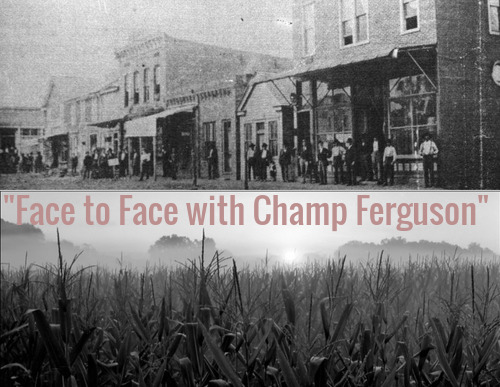
Face to Face With Champ Ferguson
John Garner had only been enrolled in school at Albany, Ky about six months when the civil war broke out, and had just recently left school and enlisted as a Union soldier the day he stood face to face with the infamous Champ Ferguson. It would be an encounter he would never forget.
After enlisting on New Years Day in 1863, two weeks shy of his 20th birthday, John had become concerned about his younger brother, Henderson, whom he had left behind in Clinton County, which was being terrorized by Confederate guerillas, including Ferguson, whom he described as a notorious human demon. Ferguson's killing spree lasted most of the war, from November 1861 to April 1865. Some of the killings were brutal and all were without mercy, with the victim usually face-to-face with him.
Determined to get his brother out of Clinton County, John dressed in civilian clothes and made his way on foot from Liberty to Somerset, and then to Albany, avoiding all public roads. His aunt, Betsy, lived in town, and his intention was to quietly slip into her home and stay hidden until she could fetch his brother for him. At the end of a wooded area in town, there was a cornfield which led up to his aunts garden. He could see her home from there, and noticed a few people were walking further down the street, but no one was near the home. Quietly, he ventured into the cornfield. Once he reached the garden, he stopped again to survey of the town. Seeing no danger, he crossed a fence and stepped into the back door of the house.
Upon seeing her nephew, Betsy threw up both hands and exclaimed, “The Lord have mercy, John what are you doing here?” He replied, "I am after Henderson. Where is he?” ‘'Gone and joined the army long ago,” she replied. “Which army?” he asked. “The Union Army,” she said. As Betsy John something to eat, suddenly there was gunfire and the clatter of horses feet, which seemed to be within very close range. John ran out on the porch, intending to get the house between him and town so he could make his getaway back into the cornfield. Suddenly, he was standing face to face with Champ Ferguson, whose pistol was drawn and pointed at him.
Champ: “What are you running for?"
John: ‘I am not running, sir.”
Champ: “Where were you going?”
John: “I heard the clatter of horses feet and stepped out here to see what was going on."
Champ: “Let me catch you running and you're a dead man."
John: “All right, if you catch me running, fire away.”
Betsy watched from inside the house as Ferguson whisked his horse and dashed back up the street. Both she and John were shaken up by what had just taken place, but now wasn't the time to talk about it. As Champ turned out of sight, John said goodbye to his aunt and began making his way through the tall green corn and into the woods. He remembered seeing at least a half dozen of Ferguson's men waiting in the street as he spoke to their captain. He realized any one of them might have recognized him as being a member of Col. Frank Wolford's Calvary had they come into the yard. He also realized how close he came to having his life taken from him, because he had heard that Ferguson took no prisoners, but cruelly murdered them.
After reaching the woods, John stopped and looked back toward town. He saw several people dashing about. Some were firing shots into the air. Feeling that he was now safe, he made his way to Rowena, where he boarded a steamboat bound for Burnside. A year later, John found his brother, Freeman, serving with the 6th Kentucky Cavalry.
When the war ended, John W. Garner became a minister in the Church of Christ faith and married Mary Freels of Wartburg, TN, a second cousin to Abraham Lincoln's mother, Nancy. They moved to Beloit, Kansas, but by 1895 were living in Perkins, Oklahoma, where John established a church and pastored there a few years before becoming an evangelist. John died in 1937 when he was 94 years old. His brother, Henderson, had also migrated west after the war. He died in Washington State in 1926. They were the sons of Freeman and Rachel Garner, who are buried at Tateville Baptist Church Cemetery in Pulaski County, Ky.
After enlisting on New Years Day in 1863, two weeks shy of his 20th birthday, John had become concerned about his younger brother, Henderson, whom he had left behind in Clinton County, which was being terrorized by Confederate guerillas, including Ferguson, whom he described as a notorious human demon. Ferguson's killing spree lasted most of the war, from November 1861 to April 1865. Some of the killings were brutal and all were without mercy, with the victim usually face-to-face with him.
Determined to get his brother out of Clinton County, John dressed in civilian clothes and made his way on foot from Liberty to Somerset, and then to Albany, avoiding all public roads. His aunt, Betsy, lived in town, and his intention was to quietly slip into her home and stay hidden until she could fetch his brother for him. At the end of a wooded area in town, there was a cornfield which led up to his aunts garden. He could see her home from there, and noticed a few people were walking further down the street, but no one was near the home. Quietly, he ventured into the cornfield. Once he reached the garden, he stopped again to survey of the town. Seeing no danger, he crossed a fence and stepped into the back door of the house.
Upon seeing her nephew, Betsy threw up both hands and exclaimed, “The Lord have mercy, John what are you doing here?” He replied, "I am after Henderson. Where is he?” ‘'Gone and joined the army long ago,” she replied. “Which army?” he asked. “The Union Army,” she said. As Betsy John something to eat, suddenly there was gunfire and the clatter of horses feet, which seemed to be within very close range. John ran out on the porch, intending to get the house between him and town so he could make his getaway back into the cornfield. Suddenly, he was standing face to face with Champ Ferguson, whose pistol was drawn and pointed at him.
Champ: “What are you running for?"
John: ‘I am not running, sir.”
Champ: “Where were you going?”
John: “I heard the clatter of horses feet and stepped out here to see what was going on."
Champ: “Let me catch you running and you're a dead man."
John: “All right, if you catch me running, fire away.”
Betsy watched from inside the house as Ferguson whisked his horse and dashed back up the street. Both she and John were shaken up by what had just taken place, but now wasn't the time to talk about it. As Champ turned out of sight, John said goodbye to his aunt and began making his way through the tall green corn and into the woods. He remembered seeing at least a half dozen of Ferguson's men waiting in the street as he spoke to their captain. He realized any one of them might have recognized him as being a member of Col. Frank Wolford's Calvary had they come into the yard. He also realized how close he came to having his life taken from him, because he had heard that Ferguson took no prisoners, but cruelly murdered them.
After reaching the woods, John stopped and looked back toward town. He saw several people dashing about. Some were firing shots into the air. Feeling that he was now safe, he made his way to Rowena, where he boarded a steamboat bound for Burnside. A year later, John found his brother, Freeman, serving with the 6th Kentucky Cavalry.
When the war ended, John W. Garner became a minister in the Church of Christ faith and married Mary Freels of Wartburg, TN, a second cousin to Abraham Lincoln's mother, Nancy. They moved to Beloit, Kansas, but by 1895 were living in Perkins, Oklahoma, where John established a church and pastored there a few years before becoming an evangelist. John died in 1937 when he was 94 years old. His brother, Henderson, had also migrated west after the war. He died in Washington State in 1926. They were the sons of Freeman and Rachel Garner, who are buried at Tateville Baptist Church Cemetery in Pulaski County, Ky.
Sunday, July 21, 2019
Tah Chee: Lone Warrior of the Tellico Bird Clan
My 4th great-grandmother on my mom's side, Elizabeth Franklin Boles, also known as "Be'toc'e," was the daughter of a full-blooded Cherokee Indian. Her grandfather, Da-Tsi (Tah Chee) "the Long Warrior of The Telico Bird Clan," was a child when his parents joined the first Cherokee party to move west of the Mississippi River, from an indian village on the Coosa River, in what is now Alabama, to the St. Francis River in Arkansas.
Throughout his life, Tah Chee, also known as William Dutch, was known as a fearless warrior, becoming a major political force in the old settler party, fighting many fights with the Osage Indians who lived near the Cherokees. The treaty the Cherokee made with the United States in 1828 so infuriated Tah Chee that he led several families to the Red River country. To keep the frontier peaceful, the Army ordered both nations to stop their raids, an order Tah Chee refused to recognize. Tah Chee fought a one-man war with the U.S. Army for years, but eventually became a scout for them, where he reached the rank of Captain.
Tah Chee (Captain William Dutch) and his wife, Aisley of The Paint Clan, were my sixth great-grandparents. Their daughter, Rose of the Tellico Bird Clan, was the mother of Elizabeth Franklin Boles.
Tah Chee died in Cherokee indian territory at Park Hill, Oklahoma on March 12, 1848.
Throughout his life, Tah Chee, also known as William Dutch, was known as a fearless warrior, becoming a major political force in the old settler party, fighting many fights with the Osage Indians who lived near the Cherokees. The treaty the Cherokee made with the United States in 1828 so infuriated Tah Chee that he led several families to the Red River country. To keep the frontier peaceful, the Army ordered both nations to stop their raids, an order Tah Chee refused to recognize. Tah Chee fought a one-man war with the U.S. Army for years, but eventually became a scout for them, where he reached the rank of Captain.
Tah Chee (Captain William Dutch) and his wife, Aisley of The Paint Clan, were my sixth great-grandparents. Their daughter, Rose of the Tellico Bird Clan, was the mother of Elizabeth Franklin Boles.
Tah Chee died in Cherokee indian territory at Park Hill, Oklahoma on March 12, 1848.
Tuesday, March 20, 2018
U.S. Rexroat
One early newspaper publisher/editor was a man by the name of Ulysses Sampson Rexroat. U.S. was born in 1869, probably in Russell County, to Sampson and Susan Absher Rexroat. His grandfather was Bro. William Rexroat, a popular Baptist preacher. It is unclear when the family moved to Chapman, Kansas, but when he died, Sampson Rexroat was, according to newspapers, one of oldest settlers in Chapman, which was settled in 1868.
It is also not clear when U.S. moved back to Kentucky, but he married Lula Walker of Columbia in 1892. Their only child, a son, Walker Brice, was born in 1893. Lula likely died either in childbirth or shortly thereafter as Walker Brice was reared by her parents and took their surname.
In 1897, U.S. was the editor of The Liberty Tribune in Liberty, Kentucky. He was also the secretary of the Liberty Fair in 1897. He apparently moved to Russell Springs the following year, because he was listed as a stockholder when the Russell Springs Fair Association was chartered in 1898. He was the groups first Secretary. In 1902, he started a newspaper in Russell Springs known as Kentucky Mountaineer.
March 4, 1903 -- (The Adair County News) "The Journal is the name of the new paper just started in Albany. Mr. U.S. Rexroat is its editor and publisher. Clinton County has a republican majority of about 500, but the editor of the journal states that his paper will be non-political. This announcement leads us to conclude that the readers of Clinton County are Democrats. We hope Mr. Rexroat will give them digestible material and that his venture will meet with success."
Ulysses Stewart Rexroat was born in Russell County in 1869, the first-born child of Sampson Rexroat and his second wife, Susan Absher Rexroat. So, i suppose being a native Russell countian allowed him to publish this commentary in his paper:
March 25, 1903 -- The Adair County News "Running a newspaper is just like shooting fish. All that is necessary is knowing how. The editor of the Albany Journal perhaps did not have on his studying cap when he wrote and published the following: Attorney O.B. Bertram went to Jamestown, Ky. last Sunday where he thinks of locating for the practice of his profession. May the Lord have mercy upon him. We've been there."
Ulysses was listed as a stockholder when the Russell Springs Fair Association was chartered in 1898 and served as its first Secretary. Two months after starting up his newspaper business in Albany, it was discovered that papers weren't the only thing being sold at the concession stand.
May 13, 1903 -- The Adair County News "U.S. Rexroat, who is the editor of the Albany Journal, was arrested last week, charged with selling liquor."
This was the second time Rexroat had been in the clutches of the law, charged with the same offense. En route to Columbia, he gave the police officer the slip and escaped. Learning he was at Russell Springs, Deputy United States Marshall R.E. McCandless and Commissioner F.R. Winfrey, went there and, just as the Commissioner entered the Springs Hotel and inquired about him, Rexroat made his escape out the back way. The Marshall was stationed out back and after a chase of 300 yards and firing at him several times, Rexroat was apprehended.
June 3, 1903 -- The Adair County News "U.S. Rexroat, who is charged with retailing liquor, was arrested at Russell Springs Wednesday night and brought to Columbia and lodged in jail. Thursday afternoon he was tried and held over, his bond being fixed at $200. The prisoner not being prepared to execute bond, the officer immediately started with him to Louisville."
Immediately after his run-in with the law, U.S. left Kentucky and moved out West. He moved around a lot, from job to job, living Arkansas, Kansas, Missouri, Oklahoma and Texas, generally working in the printing trade, oft times as a newspaper editor. But, the newspaper business wasn't Rexroat's only vocation. In between all of those jobs, he also worked in the cafe and grocery business, conducted a ranch and supply store in South Dakota, worked on a wheat farm in Kansas and worked nearly two years at the 1904 World's Fair in St. Louis.
In September of 1905, he married Maud Gravette in Bentonville, Arkansas. In 1915, he married Clara Peck, a native American of South Dakota. They had three daughters. In 1920, they were living in Strike Axe, Oklahoma, and in 1930, in Wynona City, Oklahoma.
Here are the known newspapers where Rexroat was employed:
1897: The Liberty Tribune - Liberty, Kentucky
1902: Kentucky Mountaineer - R. Springs, Kentucky
1903: Albany Journal - Albany, Ky.
1910: Gravette News Herald - Gravette, Arkansas
1912: Elsmore Leader - Elsmore, Kansas
1913: Interior Journal - Tina, Missouri
1914: The Simpson News - Simpson Kansas
1916: The Advocate - Lakin, Kansas
1917: The Argonia Argosy - Argonia, Kansas
1918: The Rolla News - Rolla, Kansas
1921: The Hustler - Apperson, Okla.
Rexroat fell victim to life's circumstances at the start of the 1930's, as he explained in a letter to the Amarillo Globe-Times on March 9, 1931while living in Perryton, Texas:
"I am just another unfortunate person appealing to you for whatever assistance you may grant through your column of your highly esteemed newspaper. Circumstances over which i had no control have forced me into an unenviable position. I have been out of steady employment for a year, although i have sought work assiduously during that time...an investment with a stock company, daily paper at Seminole, Oklahoma, boom oil town, broke me and the slump in oil, with its attendant depression, "nailed me to the cross," as it were, and I have been trying in vain to find some kind of permanent job in order to keep my three little girls in school...I would appreciate any other work that will enable me to help myself and family."
In late 1940 or early 1941, U.S. became ill and was brought back to Kentucky. He died on February 18, 1941 at the Central State psychiatric facility in Louisville. His death drew no notice in the Russell County News, but the February 26, 1941 edition of the Adair County News carried a brief obituary, which said services were held at the Christian Church in Russell Springs. Burial was at Rexroat Cemetery in Russell County.
It is also not clear when U.S. moved back to Kentucky, but he married Lula Walker of Columbia in 1892. Their only child, a son, Walker Brice, was born in 1893. Lula likely died either in childbirth or shortly thereafter as Walker Brice was reared by her parents and took their surname.
In 1897, U.S. was the editor of The Liberty Tribune in Liberty, Kentucky. He was also the secretary of the Liberty Fair in 1897. He apparently moved to Russell Springs the following year, because he was listed as a stockholder when the Russell Springs Fair Association was chartered in 1898. He was the groups first Secretary. In 1902, he started a newspaper in Russell Springs known as Kentucky Mountaineer.
March 4, 1903 -- (The Adair County News) "The Journal is the name of the new paper just started in Albany. Mr. U.S. Rexroat is its editor and publisher. Clinton County has a republican majority of about 500, but the editor of the journal states that his paper will be non-political. This announcement leads us to conclude that the readers of Clinton County are Democrats. We hope Mr. Rexroat will give them digestible material and that his venture will meet with success."
Ulysses Stewart Rexroat was born in Russell County in 1869, the first-born child of Sampson Rexroat and his second wife, Susan Absher Rexroat. So, i suppose being a native Russell countian allowed him to publish this commentary in his paper:
March 25, 1903 -- The Adair County News "Running a newspaper is just like shooting fish. All that is necessary is knowing how. The editor of the Albany Journal perhaps did not have on his studying cap when he wrote and published the following: Attorney O.B. Bertram went to Jamestown, Ky. last Sunday where he thinks of locating for the practice of his profession. May the Lord have mercy upon him. We've been there."
Ulysses was listed as a stockholder when the Russell Springs Fair Association was chartered in 1898 and served as its first Secretary. Two months after starting up his newspaper business in Albany, it was discovered that papers weren't the only thing being sold at the concession stand.
May 13, 1903 -- The Adair County News "U.S. Rexroat, who is the editor of the Albany Journal, was arrested last week, charged with selling liquor."
This was the second time Rexroat had been in the clutches of the law, charged with the same offense. En route to Columbia, he gave the police officer the slip and escaped. Learning he was at Russell Springs, Deputy United States Marshall R.E. McCandless and Commissioner F.R. Winfrey, went there and, just as the Commissioner entered the Springs Hotel and inquired about him, Rexroat made his escape out the back way. The Marshall was stationed out back and after a chase of 300 yards and firing at him several times, Rexroat was apprehended.
June 3, 1903 -- The Adair County News "U.S. Rexroat, who is charged with retailing liquor, was arrested at Russell Springs Wednesday night and brought to Columbia and lodged in jail. Thursday afternoon he was tried and held over, his bond being fixed at $200. The prisoner not being prepared to execute bond, the officer immediately started with him to Louisville."
Immediately after his run-in with the law, U.S. left Kentucky and moved out West. He moved around a lot, from job to job, living Arkansas, Kansas, Missouri, Oklahoma and Texas, generally working in the printing trade, oft times as a newspaper editor. But, the newspaper business wasn't Rexroat's only vocation. In between all of those jobs, he also worked in the cafe and grocery business, conducted a ranch and supply store in South Dakota, worked on a wheat farm in Kansas and worked nearly two years at the 1904 World's Fair in St. Louis.
In September of 1905, he married Maud Gravette in Bentonville, Arkansas. In 1915, he married Clara Peck, a native American of South Dakota. They had three daughters. In 1920, they were living in Strike Axe, Oklahoma, and in 1930, in Wynona City, Oklahoma.
Here are the known newspapers where Rexroat was employed:
1897: The Liberty Tribune - Liberty, Kentucky
1902: Kentucky Mountaineer - R. Springs, Kentucky
1903: Albany Journal - Albany, Ky.
1910: Gravette News Herald - Gravette, Arkansas
1912: Elsmore Leader - Elsmore, Kansas
1913: Interior Journal - Tina, Missouri
1914: The Simpson News - Simpson Kansas
1916: The Advocate - Lakin, Kansas
1917: The Argonia Argosy - Argonia, Kansas
1918: The Rolla News - Rolla, Kansas
1921: The Hustler - Apperson, Okla.
Rexroat fell victim to life's circumstances at the start of the 1930's, as he explained in a letter to the Amarillo Globe-Times on March 9, 1931while living in Perryton, Texas:
"I am just another unfortunate person appealing to you for whatever assistance you may grant through your column of your highly esteemed newspaper. Circumstances over which i had no control have forced me into an unenviable position. I have been out of steady employment for a year, although i have sought work assiduously during that time...an investment with a stock company, daily paper at Seminole, Oklahoma, boom oil town, broke me and the slump in oil, with its attendant depression, "nailed me to the cross," as it were, and I have been trying in vain to find some kind of permanent job in order to keep my three little girls in school...I would appreciate any other work that will enable me to help myself and family."
In late 1940 or early 1941, U.S. became ill and was brought back to Kentucky. He died on February 18, 1941 at the Central State psychiatric facility in Louisville. His death drew no notice in the Russell County News, but the February 26, 1941 edition of the Adair County News carried a brief obituary, which said services were held at the Christian Church in Russell Springs. Burial was at Rexroat Cemetery in Russell County.
Subscribe to:
Posts (Atom)
The Story of Reuben Coffey, an American Revolutionary War Soldier
In Augusta Phillips Johnson's book, "A Century of Wayne County Kentucky 1800-1900," originally published in 1939, she used W...
-
The Roanoke Colony was an enterprise financed and organized by Sir Walter Raleigh in the late 16th century to establish a permanent English ...
-
When I think of the 70's, I think of the greatest rock and roll music ever. It is now included in a music genre that is known today a...