John Garner had only been enrolled in school at Albany, Ky about six months when the civil war broke out, and had just recently left school and enlisted as a Union soldier the day he stood face to face with the infamous Champ Ferguson. It would be an encounter he would never forget.
After enlisting on New Years Day in 1863, two weeks shy of his 20th birthday, John had become concerned about his younger brother, Henderson, whom he had left behind in Clinton County, which was being terrorized by Confederate guerillas, including Ferguson, whom he described as a notorious human demon. Ferguson's killing spree lasted most of the war, from November 1861 to April 1865. Some of the killings were brutal and all were without mercy, with the victim usually face-to-face with him.
Determined to get his brother out of Clinton County, John dressed in civilian clothes and made his way on foot from Liberty to Somerset, and then to Albany, avoiding all public roads. His aunt, Betsy, lived in town, and his intention was to quietly slip into her home and stay hidden until she could fetch his brother for him. At the end of a wooded area in town, there was a cornfield which led up to his aunts garden. He could see her home from there, and noticed a few people were walking further down the street, but no one was near the home. Quietly, he ventured into the cornfield. Once he reached the garden, he stopped again to survey of the town. Seeing no danger, he crossed a fence and stepped into the back door of the house.
Upon seeing her nephew, Betsy threw up both
hands and exclaimed, “The Lord have mercy, John what are you doing here?” He replied, "I am after Henderson. Where is he?” ‘'Gone and joined the army long ago,” she replied. “Which army?” he asked. “The Union Army,” she said. As Betsy John something to eat, suddenly there was gunfire and the clatter of horses feet, which seemed to be within very close range. John ran out on the porch, intending to get the house between him and town so he could make his getaway back into the cornfield. Suddenly, he was standing face to face with Champ Ferguson, whose pistol was drawn and pointed at him.
Champ: “What are you running for?"
John: ‘I am not running, sir.”
Champ: “Where were you going?”
John: “I heard the clatter of horses feet and stepped out here to see what was going on."
Champ: “Let me catch you running and you're a dead man."
John: “All right, if you catch me running, fire away.”
Betsy watched from inside the house as Ferguson whisked his horse and dashed back up the street. Both she and John were shaken up by what had just taken place, but now wasn't the time to talk about it. As Champ turned out of sight, John said goodbye to his aunt and began making his way through the tall green corn and into the woods. He remembered seeing at least a half dozen of Ferguson's men waiting in the street as he spoke to their captain. He realized any one of them might have recognized him as being a member of Col. Frank Wolford's Calvary had they come into the yard. He also realized how close he came to having his life taken from him, because he had heard that Ferguson took no prisoners, but cruelly murdered them.
After reaching the woods, John stopped and looked back toward town. He saw several people dashing about. Some were firing shots into the air. Feeling that he was now safe, he made his way to Rowena, where he boarded a steamboat bound for Burnside. A year later, John found his brother, Freeman, serving with the 6th Kentucky Cavalry.
When the war ended, John W. Garner became a minister in the Church of Christ faith and married Mary Freels of Wartburg, TN, a second cousin to Abraham Lincoln's mother, Nancy. They moved to Beloit, Kansas, but by 1895 were living in Perkins, Oklahoma, where John established a church and pastored there a few years before becoming an evangelist. John died in 1937 when he was 94 years old. His brother, Henderson, had also migrated west after the war. He died in Washington State in 1926. They were the sons of Freeman and Rachel Garner, who are buried at Tateville Baptist Church Cemetery in Pulaski County, Ky.
Friday, August 19, 2022
Thursday, August 11, 2022
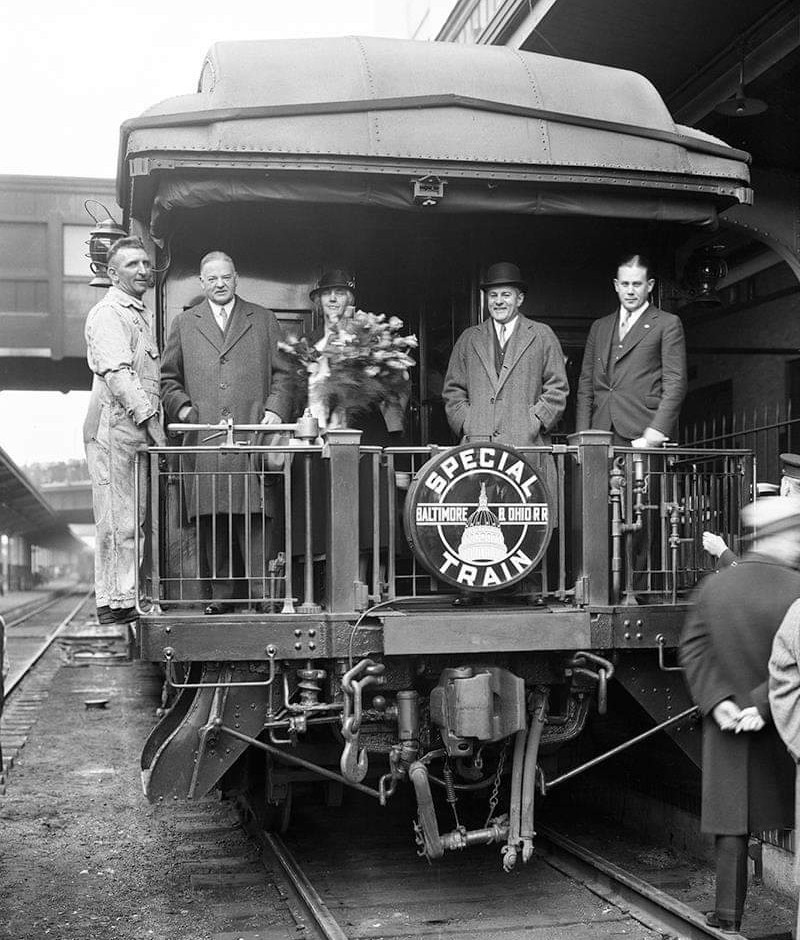
All Aboard the Hoover Special
In the presidential election on Nov. 6, 1928, because Kentucky's 11th Congressional District, which included Clinton and surrounding counties, had given Herbert Hoover the largest majority of any congressional district in the United States, it was decided a delegation should be assembled to attend his inauguration on March 4, 1929.
Sixty delegates, calling themselves the "On To Washington" party, boarded a train called 'The Hoover Special' on March 2, 1929, bound for the nations capital. Four of the delegates were from Clinton County: W.L. Booher, Dr. John A. Sloan, county attorney Granville Smith and Sheriff A. H. Boles, my great-grandfather. Also on the train were Dr. J.E. Bow, Fayette Simpson, Allan Huddleston and John Collins of Burkesville, Robert Lloyd, E.F. Cook, Josh Chumbley and Judge E. Edmonds of Jamestown, and J.J. Sandusky, Judge John M. Kennedy, Judge J.S. Sandusky, O.M. Travis, J.C. Davis and G.P. Tate of Wayne County.
This was the first presidential inauguration to be recorded by sound newsreels. The voice of Herbert Hoover delivering his inaugural address, along with a detailed description of the proceedings, was heard on the radio by fifty million listeners in the United States and millions of others around the globe. Also heard was a description of the four mile-long parade that took place during the inaugural ceremony. 20,000 people, including our delegates, participated in that.
Hoover served only one term as president. Newspaper columnist Russ Metz said the worst thing you could say about him was he always wore a business suit and necktie when he went fishing. He was always prepared to have his picture taken in case he caught a big one or prosperity suddenly came around the corner. Unfortunately for Herb, neither happened and all he got for his effort was "muddy suits and a big depression," said Metz.
One good thing did happen on the local front, which we can attribute to Herbert Hoover. A debate took place at the Clinton County Courthouse on Oct. 17, 1928 on behalf of the future president and his opponent, New York Governor Al Smith. According to Clinton County News, while Dr. John Sloan was speaking for Hoover and Elam Huddleston for Smith, local mail carrier, Bill Brown, and his girlfriend, Pauline Thrasher, perhaps inspired by those promises attributed to Hoover, snuck off from the debate, drove across the state line to Byrdstown, Tennessee and got married.
Sixty delegates, calling themselves the "On To Washington" party, boarded a train called 'The Hoover Special' on March 2, 1929, bound for the nations capital. Four of the delegates were from Clinton County: W.L. Booher, Dr. John A. Sloan, county attorney Granville Smith and Sheriff A. H. Boles, my great-grandfather. Also on the train were Dr. J.E. Bow, Fayette Simpson, Allan Huddleston and John Collins of Burkesville, Robert Lloyd, E.F. Cook, Josh Chumbley and Judge E. Edmonds of Jamestown, and J.J. Sandusky, Judge John M. Kennedy, Judge J.S. Sandusky, O.M. Travis, J.C. Davis and G.P. Tate of Wayne County.
This was the first presidential inauguration to be recorded by sound newsreels. The voice of Herbert Hoover delivering his inaugural address, along with a detailed description of the proceedings, was heard on the radio by fifty million listeners in the United States and millions of others around the globe. Also heard was a description of the four mile-long parade that took place during the inaugural ceremony. 20,000 people, including our delegates, participated in that.
Hoover served only one term as president. Newspaper columnist Russ Metz said the worst thing you could say about him was he always wore a business suit and necktie when he went fishing. He was always prepared to have his picture taken in case he caught a big one or prosperity suddenly came around the corner. Unfortunately for Herb, neither happened and all he got for his effort was "muddy suits and a big depression," said Metz.
One good thing did happen on the local front, which we can attribute to Herbert Hoover. A debate took place at the Clinton County Courthouse on Oct. 17, 1928 on behalf of the future president and his opponent, New York Governor Al Smith. According to Clinton County News, while Dr. John Sloan was speaking for Hoover and Elam Huddleston for Smith, local mail carrier, Bill Brown, and his girlfriend, Pauline Thrasher, perhaps inspired by those promises attributed to Hoover, snuck off from the debate, drove across the state line to Byrdstown, Tennessee and got married.
Friday, July 22, 2022
Bobtail Brown was a Third Generation Miller
"All good things must come to an end," wrote my friend Mary Ellis in the Wayne Weekly, regarding the passing of Billy "Bobtail" Brown on July 12th, a day after his 54th birthday. That was such a sad day for his family and friends, and for his co-workers at Mill Springs mill, where Billy had been an essential worker for two decades, a third generation miller, beginning with his grandfather, H.C. Brown, who had a grist mill, blacksmith shop and sawmill in Clinton County. Bobtail's father, Billy Brown, Sr., learned the miller trade from his dad and had operated the Mill Springs mill for several years before turning the family trade over to Bobtail.
Bobtail was once asked what he liked best about his job. "People, people, people," he had said. Mary wrote that Billy loved introducing visitors to the granddaddy of all mills in this area. "He would educate them about the springs that powered the giant wheel, turning the stones used for grinding the kernels of corn," she said. "Special corn was needed," he would say, referring to an old time, non-hybrid variety of corn that had eight rows of kernels on the cob. According to Billy, the millstones could not handle hybrid corn, or corn with high moisture content, because of it being waxy and sticking onto the stones, which, he said, prevented the corn from feeding through.
Bobtail dedicated himself to keeping the mill running and producing meal with unique taste, texture and appearance for the many guests who came back year after year to eat hoecakes and take some cornmeal home with them. Jonathan Friedman, Resource Manager of Lake Cumberland, told Mary that the Corps had lost a true partner. "Billy didn't simply operate a mill and grind corn. He brought to life a historically significant icon to thousands of visitors and locals every year." Ranger Cody Hensley said Bobtail loved his job. "He was always happy to give tours at Mill Springs Mill, and made friends with everyone who visited," he said. While grinding cornmeal on the weekends, Bobtail would keep the crowds entertained by telling jokes and then sharing the history of the mill.
Billy Brown, Jr. was 26 years old when first began operating the mill, and in twenty eight years never missed a day's work, according to one of his co-workers, Judy Daulton. "That showed his true character," she said, adding that Bobtail took much pride in knowing that he knew a trade that very, very few people knew. Billy would deliver his corn to the Monticello Woman's Club, who would package and sell it. He loved to whittle and would carve roses and give them to visitors. Daulton said he was one contractor that never had to be inspected, nor did you have to worry about him not performing his job well.
The funeral service for Billy "Bobtail" Brown was held last Sunday at Talbott Funeral Home. Lake Cumberland Corps of Engineers is currently reaching out to various avenues for training, so the mill can remain open on Saturday's, Sunday's and holidays.
Bobtail was once asked what he liked best about his job. "People, people, people," he had said. Mary wrote that Billy loved introducing visitors to the granddaddy of all mills in this area. "He would educate them about the springs that powered the giant wheel, turning the stones used for grinding the kernels of corn," she said. "Special corn was needed," he would say, referring to an old time, non-hybrid variety of corn that had eight rows of kernels on the cob. According to Billy, the millstones could not handle hybrid corn, or corn with high moisture content, because of it being waxy and sticking onto the stones, which, he said, prevented the corn from feeding through.
Bobtail dedicated himself to keeping the mill running and producing meal with unique taste, texture and appearance for the many guests who came back year after year to eat hoecakes and take some cornmeal home with them. Jonathan Friedman, Resource Manager of Lake Cumberland, told Mary that the Corps had lost a true partner. "Billy didn't simply operate a mill and grind corn. He brought to life a historically significant icon to thousands of visitors and locals every year." Ranger Cody Hensley said Bobtail loved his job. "He was always happy to give tours at Mill Springs Mill, and made friends with everyone who visited," he said. While grinding cornmeal on the weekends, Bobtail would keep the crowds entertained by telling jokes and then sharing the history of the mill.
Billy Brown, Jr. was 26 years old when first began operating the mill, and in twenty eight years never missed a day's work, according to one of his co-workers, Judy Daulton. "That showed his true character," she said, adding that Bobtail took much pride in knowing that he knew a trade that very, very few people knew. Billy would deliver his corn to the Monticello Woman's Club, who would package and sell it. He loved to whittle and would carve roses and give them to visitors. Daulton said he was one contractor that never had to be inspected, nor did you have to worry about him not performing his job well.
The funeral service for Billy "Bobtail" Brown was held last Sunday at Talbott Funeral Home. Lake Cumberland Corps of Engineers is currently reaching out to various avenues for training, so the mill can remain open on Saturday's, Sunday's and holidays.
Wednesday, July 20, 2022
Artist Fred Thrasher Was Renowned and Respected
As I writer, I know that no one is going to promote my writings more than me. There is a lot of work to building up your own product. Fred Thrasher understood that concept. In a Commonwealth Journal interview following his retirement in 2014, he attributed his aptitude for self-promotion and the marketing skills he had learned as an artist to his father, Jack. "He would drive his old pickup truck filled with firewood downtown," Fred recalled. "He kept this old banjo behind the seat and [to draw a crowd] he would start picking and singing bluegrass music. After a couple of tunes, he would say 'I've got the best firewood in town; you can cut it with a pocketknife.'" Before long, Jack would have the entire truck load sold after playing a few more tunes.
Fred, like a lot of people here, grew up poor. When he was old enough to work, he did whatever it took to help his family get by, from helping his dad cut wood to shining shoes. Even as an adult he worked at several different jobs, things like operating a service station and selling insurance. While he was successful in what he did, nothing would compare to the success he found after leaving the insurance business in 1977 to become one of Kentucky's most renowned and respected artists.
Fred really didn't work in a 'real job' setting after 1977, because painting was something he passionately loved doing, They say it's not really a job if you love doing it, and Fred loved doing it. Don't get me wrong, he hustled every step of his way to the top. The most fascinating part of his story is that Fred was self-taught.
When did it all began? According to Fred, he developed an obsession for his craft after being inspired to draw and paint by his fourth grade teacher, and while he had the desire and inspiration, he also had a topic. Growing up in a modest environment, he said, had provided him memories for which his paintings are famous. Success came quick after Fred went full-time doing what he loved. His first print, the one of the old Clinton County High School building,sold well. Today, it is one of his most sought-after prints.
Fred's most popular print, Snowflakes, was released in 1988. In what seems like hundreds of prints later, some of his other popular prints that come to my mind include The Country Doctor, The Good Harvest, Footprints in the Snow, Mill Springs Mill, and The Crossing of the Cumberland, a scene depicting the old Cumberland Ferry Company crossing the Cumberland River with a stage coach carrying the U.S. Mail. While it is hard for me to pick a favorite Fred Thrasher print, because they are all so wonderful, I am partial to one, the Albany Drive-in Theatre print, known as "The Last Picture Show," because I grew up there. Fred's last commercial print, released in 2014, was "Family Heritage," which features a serene snow-blanketed farm landscape. It was part of a series that he had collaborated on with his son, Dennis, and his grandson, Colby, who each contributed to the original painting.
The story of how Fred Thrasher began his career as an artist inspired me to want to be a writer, and it was his son, Danny, who inspired me to want to keep on writing. Danny was Fred's oldest son, who passed away in 2008. We were classmates. Saddened after hearing about his illness got me to thinking about some of the things we had done growing up. The day he, our friend, Mike Beaty, and myself decided to leave the school ground for lunch and got caught inspired me to write about it in a story I titled,An RC Cola and a Moonpie. You can read about it on my blog. Danny read the story before he died. His family related how it made him smile and laugh. I thought, if I can give him one happy moment, perhaps I can do the same for others, and that's why I do what I do.
Our whole community here was happy that Fred Thrasher enjoyed the success he did during his 37 years as a professional. He sure earned that. His paintings are everywhere. Thankfully, his prints will still be sold and bought. Fred taught and encouraged many in his family to follow in his footsteps, and many have, so hopefully his legacy will live on through them. I think it will.
Fred Thrasher enjoyed remarkable success during his 37 years as a professional. His paintings are everywhere. Thankfully, all is not lost. His prints will still be sold and bought. He taught and encouraged many in his family to follow in his footsteps, and many have, so his legacy will live on through them. Watch this page for updates.
Fred, like a lot of people here, grew up poor. When he was old enough to work, he did whatever it took to help his family get by, from helping his dad cut wood to shining shoes. Even as an adult he worked at several different jobs, things like operating a service station and selling insurance. While he was successful in what he did, nothing would compare to the success he found after leaving the insurance business in 1977 to become one of Kentucky's most renowned and respected artists.
Fred really didn't work in a 'real job' setting after 1977, because painting was something he passionately loved doing, They say it's not really a job if you love doing it, and Fred loved doing it. Don't get me wrong, he hustled every step of his way to the top. The most fascinating part of his story is that Fred was self-taught.
When did it all began? According to Fred, he developed an obsession for his craft after being inspired to draw and paint by his fourth grade teacher, and while he had the desire and inspiration, he also had a topic. Growing up in a modest environment, he said, had provided him memories for which his paintings are famous. Success came quick after Fred went full-time doing what he loved. His first print, the one of the old Clinton County High School building,sold well. Today, it is one of his most sought-after prints.
Fred's most popular print, Snowflakes, was released in 1988. In what seems like hundreds of prints later, some of his other popular prints that come to my mind include The Country Doctor, The Good Harvest, Footprints in the Snow, Mill Springs Mill, and The Crossing of the Cumberland, a scene depicting the old Cumberland Ferry Company crossing the Cumberland River with a stage coach carrying the U.S. Mail. While it is hard for me to pick a favorite Fred Thrasher print, because they are all so wonderful, I am partial to one, the Albany Drive-in Theatre print, known as "The Last Picture Show," because I grew up there. Fred's last commercial print, released in 2014, was "Family Heritage," which features a serene snow-blanketed farm landscape. It was part of a series that he had collaborated on with his son, Dennis, and his grandson, Colby, who each contributed to the original painting.
The story of how Fred Thrasher began his career as an artist inspired me to want to be a writer, and it was his son, Danny, who inspired me to want to keep on writing. Danny was Fred's oldest son, who passed away in 2008. We were classmates. Saddened after hearing about his illness got me to thinking about some of the things we had done growing up. The day he, our friend, Mike Beaty, and myself decided to leave the school ground for lunch and got caught inspired me to write about it in a story I titled,An RC Cola and a Moonpie. You can read about it on my blog. Danny read the story before he died. His family related how it made him smile and laugh. I thought, if I can give him one happy moment, perhaps I can do the same for others, and that's why I do what I do.
Our whole community here was happy that Fred Thrasher enjoyed the success he did during his 37 years as a professional. He sure earned that. His paintings are everywhere. Thankfully, his prints will still be sold and bought. Fred taught and encouraged many in his family to follow in his footsteps, and many have, so hopefully his legacy will live on through them. I think it will.
Fred Thrasher enjoyed remarkable success during his 37 years as a professional. His paintings are everywhere. Thankfully, all is not lost. His prints will still be sold and bought. He taught and encouraged many in his family to follow in his footsteps, and many have, so his legacy will live on through them. Watch this page for updates.
Tuesday, July 19, 2022
Under the Influence of Vinyl Records
Music has been a huge part of my life for as long as I can remember. My dad was a singer and a musician and I was heavily influenced by his profession, which was two-fold: the music he performed and what he mainly did for a living, which was being a disc jockey on our family-owned radio station. Because of that medium, dad was always bringing home extra copies of 45 r.p.m. records from the radio station. I loved them all, no matter what genre.
I don't remember the first record I ever played on the record player in my bedroom, but I wish I could. I do remember the records by the Beatles, Elton John, Ray Charles Little Richard, Jerry Lee Lewis and so many others. I especially wore out records by the Beatles and Ray Charles, mostly the latter. I taught myself how to play seventh chords and inverted chords by listening to "What'd I Say" by Ray Charles and "Let it Be," by the Fab Four. I wore out two rock and roll albums; "Psychotic Reaction," a 1966 album by Count Five, a garage band from California, and "Progressions," a 1967 release by The Five Americans, who were based in Texas. That one is my all-time favorite album. I not only loved the music I listened to, I also loved dissecting the songs; picking out the musical instruments that were being played, and listening to the vocals. That is where I learned to sing harmony.
There was one instrument in particular that I would always listen for. It was in the fall of 1970, or possibly a bit later, when dad brought home a 45 rpm record that would change my life, and set me on a course that i still follow to this day. Side A of that record by Jerry Corbetta and Sugarloaf was called "Green Eyed Lady," (#3 in 1970) and the reason it impacted me so was the organ solo that Corbetta played in the middle of the song.
Dad was a master guitar player, and he tried to teach me to play, but what I really wanted to do was play the piano like Jerry Lee Lewis. It didn't help any that dad's friend, Cecil Pryor, played the piano like Jerry Lee Lewis.
I was almost 11-years-old when dad brought Jerry Corbetta's record home. Thirty eight years later, in 2008, I had the opportunity to meet Corbetta backstage at a concert by his Classic Rock All-Stars group, which consisted of Corbetta on piano and Mike Pinera of Blues Image and Iron Butterfly on guitar. He wrote Ride, Captain, Ride," one of the biggest pop Rick songs ever. On bass guitar was Dennis Noda, formerly of Cannibal and the Headhunters, and on drums was the great Peter Rivera from the Motown Records group, Rare Earth.
When I heard they were going to be in the area, I knew it was Tim to meet my hero, and that is what I did. When the big moment came backstage, I shook his hand and said, "Nice to meet you. You changed my life." We talked for several minutes before I asked for his autograph. It was a big moment for me, and it all began with that 45 r.p.m. record.
Later on, we spoke to each other via email, and I was able to tell him the story of how he inspired me to want to be a piano player/musician. He responded by saying, "I grew up in a house of music. We had a piano and an organ. I would listen to the TV and play along with the music that I heard there. I loved music from the time I was 3 years old. I was 6 years old when I saw Elvis on the television .Something clicked inside me. I asked my father to buy me a piano and get me piano lessons, and he did both. I often think about the time I saw Elvis and how he inspired me to be a musician."
Over the years, I have had many great moments during my musical journey. I was Motown legend Percy Sledge's organ player for one night back in the 90's, but my biggest thrill, by far, was the night I met my inspiration, Jerry Corbetta.
Singer-songwriter, keyboardist, organist, and record producer, Jerry Corbetta died on Sept. 16, 2016 in the city where he was born, Denver, Colorado. Besides "Green Eyed Lady," Sugarloaf also had success with “Don’t Call Us, We’ll Call You” (#9 in 1974). Today, you can still find both songs being played in classic rock formats on radio and other mediums. Other than his groups, Sugarloaf and Classic Rock All-Stars , Corbetta also toured for nearly five years with Frankie Valli and the four seasons as the “fifth season,” nicknamed “Guido” by Frankie Valli.
I don't remember the first record I ever played on the record player in my bedroom, but I wish I could. I do remember the records by the Beatles, Elton John, Ray Charles Little Richard, Jerry Lee Lewis and so many others. I especially wore out records by the Beatles and Ray Charles, mostly the latter. I taught myself how to play seventh chords and inverted chords by listening to "What'd I Say" by Ray Charles and "Let it Be," by the Fab Four. I wore out two rock and roll albums; "Psychotic Reaction," a 1966 album by Count Five, a garage band from California, and "Progressions," a 1967 release by The Five Americans, who were based in Texas. That one is my all-time favorite album. I not only loved the music I listened to, I also loved dissecting the songs; picking out the musical instruments that were being played, and listening to the vocals. That is where I learned to sing harmony.
There was one instrument in particular that I would always listen for. It was in the fall of 1970, or possibly a bit later, when dad brought home a 45 rpm record that would change my life, and set me on a course that i still follow to this day. Side A of that record by Jerry Corbetta and Sugarloaf was called "Green Eyed Lady," (#3 in 1970) and the reason it impacted me so was the organ solo that Corbetta played in the middle of the song.
Dad was a master guitar player, and he tried to teach me to play, but what I really wanted to do was play the piano like Jerry Lee Lewis. It didn't help any that dad's friend, Cecil Pryor, played the piano like Jerry Lee Lewis.
I was almost 11-years-old when dad brought Jerry Corbetta's record home. Thirty eight years later, in 2008, I had the opportunity to meet Corbetta backstage at a concert by his Classic Rock All-Stars group, which consisted of Corbetta on piano and Mike Pinera of Blues Image and Iron Butterfly on guitar. He wrote Ride, Captain, Ride," one of the biggest pop Rick songs ever. On bass guitar was Dennis Noda, formerly of Cannibal and the Headhunters, and on drums was the great Peter Rivera from the Motown Records group, Rare Earth.
When I heard they were going to be in the area, I knew it was Tim to meet my hero, and that is what I did. When the big moment came backstage, I shook his hand and said, "Nice to meet you. You changed my life." We talked for several minutes before I asked for his autograph. It was a big moment for me, and it all began with that 45 r.p.m. record.
Later on, we spoke to each other via email, and I was able to tell him the story of how he inspired me to want to be a piano player/musician. He responded by saying, "I grew up in a house of music. We had a piano and an organ. I would listen to the TV and play along with the music that I heard there. I loved music from the time I was 3 years old. I was 6 years old when I saw Elvis on the television .Something clicked inside me. I asked my father to buy me a piano and get me piano lessons, and he did both. I often think about the time I saw Elvis and how he inspired me to be a musician."
Over the years, I have had many great moments during my musical journey. I was Motown legend Percy Sledge's organ player for one night back in the 90's, but my biggest thrill, by far, was the night I met my inspiration, Jerry Corbetta.
Singer-songwriter, keyboardist, organist, and record producer, Jerry Corbetta died on Sept. 16, 2016 in the city where he was born, Denver, Colorado. Besides "Green Eyed Lady," Sugarloaf also had success with “Don’t Call Us, We’ll Call You” (#9 in 1974). Today, you can still find both songs being played in classic rock formats on radio and other mediums. Other than his groups, Sugarloaf and Classic Rock All-Stars , Corbetta also toured for nearly five years with Frankie Valli and the four seasons as the “fifth season,” nicknamed “Guido” by Frankie Valli.
Monday, July 4, 2022
I'm Mighty Proud of that Ragged Old Flag
"This ragged old flag is something to cherish," said Debra Brown Craig of Albany. It made me think of that song Johnny Cash wrote in 1974 during a time of political turbulence in the United States that had forced the resignation of President Richard Nixon during the Watergate scandal. Although Cash had publicly supported Nixon's candidacy, he had started to question the wisdom of Nixon-era policies concerning the Vietnam War. He wrote "Ragged Old Flag" to "reaffirm faith in the country and the goodness of the American people.
Debra's father, J.O.Brown, flew the flag (see photo) outside the family store, Brown’s Food Mart in Albany, for many years. "Daddy was definitely a patriot," she says of her father who served as a Tech 4 specialist in the U.S. Army during WWII. He passed away in 1976. For as long as she can remember, this flag waved proudly at the store, which was where the Garden Spot is now. As you can see, the flag is old, tattered, ripped and worn, but praise God it still perseveres, despite the obstacles it has endured. "Just like our country," says Debra, who added, "May God continue to bless America. Happy Independence Day, everyone." My sentiment as well, Debra!
"And the government for which she stands
Is scandalized throughout the land
And she's getting threadbare and wearing thin
But she's in good shape for the shape she's in
'Cause she's been through the fire before
And I believe she can take a whole lot more"
- Johnny Cash (Ragged Old Flag)
Debra's father, J.O.Brown, flew the flag (see photo) outside the family store, Brown’s Food Mart in Albany, for many years. "Daddy was definitely a patriot," she says of her father who served as a Tech 4 specialist in the U.S. Army during WWII. He passed away in 1976. For as long as she can remember, this flag waved proudly at the store, which was where the Garden Spot is now. As you can see, the flag is old, tattered, ripped and worn, but praise God it still perseveres, despite the obstacles it has endured. "Just like our country," says Debra, who added, "May God continue to bless America. Happy Independence Day, everyone." My sentiment as well, Debra!
"And the government for which she stands
Is scandalized throughout the land
And she's getting threadbare and wearing thin
But she's in good shape for the shape she's in
'Cause she's been through the fire before
And I believe she can take a whole lot more"
- Johnny Cash (Ragged Old Flag)
Wednesday, June 29, 2022
Three Blind Mice
Thirty-Seven years ago this week (June 26, 1985), the organist for the Clearwater, Florida Phillies, was ejected from a baseball game following a disputed call on a runner at first base. Responding to the crowds reaction, the organist, who was set up behind the base, started playing, "Three Blind Mice." Upon recognizing the song, the first base umpire pointed to him and then thumbed him out of the game.
Wilbur Snapp was a native of Urbana, Ohio, having been born there in 1920. He served in the U.S. Air Force during WWII and when the war was over, came back home and began operating a music store, eventually teaching himself how to play the organ.
Later, Wilbur moved to Florida and was soon hired to play the organ at Jack Russell Memorial Stadium in Clearwater. Pretty cool story, huh? I imagine that between June 26, 1985 and when he died on Sept. 6, 2003, at the age of 83, Wilbur received many high fives or slaps on the back for taunting the umpire that day.
Did you ever see such a sight in your life as three blind mice? We have all been there. After all, most of us grew up listening to Sid Scott's play by play of the 'Mighty Bulldogs of Clinton County High.' One of the things that made Sid a legendary local icon was that he always "called it like he saw it!" - his words, and we pretty much always agreed with him. He taught us well.
Way to go Wilbur!
By the way, the Clearwater Phillies are now called the Threshers.
Wilbur Snapp was a native of Urbana, Ohio, having been born there in 1920. He served in the U.S. Air Force during WWII and when the war was over, came back home and began operating a music store, eventually teaching himself how to play the organ.
Later, Wilbur moved to Florida and was soon hired to play the organ at Jack Russell Memorial Stadium in Clearwater. Pretty cool story, huh? I imagine that between June 26, 1985 and when he died on Sept. 6, 2003, at the age of 83, Wilbur received many high fives or slaps on the back for taunting the umpire that day.
Did you ever see such a sight in your life as three blind mice? We have all been there. After all, most of us grew up listening to Sid Scott's play by play of the 'Mighty Bulldogs of Clinton County High.' One of the things that made Sid a legendary local icon was that he always "called it like he saw it!" - his words, and we pretty much always agreed with him. He taught us well.
Way to go Wilbur!
By the way, the Clearwater Phillies are now called the Threshers.
Saturday, June 25, 2022
Seventy-Six Baptist Church
Before he settled the town of Seventy-Six, John Walker Semple had dreamed of a thriving community around a mill he had constructed on Indian Creek. After all, according to Jack Ferguson's book, "Early Times in Clinton County," the mill was drawing trade from all over the county. Recognizing the commercial possibilities, Semple added a general store, a saw mill, a blacksmith shop, a cabinet shop and later, a town.
What was needed was a church. Sadly, John Walker Semple did not live to see that happen. Most accounts say he died on Nov. 13, 1820. But, his wife, Lucy, and daughter, Francis, did see it happen. On June 22, 1822, they and twenty other members left Clear Fork Baptist Church and exactly one week later (on June 29th) became charter members of Seventy-Six Baptist Church. Among the others was one of Clear Fork's founding members, William Goodson Sr., and five members of his family, including his wife, Margaret, and son, William Jr. Others were Peggy Ashinhurst, Ann Beck, Ann Savage, two slaves (Tom and Sabre), Patsy Bristow, Hetty Brents, Joel Ellis, Elizabeth Rose, John Owens and William, Rachael, Peggy and Jonathan Smith.
Tomorrow, Seventy-Six Baptist Church will celebrate 200 years. There will be music, food, fellowship, and the word of God. Bring a chair and spend the day. The service and celebration begins at 10am. The church is located at 27 Seventy-Six Baptist Church Road.
What was needed was a church. Sadly, John Walker Semple did not live to see that happen. Most accounts say he died on Nov. 13, 1820. But, his wife, Lucy, and daughter, Francis, did see it happen. On June 22, 1822, they and twenty other members left Clear Fork Baptist Church and exactly one week later (on June 29th) became charter members of Seventy-Six Baptist Church. Among the others was one of Clear Fork's founding members, William Goodson Sr., and five members of his family, including his wife, Margaret, and son, William Jr. Others were Peggy Ashinhurst, Ann Beck, Ann Savage, two slaves (Tom and Sabre), Patsy Bristow, Hetty Brents, Joel Ellis, Elizabeth Rose, John Owens and William, Rachael, Peggy and Jonathan Smith.
Tomorrow, Seventy-Six Baptist Church will celebrate 200 years. There will be music, food, fellowship, and the word of God. Bring a chair and spend the day. The service and celebration begins at 10am. The church is located at 27 Seventy-Six Baptist Church Road.
Thursday, June 2, 2022
Jackie Latham
The date was Nov. 13, 1956. The location was the Clinton County High School gymnasium. It was opening night for the 1956-57 basketball season and the Marrowbone Cardinals were in town. No other game could have provided any greater highlights than there was that night at CCHS. Coach Bill Kidd's Bulldogs had played poorly during the first half and were down by as many as 19 points in the third quarter, when suddenly the momentum began to change. The Clinton County News wrote that the Bulldogs began to claw their way back into the game by displaying a superbly aggressive style of defense, stealing the ball and causing their opponent to commit one mistake after another. With four seconds left to play, and CCHS trailing 49-to-48, Jackie Latham, a 16-year-old freshman guard, playing in his very first official varsity game, stepped up to the free throw line after being fouled and calmly made two free throws to give his team the win.
Fast forward to the 1958-59 season. Lindle Castle was now the head coach (his second season) and his basketball squad was playing its toughest schedule in the history of the school. Last year's team had produced a winning record for the first time since the 1954-55 season. It was Dec. 4th, about a month into the season, when Jackie Latham, now a junior, suffered a broken ankle after he slipped and fell on spilled Coca-Cola during a game against Burkesville at the Marrowbone gym. Even though the Bulldogs had the scoring power of Jim DeForest, Bob Reneau, Ken Conner and Billy Perdue, and help from other players like Walker Stockton, Lanny Weaver, Ira Davis, Ray Reneau and Clayton Brown, the loss of Latham was a huge blow to the team. He was averaging 19.1 points per game when the accident occurred. The hope was that he would be ready to go by district tournament time, and he was, scoring 17 points in the win against their first opponent, Cumberland County, and 24 when we beat Marrowbone in the championship game (DeForest had 33).
No one knew it, but the golden years of basketball under the leadership of Lindle Castle were just beginning. "Until two years ago," wrote James Paul Allen in the Clinton County News, "CCHS had begun to lose all hopes in its ball club, because they were having one losing season after another, and hadn't won a district trophy for a while. Then along came Coach Castle to renew the school spirit and build the Bulldogs to what they are today." The coach would later say, "We had a lot of one room schools out in the county at that time. We had goals put up at all of them. We had a lot of men teachers who were interested in basketball and taught the fundamentals of the game to their boys. They would play ball all year around. There wasn't that much else to do. The children wore out the goals practicing hour after hour. Then they started closing the one room schools in favor of better education. When these schools closed, the golden years ended."
The 1959 district championship was Clinton County's first one since 1944. Principal L.H. "Prof" Robinson wrote, "we entered the tournament as the most underrated, most forgotten team in tournament history. Somehow, I felt Jackie would throw away the shackles of plastic paris [the cast on his foot] and again roam the basketball court like a haunted ghost. It was a great day for CCHS when he was able to start practicing again. Even then, the faint hearted said he will never get back in condition this school year. They failed to reckon with the will of a boy who loves the sport of basketball and to reckon with the rapid recovery of a vigorous American boy." In the regional tournament, the Bulldogs lost their first game to Russellville, despite a double-double from Deforest (32 points and 18 rebounds), with Latham scoring 24 points for the second straight game.
Jackie worked hard on conditioning during the summer of 1959 and was ready to go by the time the next season rolled around. On opening night, Nov. 6th, he let everyone know he was back and better than ever by scoring 33 points on 13 field goals and seven free throws against the Marrowbone team. The Bulldogs were 6-0 when they played at Wayne County on Dec. 3rd. It has been said over the years that during the game the action was extremely rough. So rough, in fact, that near the end of the third quarter Coach Castle pulled his players off the floor and the game was over. A week later the KHSAA imposed a thirty-day suspension on the Bulldogs, ending play for the remainder of 1959. Games would resume on Jan. 3rd. The lay-off was actually good for Jackie, who had missed the last two games due to a hand injury.
By the end of February 1960, the Mighty Bulldogs were rated first in the district and second in the region. We won the district tournament by defeating Metcalfe County for the second time in three meetings. A fourth meeting between the two teams would occur on March 12th, when the Bulldogs edged past the Hornets 65-to-62 in overtime to win the school's first ever regional championship before a packed house of 4,500 people at Bowling Green High School. It would be the night that Jackie Latham, now a senior, would officially become a legend.
Metcalfe County's strong defense had kept the Hornets on top at the end of the first three quarters. The 4th quarter was no less than a battle between David and Goliath, Metcalfe County's 6'6 John Paul Blevins and Clinton County's 5'11 Jackie Latham. Clinton County News would describe it as "a battle between a real good big boy and a real good little one." On WANY, the Voice of the Bulldogs, Sid Scott, would describe it this way, "a big man versus a little man, and the little man is winning!
Here's how it went down: Blevins stung the Bulldogs with three straight goals to move Metcalfe to a 50-46 lead with less than three minutes left to play in regulation. Latham responded with five straight points to put Clinton ahead 51-50. He hit on a third straight field goal from the circle and it was 53-50 with 1:45 left. Blevins cashed in on two free throws, but so did Latham. Blevins' turnaround jumper made it 55-54, with Clinton County still on top. Billy Perdue connected on two free throws and with 57 seconds left Clinton County appeared to have it in the bag at 57-54. However, Blevins was fouled during a field goal attempt and converted both free throws with 47 seconds left to pull the Hornets to within one point. The Bulldogs tried to play keep away but Perdue misfired on a pass to Latham. With just 12 seconds remaining, Metcalfe County's Pierce was fouled by Wilkie Skipworth as he drove in for a layup. He made one of two free throws to tie the game at 57-all. Latham attempted a 12-foot jumper at the buzzer, but the ball bounced twice on the rim before falling off. It was all Clinton County in the overtime period. When the smoke cleared, three things had happened; the Bulldogs had won 65-to-62, Jackie Latham had scored 19 of his 24 points in the fourth quarter and for the first time ever the Bulldogs were going to the Sweet 16.
"The Best Backcourt Duo in Kentucky in 1960"
By all accounts, Jackie Latham and Billy Perdue were the best backcourt duo in Kentucky in 1960. While Perdue, who had grown up in the Cartwright community, was known for his ability to score from long range, Latham, who lived next door at Upchurch, was known for his quickness and a two-hand set shot that rarely missed. Nicknamed "Rabbit" because he was always running, Jackie hustled non-stop. It is said he once threw a bag of fertilizer on his back and ran a mile, just to show he could do it. At the age of 65, he played 202 holes of golf in one day. At the age of 70, he played ninety holes, running between every shot.
Someone once said it doesn't matter how long you live. What matters is what you do while you are living and what you leave behind when you are gone. Many older folks will tell you that Jackie Latham was probably the best guard Clinton County High School boys varsity basketball ever produced. One thing for sure, by the time he was finished, he had put a stamp on the future of CCHS basketball.
Jackie was inducted in the Clinton County High School Basketball Wall of Fame in 1999.
Left to Right: Jackie Latham, Coach Lindle Castle and Billy Perdue
Fast forward to the 1958-59 season. Lindle Castle was now the head coach (his second season) and his basketball squad was playing its toughest schedule in the history of the school. Last year's team had produced a winning record for the first time since the 1954-55 season. It was Dec. 4th, about a month into the season, when Jackie Latham, now a junior, suffered a broken ankle after he slipped and fell on spilled Coca-Cola during a game against Burkesville at the Marrowbone gym. Even though the Bulldogs had the scoring power of Jim DeForest, Bob Reneau, Ken Conner and Billy Perdue, and help from other players like Walker Stockton, Lanny Weaver, Ira Davis, Ray Reneau and Clayton Brown, the loss of Latham was a huge blow to the team. He was averaging 19.1 points per game when the accident occurred. The hope was that he would be ready to go by district tournament time, and he was, scoring 17 points in the win against their first opponent, Cumberland County, and 24 when we beat Marrowbone in the championship game (DeForest had 33).
No one knew it, but the golden years of basketball under the leadership of Lindle Castle were just beginning. "Until two years ago," wrote James Paul Allen in the Clinton County News, "CCHS had begun to lose all hopes in its ball club, because they were having one losing season after another, and hadn't won a district trophy for a while. Then along came Coach Castle to renew the school spirit and build the Bulldogs to what they are today." The coach would later say, "We had a lot of one room schools out in the county at that time. We had goals put up at all of them. We had a lot of men teachers who were interested in basketball and taught the fundamentals of the game to their boys. They would play ball all year around. There wasn't that much else to do. The children wore out the goals practicing hour after hour. Then they started closing the one room schools in favor of better education. When these schools closed, the golden years ended."
The 1959 district championship was Clinton County's first one since 1944. Principal L.H. "Prof" Robinson wrote, "we entered the tournament as the most underrated, most forgotten team in tournament history. Somehow, I felt Jackie would throw away the shackles of plastic paris [the cast on his foot] and again roam the basketball court like a haunted ghost. It was a great day for CCHS when he was able to start practicing again. Even then, the faint hearted said he will never get back in condition this school year. They failed to reckon with the will of a boy who loves the sport of basketball and to reckon with the rapid recovery of a vigorous American boy." In the regional tournament, the Bulldogs lost their first game to Russellville, despite a double-double from Deforest (32 points and 18 rebounds), with Latham scoring 24 points for the second straight game.
Jackie worked hard on conditioning during the summer of 1959 and was ready to go by the time the next season rolled around. On opening night, Nov. 6th, he let everyone know he was back and better than ever by scoring 33 points on 13 field goals and seven free throws against the Marrowbone team. The Bulldogs were 6-0 when they played at Wayne County on Dec. 3rd. It has been said over the years that during the game the action was extremely rough. So rough, in fact, that near the end of the third quarter Coach Castle pulled his players off the floor and the game was over. A week later the KHSAA imposed a thirty-day suspension on the Bulldogs, ending play for the remainder of 1959. Games would resume on Jan. 3rd. The lay-off was actually good for Jackie, who had missed the last two games due to a hand injury.
By the end of February 1960, the Mighty Bulldogs were rated first in the district and second in the region. We won the district tournament by defeating Metcalfe County for the second time in three meetings. A fourth meeting between the two teams would occur on March 12th, when the Bulldogs edged past the Hornets 65-to-62 in overtime to win the school's first ever regional championship before a packed house of 4,500 people at Bowling Green High School. It would be the night that Jackie Latham, now a senior, would officially become a legend.
Metcalfe County's strong defense had kept the Hornets on top at the end of the first three quarters. The 4th quarter was no less than a battle between David and Goliath, Metcalfe County's 6'6 John Paul Blevins and Clinton County's 5'11 Jackie Latham. Clinton County News would describe it as "a battle between a real good big boy and a real good little one." On WANY, the Voice of the Bulldogs, Sid Scott, would describe it this way, "a big man versus a little man, and the little man is winning!
Here's how it went down: Blevins stung the Bulldogs with three straight goals to move Metcalfe to a 50-46 lead with less than three minutes left to play in regulation. Latham responded with five straight points to put Clinton ahead 51-50. He hit on a third straight field goal from the circle and it was 53-50 with 1:45 left. Blevins cashed in on two free throws, but so did Latham. Blevins' turnaround jumper made it 55-54, with Clinton County still on top. Billy Perdue connected on two free throws and with 57 seconds left Clinton County appeared to have it in the bag at 57-54. However, Blevins was fouled during a field goal attempt and converted both free throws with 47 seconds left to pull the Hornets to within one point. The Bulldogs tried to play keep away but Perdue misfired on a pass to Latham. With just 12 seconds remaining, Metcalfe County's Pierce was fouled by Wilkie Skipworth as he drove in for a layup. He made one of two free throws to tie the game at 57-all. Latham attempted a 12-foot jumper at the buzzer, but the ball bounced twice on the rim before falling off. It was all Clinton County in the overtime period. When the smoke cleared, three things had happened; the Bulldogs had won 65-to-62, Jackie Latham had scored 19 of his 24 points in the fourth quarter and for the first time ever the Bulldogs were going to the Sweet 16.
By all accounts, Jackie Latham and Billy Perdue were the best backcourt duo in Kentucky in 1960. While Perdue, who had grown up in the Cartwright community, was known for his ability to score from long range, Latham, who lived next door at Upchurch, was known for his quickness and a two-hand set shot that rarely missed. Nicknamed "Rabbit" because he was always running, Jackie hustled non-stop. It is said he once threw a bag of fertilizer on his back and ran a mile, just to show he could do it. At the age of 65, he played 202 holes of golf in one day. At the age of 70, he played ninety holes, running between every shot.
Someone once said it doesn't matter how long you live. What matters is what you do while you are living and what you leave behind when you are gone. Many older folks will tell you that Jackie Latham was probably the best guard Clinton County High School boys varsity basketball ever produced. One thing for sure, by the time he was finished, he had put a stamp on the future of CCHS basketball.
Jackie was inducted in the Clinton County High School Basketball Wall of Fame in 1999.
Wednesday, June 1, 2022
Edison Records: Battle Hymn of the Republic
My 105-year-old recording of "Battle Hymn of the Republic," by singer Thomas Chalmers, was recorded May 29, 1917 at Thomas Edison's recording studio in Manhattan. The recording is registered with the Library of Congress.
"Battle Hymn of the Republic" first gained popularity around Charleston, South Carolina. It became known as "John Brown's Body," following the insurrection at Harper's Ferry, led by Abolitionist John Brown, whose actions, trial and subsequent execution made him a martyr.
lies a-mouldering in the grave
His soul is marching on"
By the time of the Civil War, the song had become a popular marching song with Union Army regiments. It was when Julia Ward Howe visited Washington, DC on November 18, 1861 that "Battle Hymn of the Republic" was first born. Howe and her husband were active abolitionists, who had experienced first-hand a skirmish between Confederate and Union troops in nearby Virginia, and heard the troops go into battle singing "John Brown's Body." That evening in the nation's capital, Howe was inspired to write a poem that better fit the music. It began "Mine eyes have seen the glory of the coming of the Lord."
Andy Griffith and his Martin D-18 Guitar
Andy Griffith was born in Mount Airy, NC on this day in 1926.
One of the actors that had a minor role in the Griffith's 1957 movie, "A Face In The Crowd," was blues singer/guitarist Brownie McGhee. Andy befriended him and apparently liked Brownies choice in instruments, a Martin D-18 guitar. In the movie, two guitars were needed, a cheap-looking one used by his character before he became famous, and a fancier one when he became the successful 'Lonesome Roads." The prop master took a beautiful 1958 Martin D-18, painted it black and glued sequins on the guitars sound board to spell out "Momma." "Lonesome. Momma" was a reference to the name Lonesome Rhodes gave to his guitar.
After the film was completed, Griffith took the painted D-18 home, removed the sequins and sanded off the black paint down to the bare wood. He also sanded off the logo decal and pickguard. He liked the look of the guitar without the pickguard and never replaced it. A guitar builder in New York City touched up to the wood and gave the instrument a new coat of lacquer. Griffith played this Martin guitar on and off his TV shows for nearly 50 years.
In 2004, the Martin guitar company produced 311 Andy Griffith Signature D-18's and then discontinued the guitar. Manufacturers lolsuggest price was $3,700, however used models can be purchased for around $2,500 and sometimes pop up on eBay.
Subscribe to:
Posts (Atom)
Near the Cross
The hymn, "Near the Cross," sometimes referred to as "Jesus Keep Me Near the Cross," or, "In the Cross" is c...
-
The Roanoke Colony was an enterprise financed and organized by Sir Walter Raleigh in the late 16th century to establish a permanent English ...
-
When I think of the 70's, I think of the greatest rock and roll music ever. It is now included in a music genre that is known today a...